Quantum Computing Helps Doctors Spot Cancer More Accurately
USC scientists just created a quantum-powered AI system that outlines tumors more precisely than standard technology, potentially helping doctors plan better treatments. The hybrid system works with far less data and computing power than traditional AI.
Finding cancer early and treating it precisely could get dramatically easier thanks to a quantum computing breakthrough at USC.
Amir Kalev and his team at USC Viterbi's Information Sciences Institute just created Qu-Net, a hybrid system that combines quantum computing with artificial intelligence to help doctors see cancer boundaries more clearly. The technology outperformed standard AI by 7% while using only one-sixth the computing power.
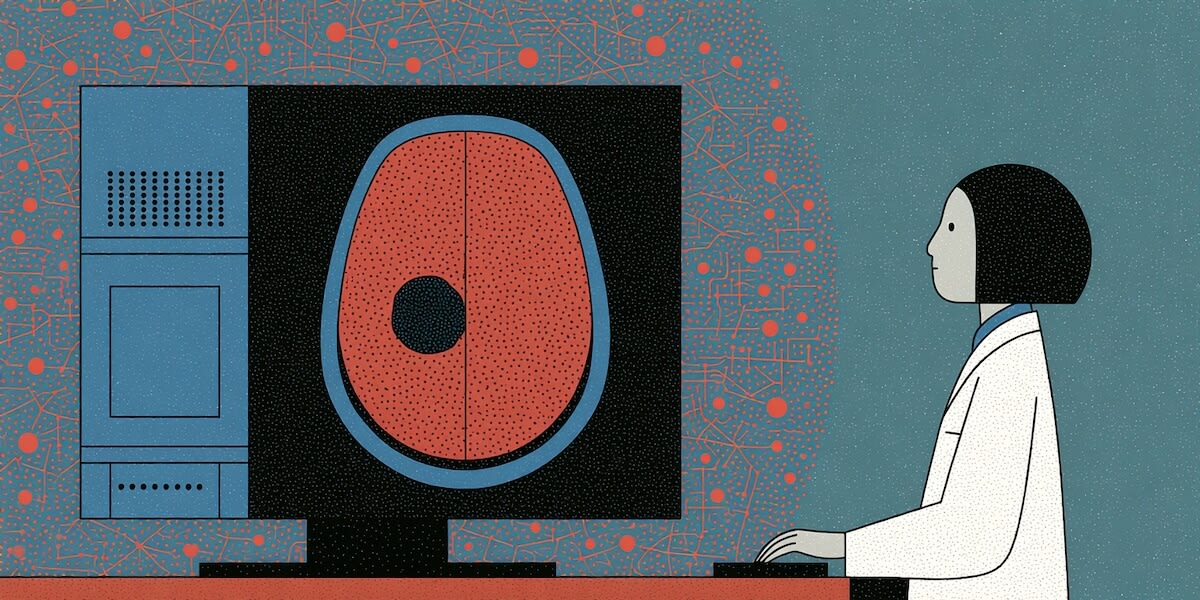
The innovation tackles a crucial challenge in cancer care. Before doctors can plan radiation treatment or surgery, AI must trace the exact outline of a tumor, separating cancerous tissue from healthy tissue pixel by pixel. Those precise boundaries determine where radiation gets targeted and how surgery gets planned.
Kalev suspected quantum computing could sharpen those crucial outlines. Working with recent graduate Naman Jain, he developed QuFeX, a quantum module that strengthens existing AI systems rather than replacing them entirely.
The team tested their creation against leading classical AI on medical imaging datasets. The results surprised even the researchers. Qu-Net produced sharper tumor boundaries using just 250,000 parameters compared to 1.5 million for standard systems.
"In medicine, datasets are really small and often of very low quality," Jain explained. "Traditional AI methods need massive amounts of data to be reliable. We wanted to see if quantum could close that gap."
The technology appears to do exactly that. By working efficiently with limited data, Qu-Net could make advanced AI practical for more hospitals while reducing computing costs and training time.
The Ripple Effect
The research is already moving from lab to clinic. Kalev partnered with Dr. Eric Chang, chair of Radiation Oncology at USC's Keck School of Medicine, to test whether quantum-enhanced AI can speed up treatment planning in real patients.
Chang sees enormous potential. "The most exciting aspect of this research is that it could begin to tackle the laborious processes involved in delivering radiation therapy, such as manual image segmentation of a patient's organs and tumors," he said.
The team plans to test their technology on simulated scans and actual patient images soon. If successful, they hope to build systems that help doctors adjust radiation plans as tumors change during treatment.
Kalev's ultimate goal is shrinking treatment planning from days to hours, letting patients get scanned, receive a personalized plan, and start therapy during a single visit. Beyond cancer, the same advances could improve diagnosis of brain disorders, heart disease, and surgical planning.
The technology could even strengthen computer vision in self-driving cars and satellite imaging. But for Kalev, the medical applications matter most. "Projects like QuFeX and Qu-Net aren't about proving a theoretical physics concept," he said. "They are about the tangible, real-world impact of quantum technology on human lives."
Clearer pictures of cancer today could mean better outcomes tomorrow.
Based on reporting by Google News - Researchers Find
This story was written by BrightWire based on verified news reports.
Spread the positivity!
Share this good news with someone who needs it