Rare Albatross Flies 3,000 Miles North, Stunning Scientists
A critically endangered waved albatross was spotted off California's coast, 3,000 miles from its Galapagos home. Scientists are captivated by this extraordinary journey and what it might teach us about ocean wildlife.
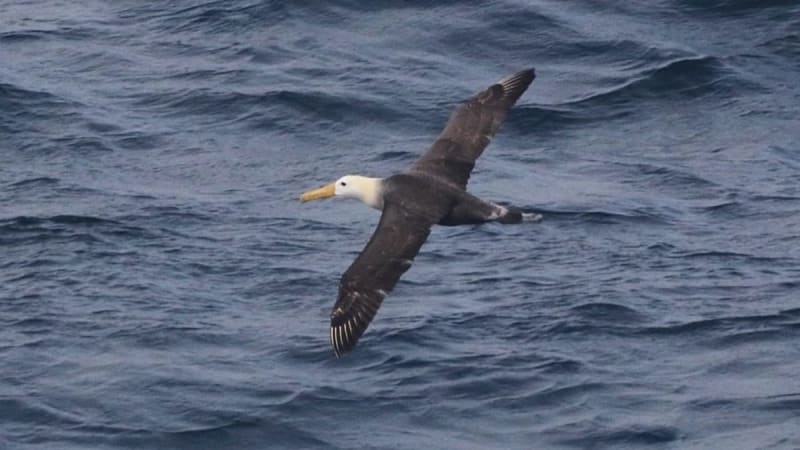
A rare waved albatross has become an unexpected visitor to California waters, traveling an astonishing 3,000 miles from its island home and giving scientists a chance to study a species they rarely see.
Marine ornithologist Tammy Russell spotted the adult bird from a research vessel off the central California coast in late January. The yellow-billed seabird with a wingspan of up to eight feet was gliding over the Pacific roughly 23 miles offshore, between San Francisco and Los Angeles.
"I can't even believe what I saw," Russell posted on Facebook after the sighting. "I'm still in shock."
This marks just the second time anyone has recorded a waved albatross north of Central America. The species normally breeds in the Galapagos Islands and stays within tropical waters, making this journey a remarkable anomaly.
Russell believes the bird may have taken a year off from breeding and decided to explore. Adult waved albatrosses typically lay eggs in spring, and their chicks leave nests by January, giving some birds seasonal freedom to wander.
The same albatross appears to have been spotted off Northern California last October, suggesting it's not in any rush to return home. These long-winged birds can live up to 45 years and spend most of their lives soaring over open ocean, feeding on fish, squid and crustaceans.
The Bright Side
While scientists initially wondered if environmental stress drove the bird north, experts say this might simply be nature's curiosity at work. Marshall Iliff from Cornell University's Lab of Ornithology notes that seabirds regularly travel vast distances searching for food, and occasionally, an adventurous individual roams far beyond its normal range.
"A single bird could also be a fluke accident," Iliff explained. "There is no evidence at this point that this is anything but a fluke."
Russell points out that if multiple waved albatrosses started appearing in California, that would signal environmental changes pushing them northward. But for now, this lone traveler seems to be following its own compass.
The sighting gives researchers valuable baseline data about the species' northern range. These critically endangered birds, the largest in the Galapagos, nest on lava fields and face conservation challenges in their native habitat.
For Russell and her fellow researchers, tracking this unexpected visitor offers a rare window into albatross behavior and migration patterns that scientists rarely get to observe up close.
Sometimes the most important scientific discoveries come from watching a single adventurous bird follow its wandering spirit across thousands of miles of open ocean.
More Images

Based on reporting by Euronews
This story was written by BrightWire based on verified news reports.
Spread the positivity!
Share this good news with someone who needs it