%2Ffile%2Fattachments%2F2989%2F16Snowwhitefirelily_126014.jpg)
Rare Fire Lilies Bloom After Western Cape Wildfire
Endangered flowers unseen for years are bursting from scorched earth in South Africa's Overberg region, offering botanists a rare glimpse of nature's resilience. Among them: a lily found nowhere else on Earth with only 250 plants remaining.
Across the blackened landscapes of South Africa's Overberg region, something extraordinary is happening where devastating wildfires swept through just weeks ago.
Blood-red fire lilies are pushing through bare earth and ash, their scarlet blooms standing vivid against twisted, burnt branches. Some of these rare flowers haven't been seen in four years.
The March 2026 wildfire was the region's largest in two decades, scorching fynbos sanctuaries and farmlands between Gansbaai and Hermanus. The blaze damaged homes and farms, and wildlife couldn't escape the flames.
But fire has been part of this ecosystem for millions of years. These blazes awaken seeds that lie dormant underground, sometimes for decades, waiting for exactly this moment.
"It's breathtaking to see plants bursting out of the ground, some that have been absent for years," said Sean Privett, a botanist and managing director of the Grootbos Foundation. His team recently discovered something remarkable.
The Bredasdorp lily, known scientifically as Cyrtanthus guthrieae, appeared in the ash. This hugely endangered flower grows nowhere else on the planet, with only 250 adult plants left in the wild.
The discovery was so significant that a floral artist traveled to the site with paints and brushes to document the sighting in real time. The Custodians of Rare and Endangered Wildflowers team is now monitoring the area closely.
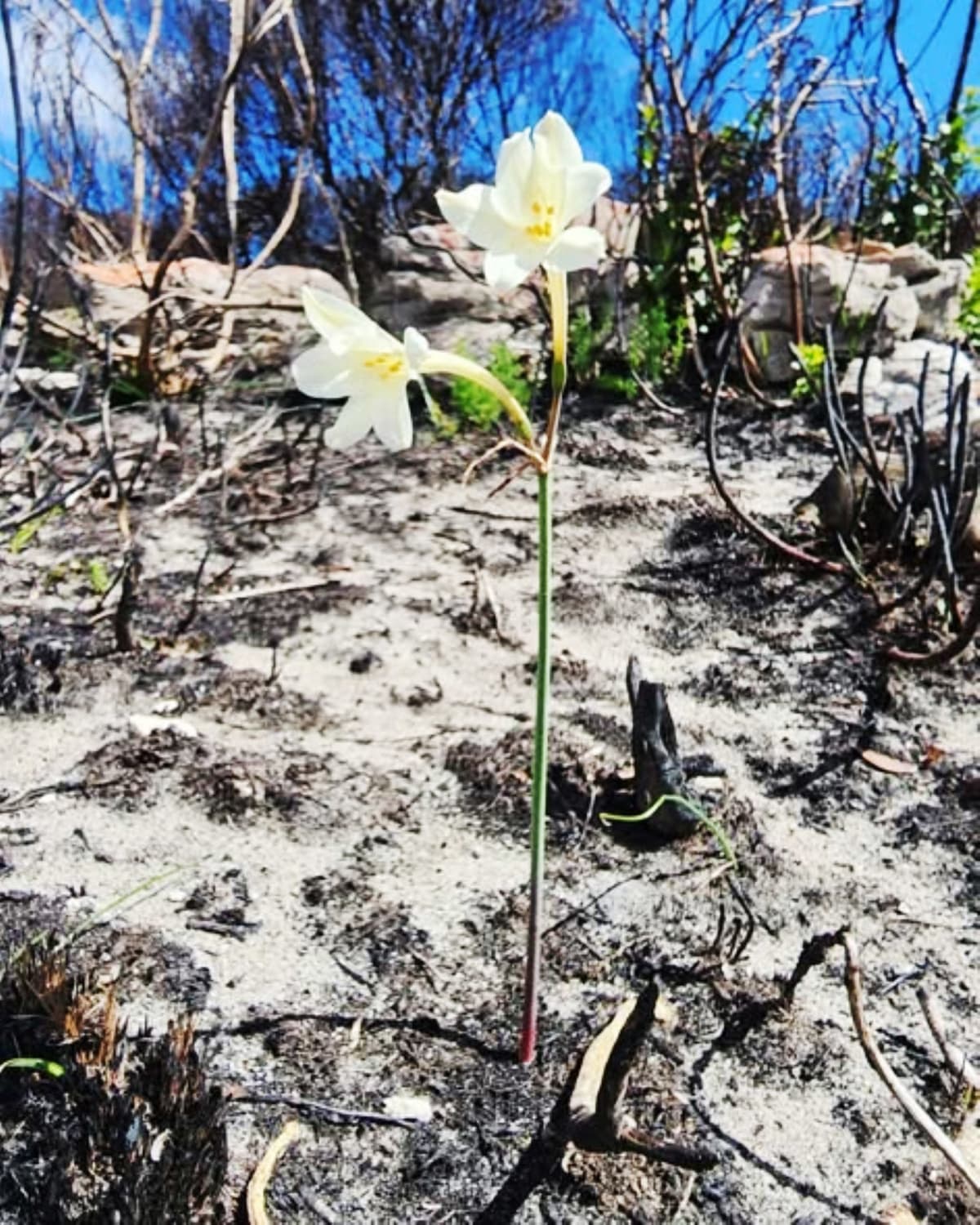
White fire lilies are also emerging along coastal lowlands, their blooms attracting nocturnal moths. Meanwhile, the more common fire lilies provide crucial nectar for sunbirds when the surrounding ground remains parched.
The Bright Side
This natural rescue mission shows how ecosystems adapt and thrive through cycles that might look catastrophic to human eyes. The coming rainy season could trigger an explosion of new growth, potentially revealing species botanists have never documented.
The rare red disa is already taking advantage of the cleared, sunny environment left behind. Without thick vegetation and invasive weeds to compete with, these fire-dependent species finally have their moment in the sun.
Privett's team is now working with neighboring reserves and landowners on managed burns and weed control. The goal is creating a vegetation mosaic that reduces future fire risk while supporting the natural cycle these remarkable plants depend on.
Nature's resilience is written in scarlet across the scorched earth of the Overberg.
More Images
%2Ffile%2Fattachments%2F2989%2F16IMG_0004_818750_237471.jpg)
%2Ffile%2Fattachments%2F2989%2F16RedDisaWikimediaCommons_217770.jpg)
%2Ffile%2Fattachments%2F2989%2F16firesmoke_577736_327151.jpg)
Based on reporting by Daily Maverick
This story was written by BrightWire based on verified news reports.
Spread the positivity!
Share this good news with someone who needs it