Rare Hawksbill Turtle Beare Returns to Ocean After Rescue
A critically endangered hawksbill sea turtle covered in barnacles made a full recovery after three months of care in New South Wales. Beare, named after the beach where he was found, could now live for decades more in the wild.
When veterinarian Carl von Schreiber took his morning walk on Beares Beach near Bermagui last December, he discovered something locals had mistaken for a sandy rock for three days. It was actually Beare, a critically endangered hawksbill sea turtle stranded far from home and covered in barnacles.
Carl and his wife Motria knew the turtle needed specialist care, so they contacted Mudgeroo Wombat & Wildlife Refuge in Jervis Bay. Wildlife carer Belinda Donovan took charge of Beare's recovery, though she wasn't sure at first what caused his condition.
"If they're not doing well, they can't dive, so they're often covered in a heavy load of barnacles," Donovan explained. "Because they're not diving down, these parasites take hold."
For nearly four months, Beare regained his strength on a strict diet of prawns and fish. Donovan said hawksbill turtles are surprisingly feisty compared to other sea turtles, slapping the water when they're hungry and demanding their meals.
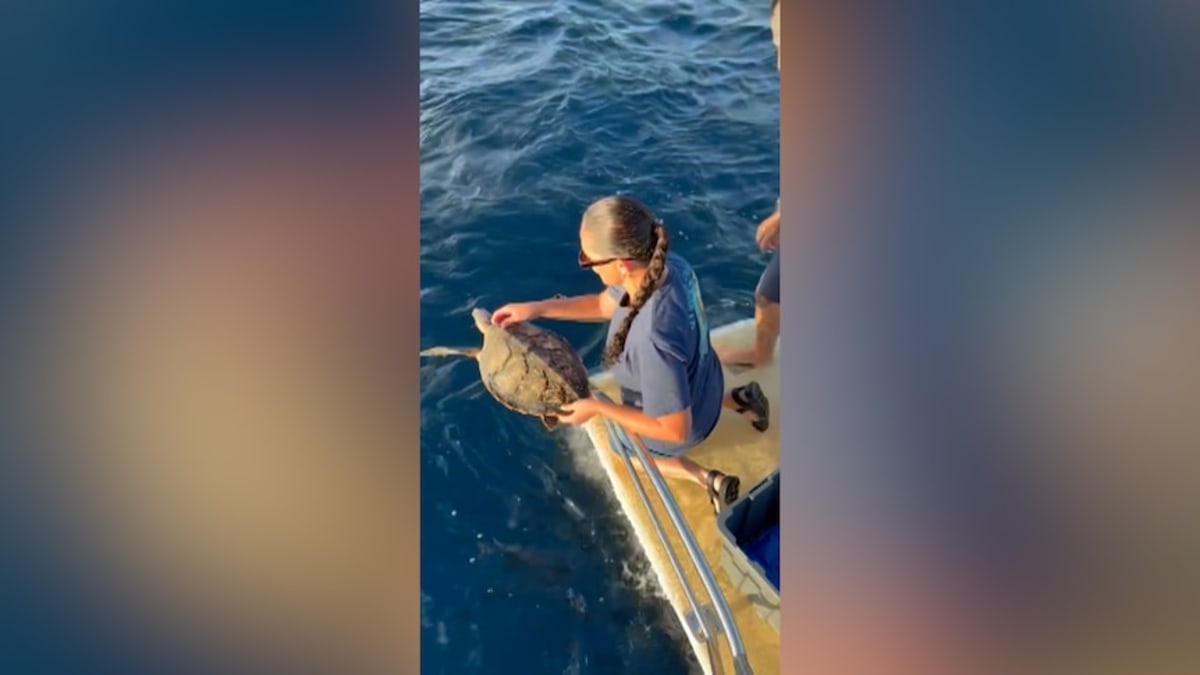
Once Beare passed his final health checks, the Donovans faced one more challenge. Hawksbill turtles belong in tropical waters, not the far south coast of New South Wales. They drove 280 kilometers north to Port Stephens to give Beare the best chance at reaching his native range in Queensland's warmer waters.
The Ripple Effect
Saving a single turtle might seem small, but it matters more than you'd think. Hawksbill sea turtles were once hunted nearly to extinction for their beautiful shells, and they're now critically endangered worldwide.
"Not many of them make it through to become adults," Donovan said. "So all those that we can save helps create more breeding animals down the track."
Hawksbills can live up to 80 years, meaning Beare could have decades ahead to help his species recover. Every rescued turtle that reaches breeding age gives the species a better chance at survival.
With Beare now swimming toward Queensland, one castaway has found his way home.
More Images


Based on reporting by Google News - Wildlife Recovery
This story was written by BrightWire based on verified news reports.
Spread the positivity!
Share this good news with someone who needs it