Rare Risso's Dolphin Found in Netherlands After 50 Years
Scientists confirmed a dolphin that washed ashore in Zeeland is a Risso's dolphin, the first recorded stranding of this species in Dutch waters since 1970. The discovery offers researchers a rare chance to study a deep-water species rarely seen in the North Sea.
A dolphin that washed up on a Dutch beach last week turned out to be a scientific surprise hiding in plain sight.
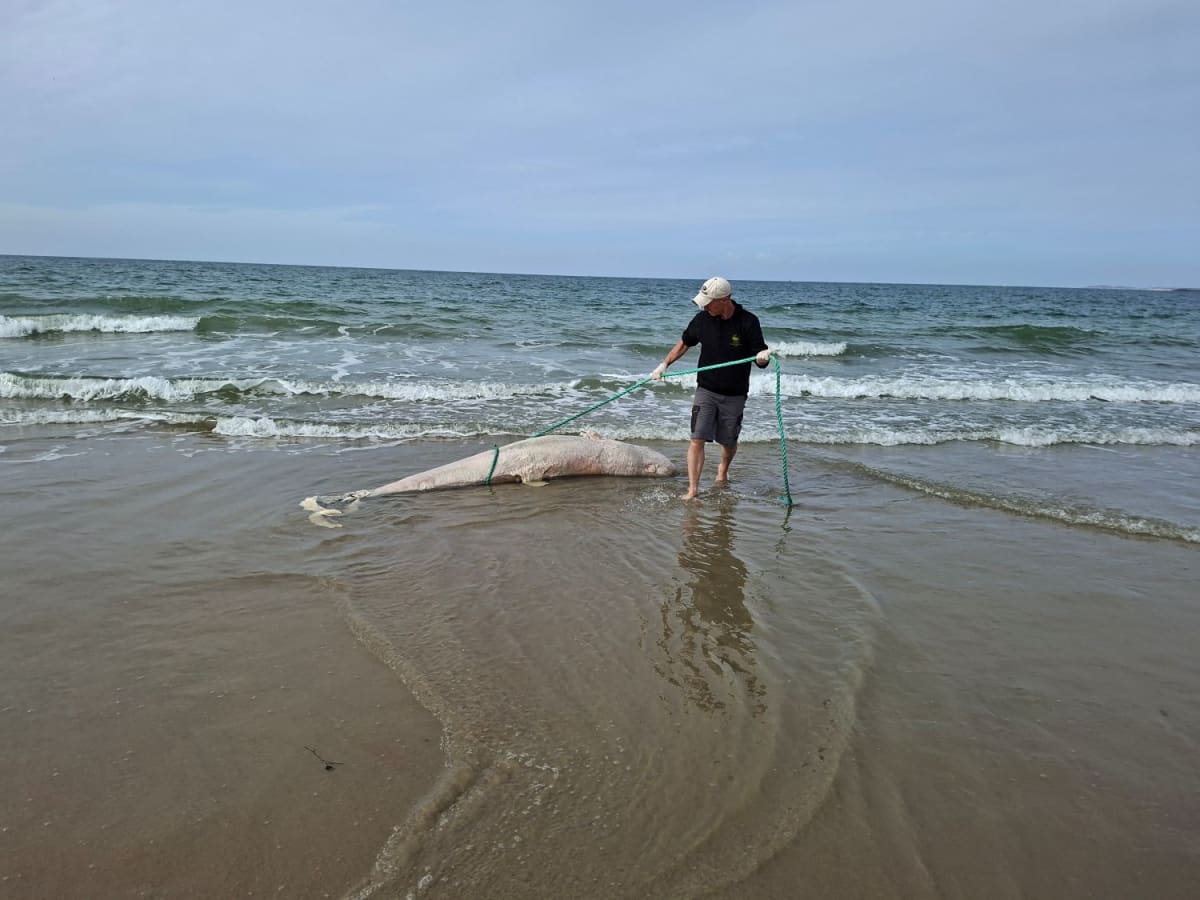
When the body appeared on Kamperland beach in Zeeland on April 10, rescuers thought they'd found a beluga whale that had been spotted swimming off the coast. The carcass was so decomposed it had turned white, and its dorsal fin was no longer visible.
"Given its color and dimensions, we concluded it was a dead beluga," sea mammal specialist Jaap van der Hiele admitted. Even when a photo hinted at a dorsal fin, the white color convinced everyone they knew what they were looking at.
Tests at Utrecht University this week revealed the truth. The animal was actually a Risso's dolphin, a deep-water species normally found near the Azores, thousands of miles away.
Researcher Lonneke IJsseldijk identified the species from its skull. Risso's dolphins have teeth only in their lower jaw, while belugas have them in both jaws.
The last time a Risso's dolphin stranded in the Netherlands was 1970, making this discovery incredibly rare. While little remained of the body to determine cause of death, the skeleton will go to Naturalis natural history museum in Leiden for future study.
Van der Hiele had spent days searching for the carcass using drift models from water experts in both the Netherlands and Belgium. He believes the dolphin died somewhere in the English Channel and currents pushed it into the North Sea, a pattern he's seen with stranded sea turtles.
Why This Inspires
Finding rare species in unexpected places reminds us how much we still have to learn about ocean life. Every stranding, while sad, gives scientists precious data about animals that spend most of their lives in waters too deep for us to study.
This misidentified dolphin shows that even experts can be surprised by what the sea reveals. The skeleton will help researchers understand these mysterious deep-water dolphins for years to come, turning an unfortunate death into knowledge that could help protect living populations.
Sometimes the most important discoveries are the ones we never expected to make.
Based on reporting by Dutch News
This story was written by BrightWire based on verified news reports.
Spread the positivity!
Share this good news with someone who needs it