Rare Turtle Covered in Barnacles Makes Full Recovery
A critically endangered hawksbill sea turtle found stranded on an Australian beach has returned to the ocean after months of expert care. Beare's recovery gives hope for a species that could face extinction without intervention.
When veterinarian Carl von Schreiber spotted what looked like a sandy rock on Beares Beach last December, he discovered something far more precious: a critically endangered hawksbill sea turtle fighting for its life.
The turtle, later named Beare after the beach near Bermagui, had been stranded for three days. His body was covered in barnacles, a sign that he was too weak to dive underwater and escape the parasites that latch onto struggling turtles.
Carl and his wife Motria knew Beare needed specialist help fast. They contacted Mudgeroo Wombat & Wildlife Refuge in Jervis Bay, where wildlife expert Belinda Donovan took charge of the rescue.
Donovan said the cause of Beare's illness remained a mystery, making recovery uncertain. But she built a careful treatment plan centered on a steady diet of prawns and fish.
Hawksbill sea turtles are typically found in tropical coral reefs from Queensland to Western Australia's north coast. Juveniles sometimes drift south during their "lost years," floating in mats of seaweed and debris after hatching.
Once hunted nearly to extinction for their beautiful shells, hawksbills are now critically endangered. Every individual matters for the survival of the species.
Over nearly four months, Beare regained his strength and personality. Donovan learned that hawksbills are surprisingly feisty compared to other sea turtles, slapping the water when annoyed and demanding food at mealtimes.
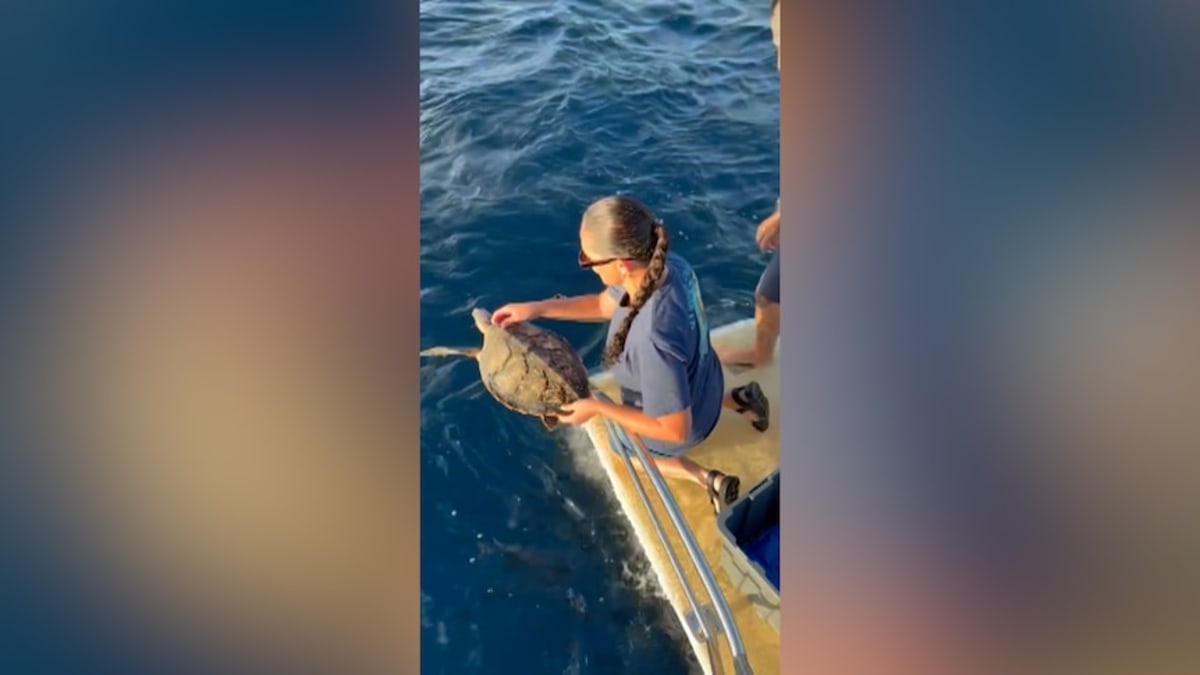
When final health tests came back clear, the Donovans faced one last challenge: getting Beare back to suitable habitat. They drove 280 kilometers north to Port Stephens, then released him into waters where he could swim toward Queensland.
Sunny's Take
Saving one turtle might seem small, but for a critically endangered species, every life counts. Hawksbills can live up to 80 years, meaning Beare could have decades ahead to contribute to his species' survival. His rescue shows what's possible when everyday people spot trouble and experts step in with patience and care. The combination of a vigilant beachgoer, dedicated vets, and skilled wildlife rehabilitators gave this ancient mariner a second chance at life.
With the right help, even a turtle mistaken for a rock can return to the waves.
More Images


Based on reporting by ABC Australia
This story was written by BrightWire based on verified news reports.
Spread the positivity!
Share this good news with someone who needs it