Renewables Meet 99% of Global Power Demand Growth in 2025
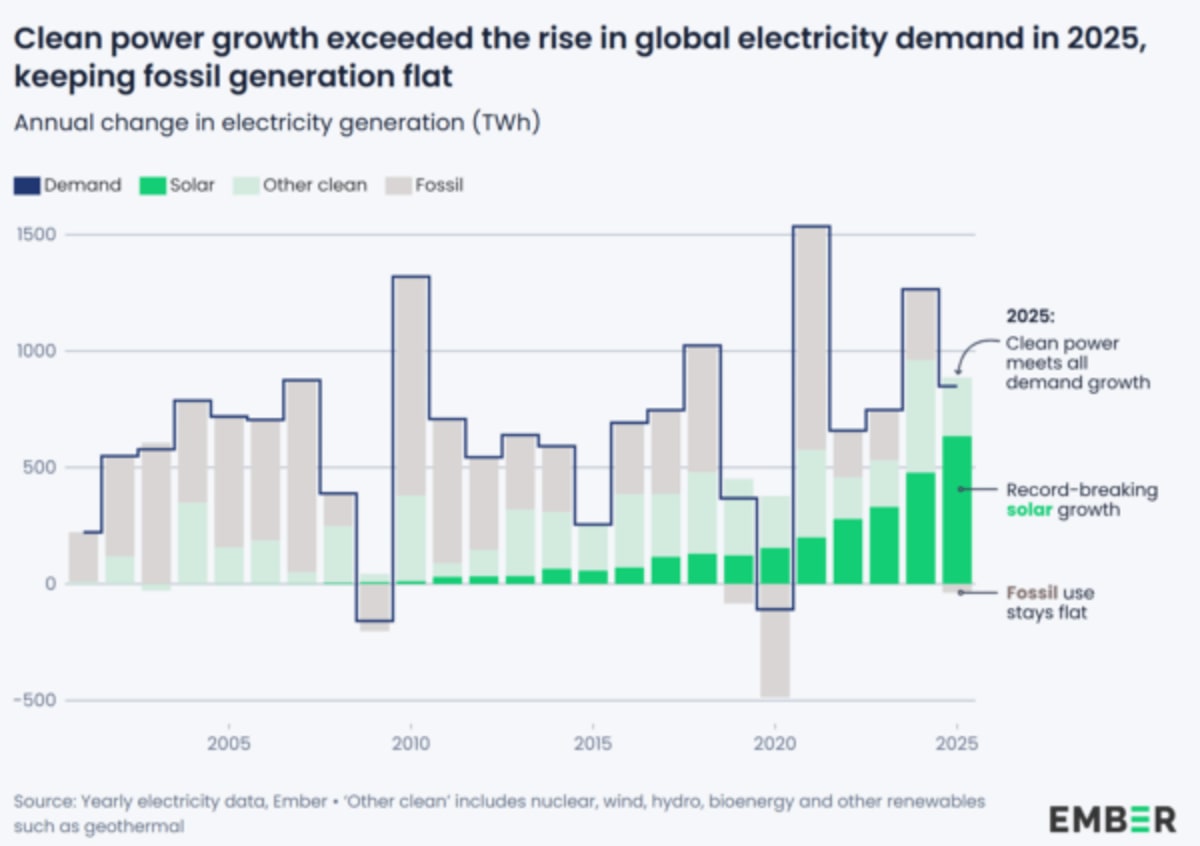
For the first time since 2020, fossil fuel electricity generation didn't increase anywhere in the world. Solar, wind, and other clean energy sources grew fast enough to power nearly all new demand in 2025.
The world just hit a turning point in the fight against climate change, and it happened so fast that even energy experts are celebrating.
Renewable energy sources met 99% of all new electricity demand in 2025, according to Ember's Global Electricity Review 2026. That means solar panels, wind turbines, and hydropower dams generated almost every watt of new power the world needed last year.
Even more impressive? Global fossil fuel electricity generation didn't rise at all. It's only the fifth time this century that's happened, and the first time since 2020.
The biggest surprise came from China and India, two countries that have historically relied heavily on coal and gas. Both nations actually reduced their fossil fuel generation in 2025 because their clean energy installations grew faster than their electricity needs.
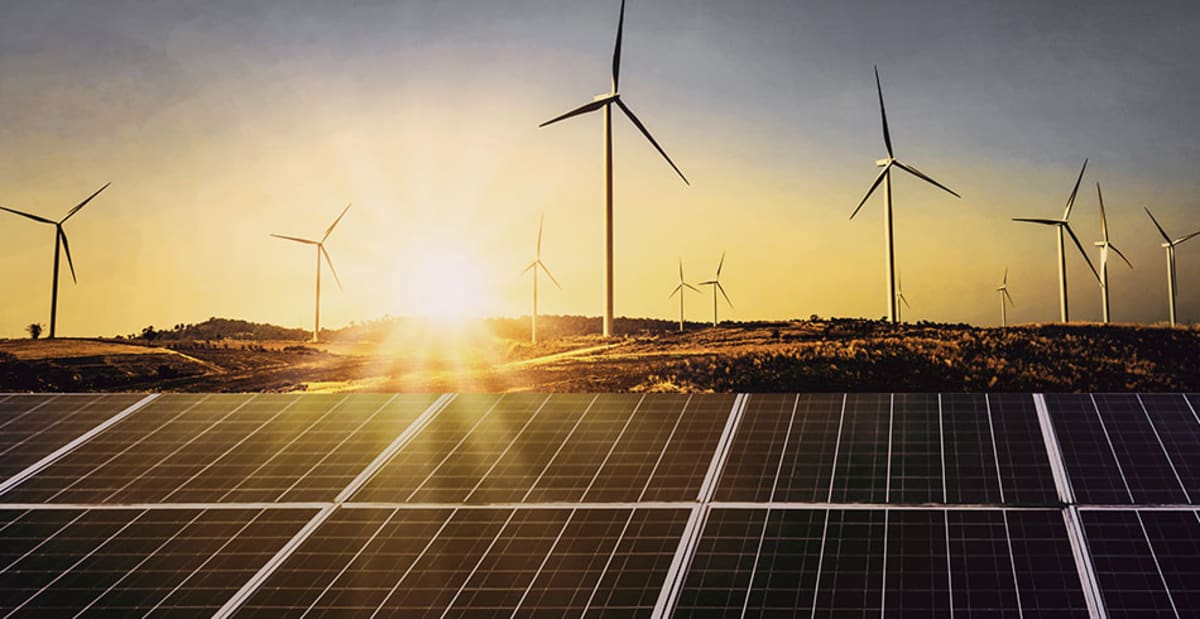
Solar power led the charge, meeting three-quarters of new global electricity demand. The world now generates as much solar power as the entire European Union uses in total electricity.
China installed more than half of all new solar capacity worldwide, pushing its combined solar and wind share to 22% of total generation. That's now higher than the average across developed OECD countries.
India doubled its previous renewable energy record and installed more new solar capacity than the United States for the first time ever.
The world crossed another historic threshold in 2025. Renewable sources including solar, wind, and hydropower now provide more than a third of global electricity. Coal dropped below a third for the first time in modern history.
The Ripple Effect
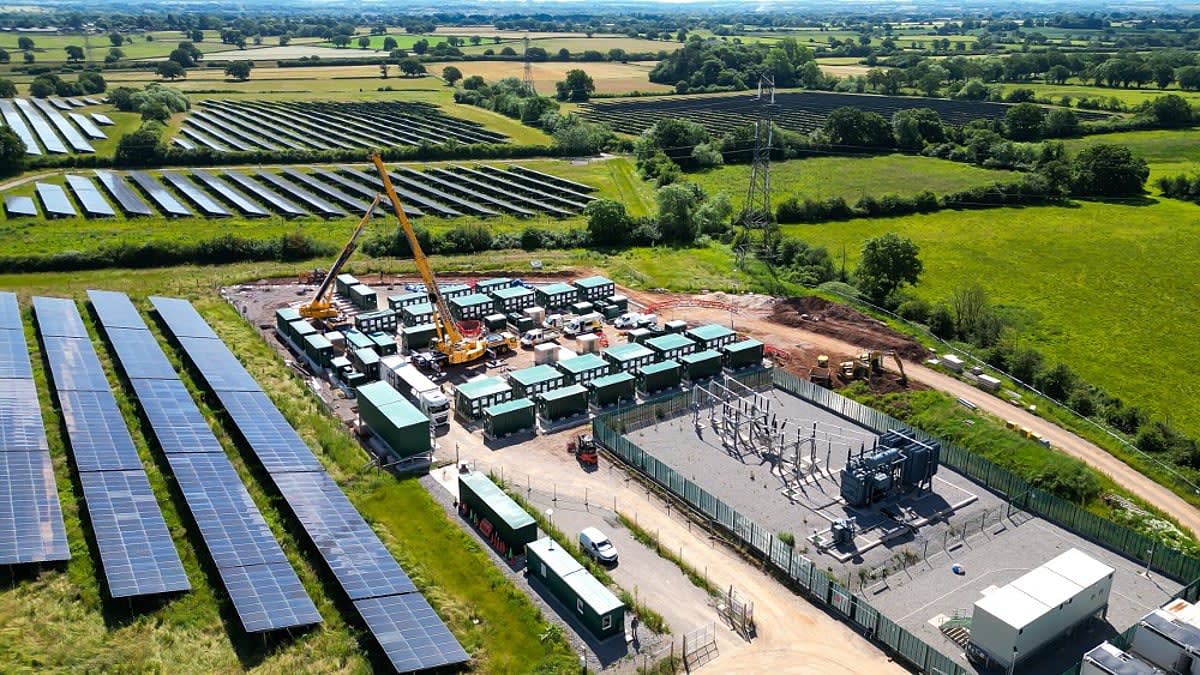
Battery storage is unlocking solar's full potential. Costs dropped 45% in 2025 after falling 20% the year before, making it affordable to save sunshine for nighttime use.
The world installed enough battery capacity to shift 14% of new solar generation from midday to evening hours when people actually need it most. Australia led the way, installing enough storage to move half of its new solar power to different times of day. Power prices dropped and grid reliability improved.
Battery deployment grew 46% to reach 250 gigawatt-hours in 2025. As one energy analyst put it, we're moving from "daytime solar to anytime solar."
The momentum keeps building as costs fall and countries realize clean energy can actually power economic growth without fossil fuels.
More Images


Based on reporting by Google: renewable energy record
This story was written by BrightWire based on verified news reports.
Spread the positivity!
Share this good news with someone who needs it