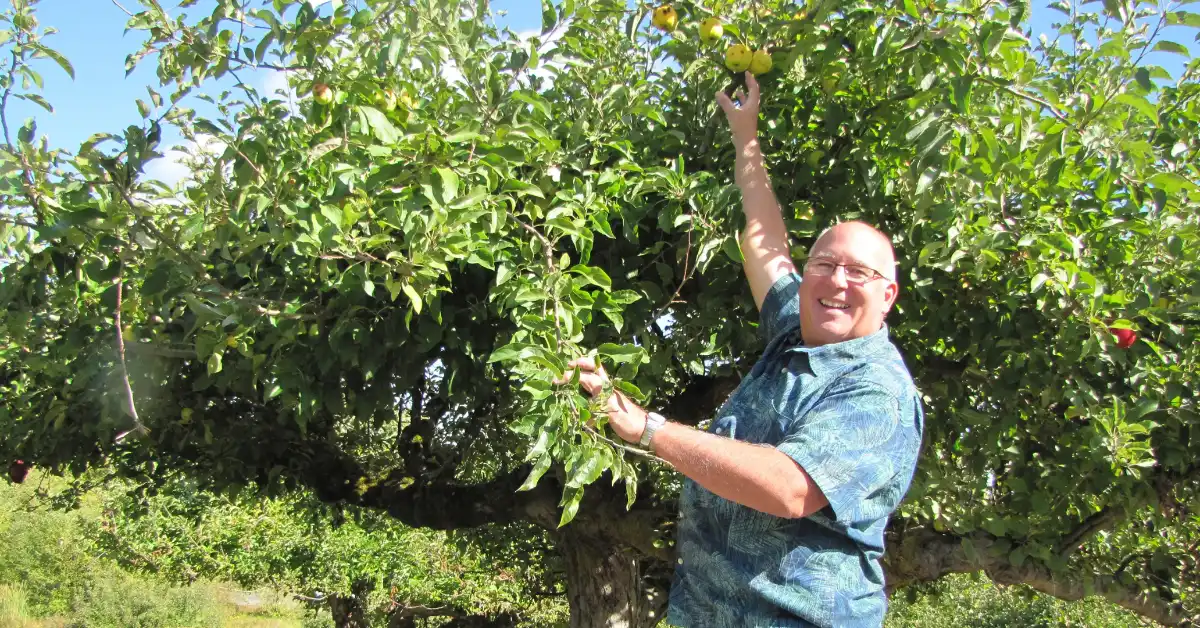
Retired FBI Agent Rescues 30 Extinct Apple Varieties
A former FBI agent turned his retirement into a mission to save century-old apple trees from disappearing forever. His Lost Apple Project has already rescued 30 rare varieties that were thought to be gone.
Dave Benscoter was pruning apple trees for a friend in 2012 when he spotted something extraordinary. The trees looked completely different from any modern variety he'd seen before.
When he asked about them, his friend identified two rare types: Yellow Transparent and Wealthy. The Wealthy apple was notable as the first apple ever bred in the United States. But she couldn't name the rest of the trees in her orchard.
That mystery launched Benscoter down a rabbit hole that would define his retirement. The former FBI agent became obsessed with tracking down "lost apples" in the Pacific Northwest.
He spent hours digging through nature studies, old family recipes, and century-old county fair newspapers. Any mention of a forgotten apple variety became a new lead to chase. Then he partnered with Joanie Cooper and Sean Shepherd, two experts who specialize in apple DNA identification.
Their first year of searching yielded one rediscovered variety: the Fall Jenneting. By 2024, they had found 30 once-lost apple types.
Benscoter and his friend E.J. Brandt formalized their work into the Lost Apple Project in 2012. They focus on finding historic apple trees planted before 1920 across eastern Washington, western Idaho, and northern Oregon. The duo collects apple specimens each fall for DNA testing, then returns in winter to graft branches and preserve the genetics.
The trees they've found bear wonderfully curious names like Streaked Pippin, Sary Sinap, and Nero. Each rediscovery represents a genetic treasure that commercial agriculture had abandoned.
One of Benscoter's favorite memories involves a farmer in Arkansas who had spent his entire career hoping to taste a Kittageskee apple. The variety had vanished from Arkansas decades earlier. The farmer's one retirement regret was never finding it.
Two years later, the Lost Apple Project discovered Kittageskee trees in southern Idaho. Members shipped the apples to the Arkansas farmer so he could finally taste the variety he'd dreamed about his whole life.
Why This Inspires
Benscoter's work proves that retirement doesn't mean the end of making a difference. His detective skills from the FBI translated perfectly into tracking down agricultural history that might have been lost forever. These aren't just trees—they're living links to the past, each with unique flavors and characteristics that modern breeding may have eliminated.
The Lost Apple Project shows how one person's curiosity can preserve biodiversity for future generations.
More Images


Based on reporting by Good Good Good
This story was written by BrightWire based on verified news reports.
Turn Today’s Good News Into Action
Generate a simple, meaningful 2-minute act of kindness you can do today and log your ripple effect.
Spread the positivity!
Share this good news with someone who needs it