Retired Officer Cuts Rice Water Use By 75% in Punjab
A former government official in India has developed a farming technique that grows rice using just 25% of the water normally required. His innovation could help save Punjab's rapidly disappearing groundwater while maintaining crop yields.
Punjab, India's breadbasket, is running out of water, but a retired civil servant just figured out how to grow rice with a fraction of what farmers currently use.
Kahan Singh Pannu spent his career watching Punjab's groundwater levels drop dangerously low. The state extracts more groundwater than anywhere else in India, with 97% going to irrigation, mostly for rice paddies that weren't even native to the region.
The numbers tell a frightening story. Government data predicts Punjab's groundwater could sink below 1,000 feet by 2039 if current farming practices continue.
After retiring in 2020 as Punjab's Secretary of Agriculture, Pannu didn't write reports or give speeches. He became a farmer and invented a better way.
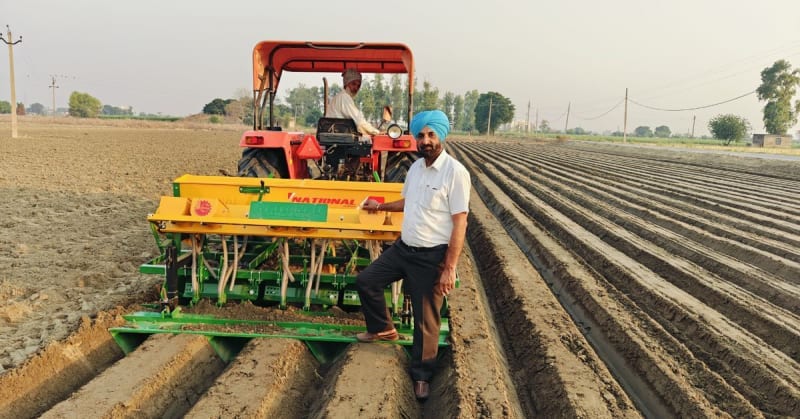
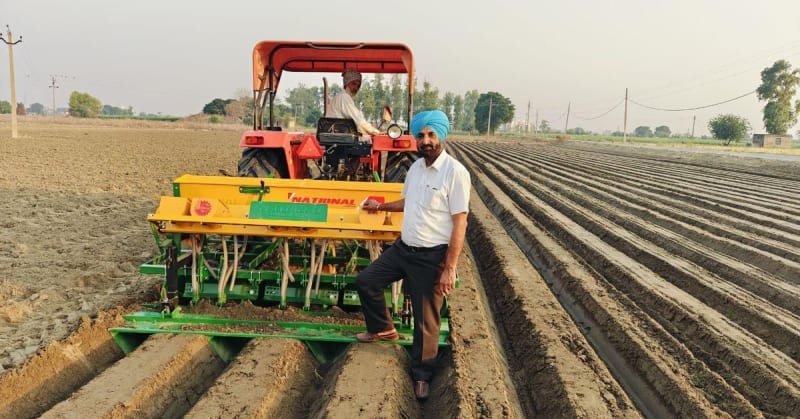
His technique, called Seeding of Rice on Beds, plants rice seeds on raised beds with furrows between them. Instead of flooding entire fields with standing water like traditional methods require, farmers only fill the furrows when plants need water.
Traditional rice farming uses about 4,000 liters of water to produce one kilogram of rice. Pannu's method cuts that to just 1,000 liters.
The innovation required solving a key problem. Farmers flood fields not just to water crops, but to kill weeds that compete with rice for nutrients. Pannu partnered with the Indian Agricultural Research Institute to use herbicide-tolerant seeds that let rice thrive while controlling weeds without flooding.
Pannu worked with local equipment makers to design a machine that prepares the beds and plants seeds simultaneously. The device saves labor and improves planting accuracy in one pass through the field.
Last season, 12 farms across Punjab tested the method. Pannu's own harvest proved the concept works, yielding 28 quintals per acre, matching traditional methods while using 75% less water.
Jaswinder Singh, a farmer in Hoshiarpur district, adopted the technique and saw the savings firsthand. The method not only conserves water but reduces costs for fuel and labor.
The Ripple Effect
Punjab produces rice for millions of people across India. If this water-saving method spreads across the state's rice-growing regions, it could preserve groundwater for generations while keeping farmers profitable.
The technique proves that farming communities don't have to choose between their livelihoods and their future. Sometimes the best solutions come from people who understand both the problem and the land deeply enough to bridge the gap.
More Images
%2Fenglish-betterindia%2Fmedia%2Fpost_attachments%2Fuploads%2F2025%2F01%2Fias-paddy-farming-less-water-1738222398.jpg)

%2Fenglish-betterindia%2Fmedia%2Fpost_attachments%2Fuploads%2F2025%2F01%2Fias-paddy-farming-less-water-2-1738222581.jpg)
Based on reporting by The Better India
This story was written by BrightWire based on verified news reports.
Spread the positivity!
Share this good news with someone who needs it