Rice Grains Power Next-Gen Soft Robots
Scientists turned ordinary rice into a smart material that automatically changes stiffness based on impact speed. This breakthrough could revolutionize soft robotics and create protective gear that adapts instantly without electronics.
Rice grains could soon power robots that work safely alongside humans and protective equipment that thinks for itself.
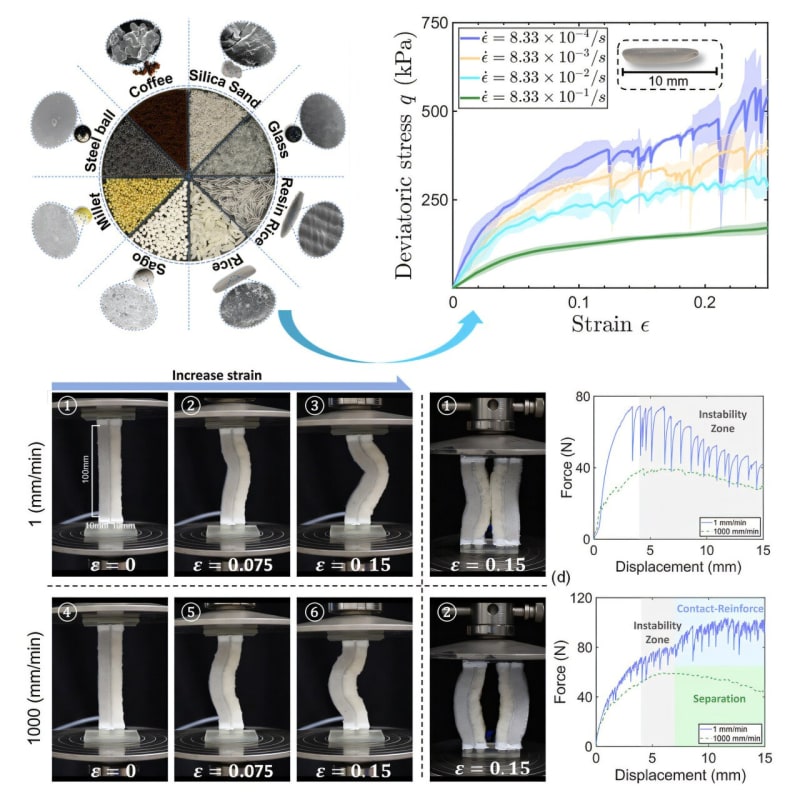
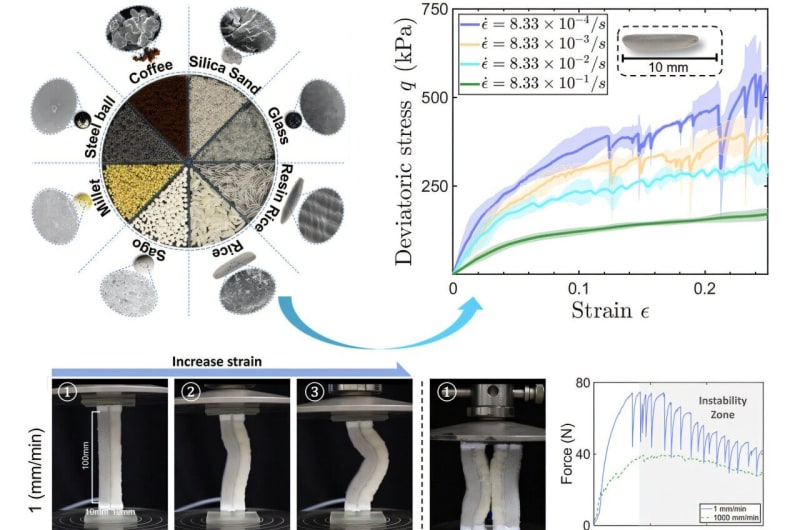
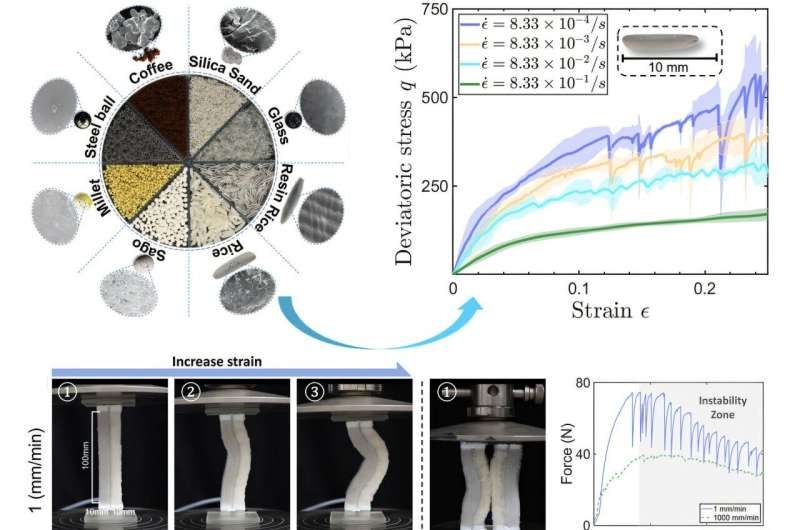
Researchers at the University of Birmingham discovered something remarkable about rice: it gets weaker under fast pressure but stays strong when compressed slowly. Instead of dismissing this quirk, they turned it into a breakthrough.
The team created a new metamaterial by combining rice with materials like sand. The result is a substance that changes how it bends, buckles, or stiffens depending on whether force hits it quickly or slowly. No batteries, sensors, or computer chips required.
"Rice might be best known as a staple food globally, but it's rarely associated with advanced engineering," said Dr. Mingchao Liu, who led the research. The secret lies in how friction between rice grains drops sharply at high speeds, weakening the internal networks that normally hold the load.
The innovation works by letting physics make the decisions. Fast impacts trigger one response, while slow movements create another, all through the material's natural properties.
The Ripple Effect
This discovery opens doors for soft robots that could transform how machines work in our world. Unlike traditional metal robots, these softer machines would be lighter, safer, and flexible enough to assist with delicate surgery or explore dangerous environments where humans can't go.
The material could also revolutionize safety equipment. Imagine protective gear that instantly hardens during sudden impacts to shield you from injury, then softens again for comfort during normal movement. All of this happens automatically, without any power source or computer control.
The research, published in the journal Matter, demonstrates how everyday materials can become intelligent systems through clever engineering. By understanding how granular matter like rice behaves under different conditions, scientists can design materials that respond appropriately to their environment.
Beyond robots and safety gear, this approach represents a new way of thinking about material design. Instead of adding complex electronics to make something "smart," researchers are discovering the hidden intelligence already present in simple materials around us.
This rice-based breakthrough proves that tomorrow's most advanced technologies might come from the most unexpected places.
More Images


Based on reporting by Phys.org - Technology
This story was written by BrightWire based on verified news reports.
Spread the positivity!
Share this good news with someone who needs it