Robot Dogs Now Haul Fresh Produce From Mountain Farms
Quadruped robots are solving one of farming's toughest challenges: getting fresh crops from remote fields to market. Chinese robotics company DEEP Robotics is using their Lynx M20 robot dogs to navigate steep mountain terrain that traditional farm equipment can't reach.
Farmers working steep mountain fields just got an unexpected helper that never gets tired and doesn't complain about the climb.
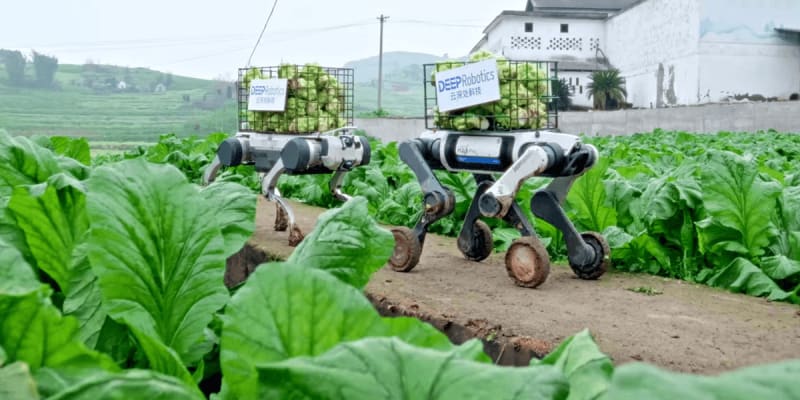
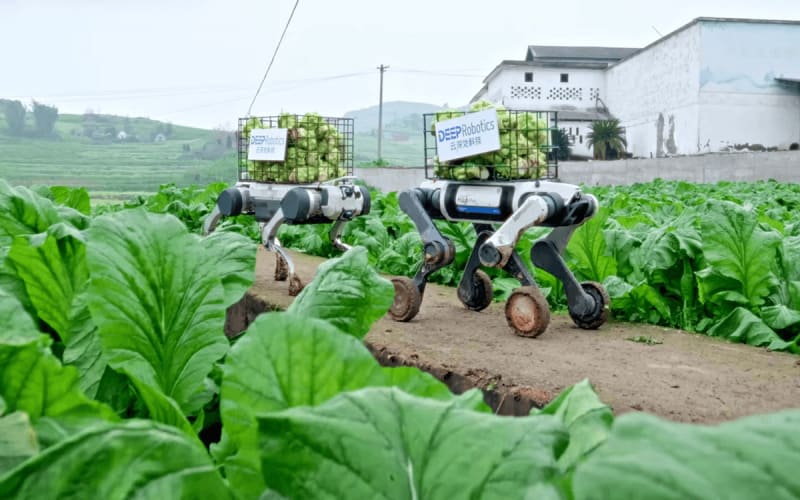
DEEP Robotics has deployed their Lynx M20 quadruped robots to transport freshly harvested greens from mountainous farmland in China. These four-legged machines are tackling what agricultural experts call the rural "last mile" problem, where getting crops from field to road remains one of farming's most labor-intensive challenges.
The robot dogs navigate uneven terrain that would stop wheeled vehicles in their tracks. They carry loads of fresh produce across slopes and paths too steep or narrow for traditional farm equipment, turning what used to take hours of backbreaking human labor into an automated process.
Mountain farming has always been physically demanding work. Farmers often carry heavy loads on their backs or use pack animals to move crops from remote fields to collection points. The terrain makes it nearly impossible to use tractors or trucks, forcing families to rely on manual labor that's becoming harder to find as younger generations move to cities.
These robots offer a practical solution that keeps mountain farms viable. The Lynx M20 units work alongside human farmers, following preset paths or responding to remote commands as they shuttle back and forth between fields and collection areas.
The Ripple Effect
This technology could transform how we think about agricultural accessibility. Mountains and hills cover about 24% of Earth's land surface, and many of these areas support small family farms that struggle with the physical demands of harvest season.
Robot assistants mean older farmers can keep working their land longer. They also make mountain farming more attractive to younger people who might return to family farms if the work becomes less physically punishing.
The same technology being tested in Chinese mountain fields could eventually help farmers worldwide who work challenging terrain. From Appalachian hillsides to Andean slopes, steep farmland produces unique crops that depend on elevation and climate, but harvesting them has always required exceptional physical endurance.
As these robots become more affordable and capable, they're not replacing farmers but extending their abilities. One farmer with robot helpers can manage more land and harvest more efficiently, potentially increasing income while reducing injury risk.
The future of farming might look less like massive industrial operations and more like human-robot partnerships that make small-scale agriculture sustainable again.
More Images
Based on reporting by IEEE Spectrum
This story was written by BrightWire based on verified news reports.
Spread the positivity!
Share this good news with someone who needs it