Robot Firefighters Scout Burning Buildings in South Korea
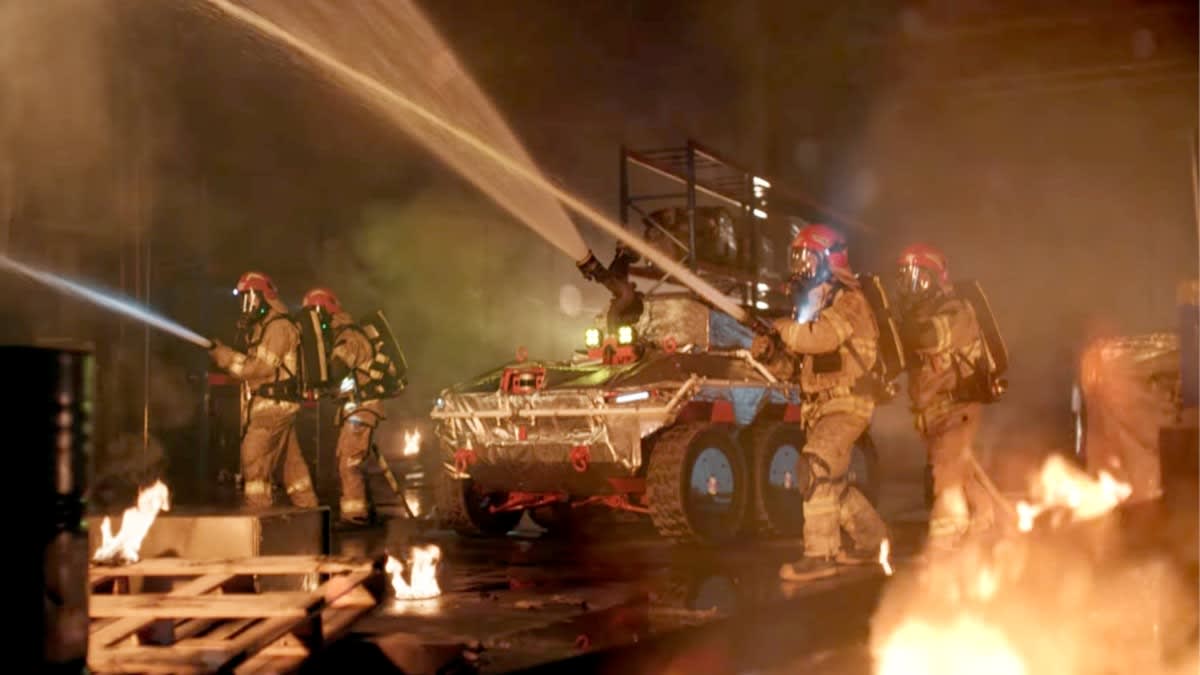
South Korea's fire departments now send robots into burning buildings first, giving crews a safer way to assess danger before risking lives. The machines can withstand temperatures up to 1,500 degrees while sending back real-time video.
Firefighters often walk into burning buildings blind, not knowing what dangers wait behind the smoke. Now, a rugged robot rolls in first and sends back the information that could save lives.
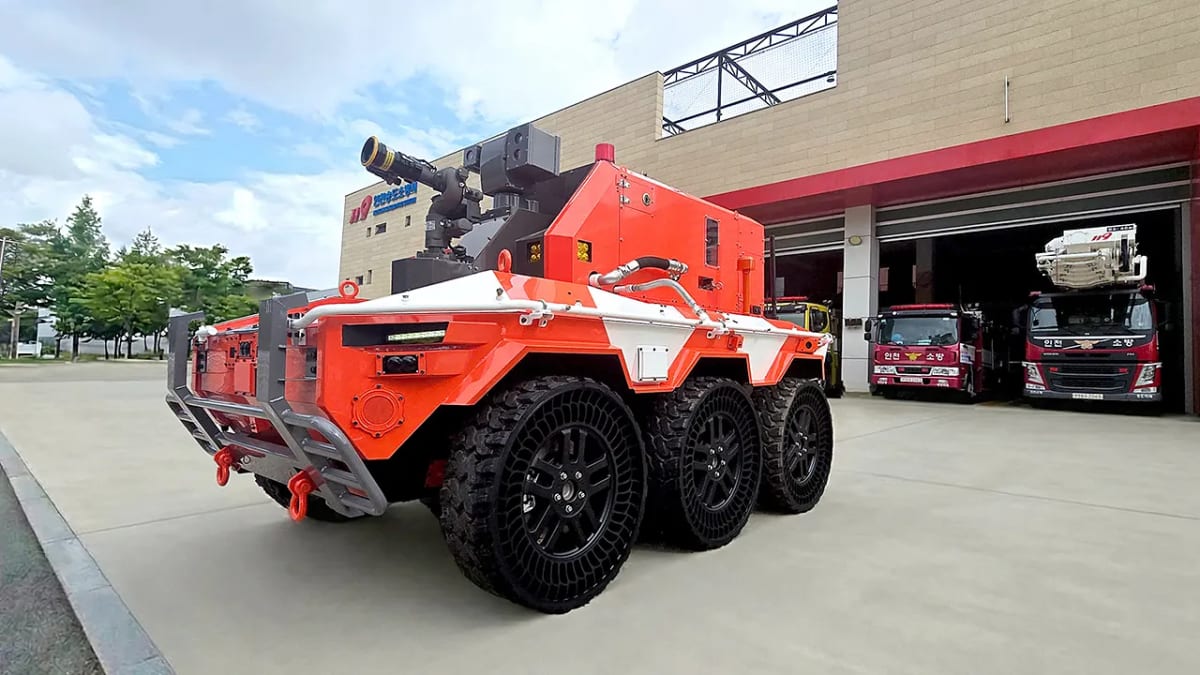
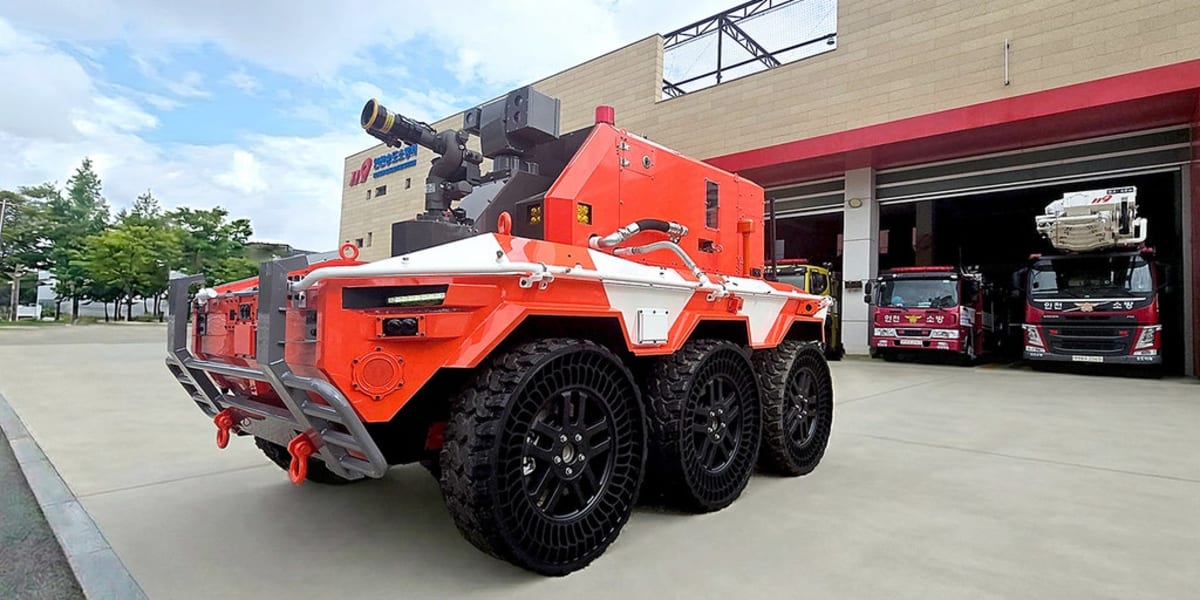
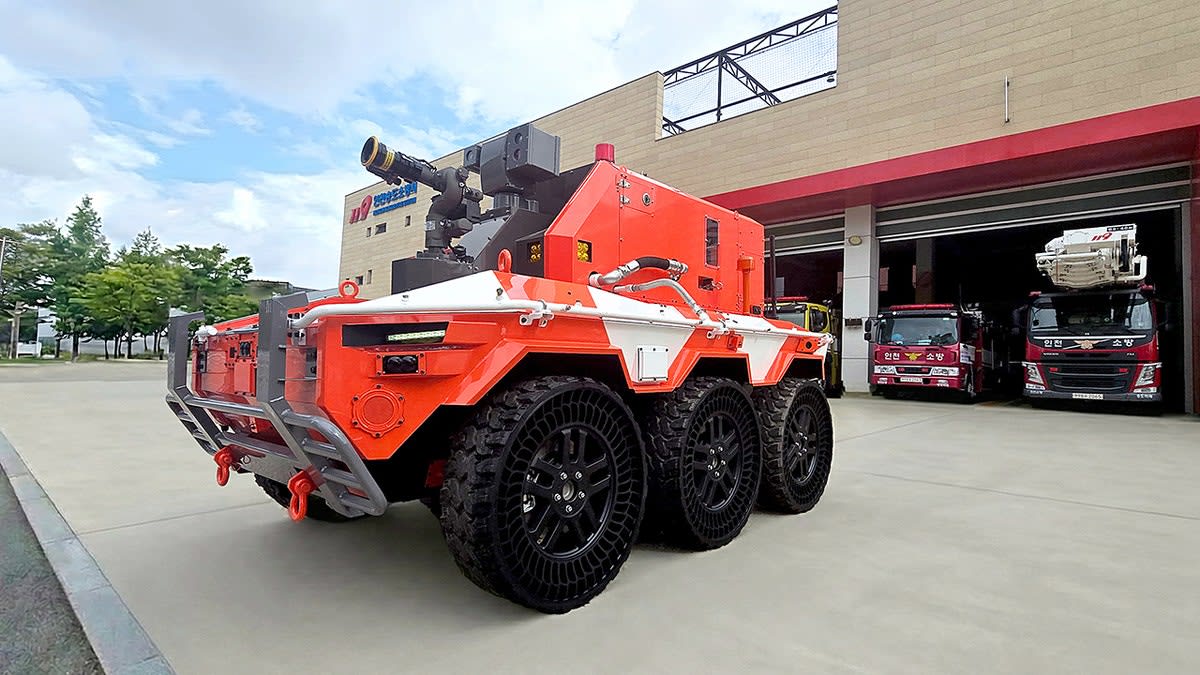
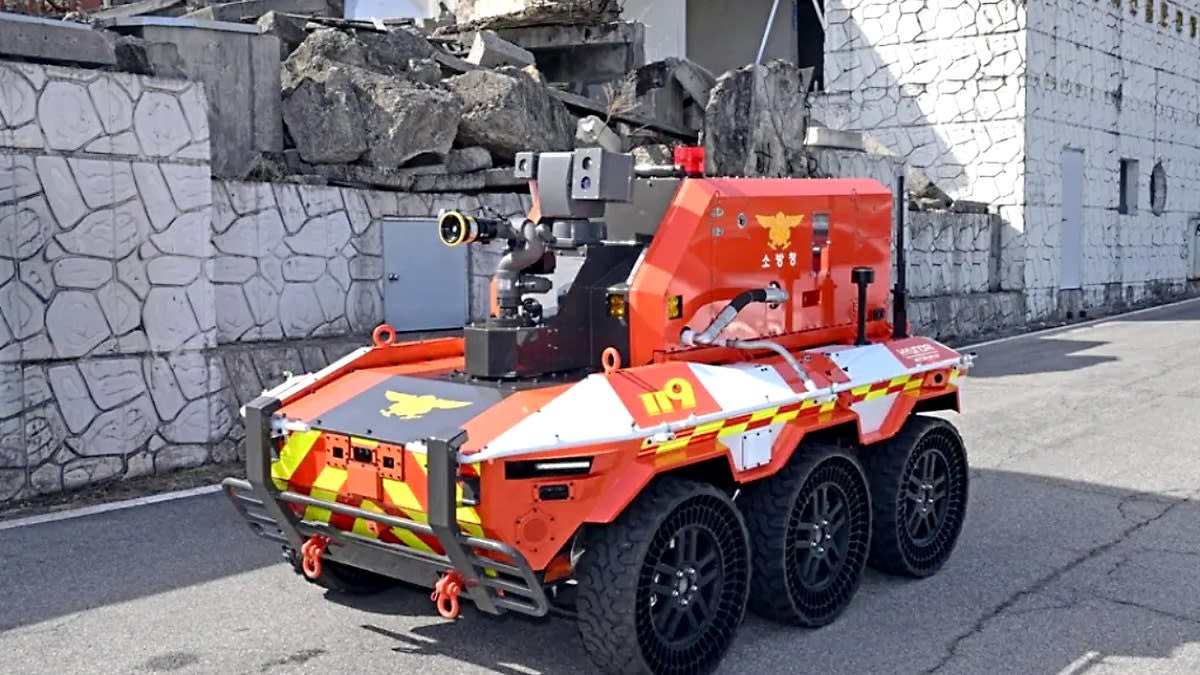
Hyundai Motor Group partnered with South Korea's National Fire Agency to develop a robotic firefighter that enters blazing structures before human crews. The six-wheeled vehicle carries thermal cameras that see through thick smoke, a powerful water cannon, and a self-cooling system that protects it in temperatures reaching nearly 1,500 degrees Fahrenheit.
The robot already proved itself during a factory fire in North Chungcheong Province. Two units have been delivered to South Korean fire stations, with more on the way.
Each of the robot's six wheels has its own motor, allowing it to rotate in tight spaces and climb over foot-tall obstacles. It can navigate steep ramps in parking garages and send live video back to crews waiting outside. That real-time view shows where flames are spreading and where survivors might be trapped.
One feature tackles a simple but critical problem. The robot carries a glowing hose that creates a visible path through smoke. When visibility drops to zero, firefighters use hoses to find their way out. A hose that glows could be the difference between getting out safely and getting lost.
The Ripple Effect
This technology represents something bigger than one robot. Over the past decade, 1,788 firefighters in South Korea have been injured or killed at fire scenes. Machines that handle the most dangerous early moments could help bring that number down.
The shift is already happening globally. Autonomous trucks work in remote mines. Robots clear landmines in former war zones. Some robotic dogs now carry water cannons to assist fire crews. As these systems get smarter, artificial intelligence may soon analyze fire patterns and heat levels to guide firefighting strategy.
U.S. fire departments already use drones and thermal cameras in certain rescues. A robot that scouts burning buildings before anyone enters could become standard equipment. For firefighters, it means better information and fewer blind entries into danger. For communities, it means faster rescues and crews who come home safe.
Technology is taking the first step into the flames so humans don't have to.
More Images
Based on reporting by Fox News Tech
This story was written by BrightWire based on verified news reports.
Spread the positivity!
Share this good news with someone who needs it