Robot Hand Picks Up Potato Chips Without Breaking Them
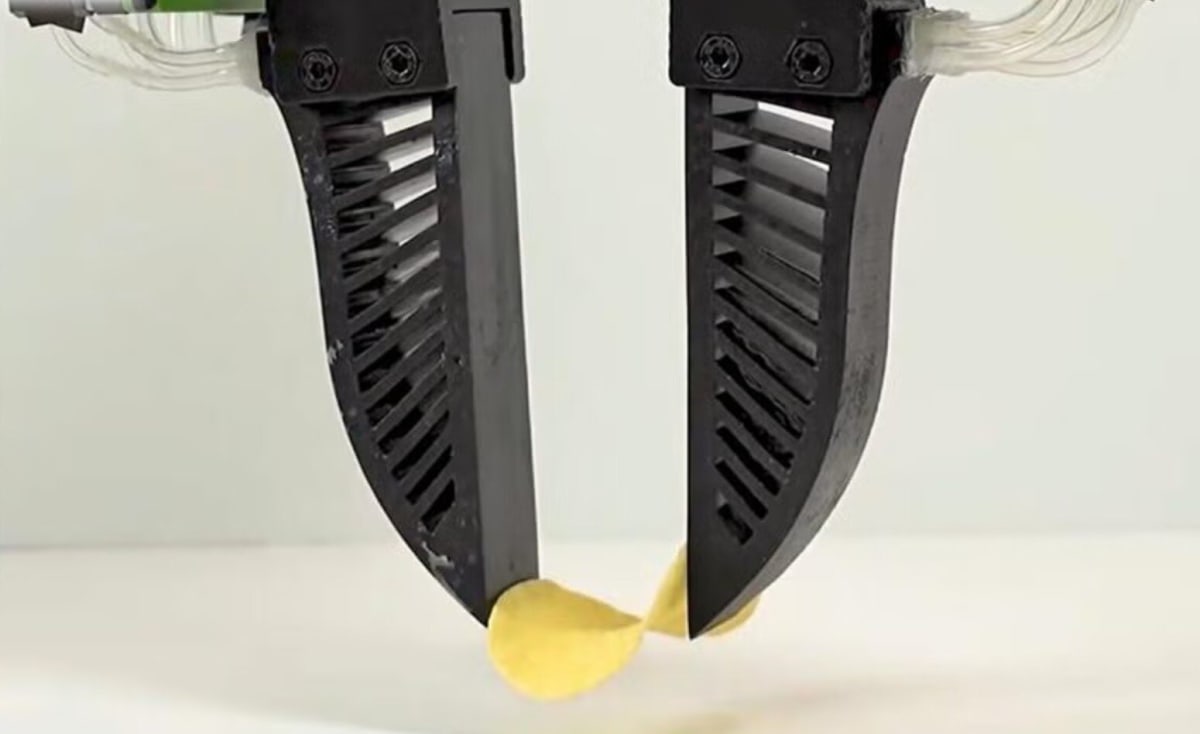
Scientists created robotic fingers so gentle they can grip a raspberry or potato chip without crushing it. The breakthrough could transform everything from grocery handling to surgery.
📺 Watch the full story above
Imagine a robot that can unpack your groceries without squishing the raspberries or cracking a single chip. Scientists at the University of Texas at Austin just made that possible.
The team developed robotic fingers with a sense of touch so precise they can handle objects as fragile as a potato chip. Called FORTE (Fragile Object Grasping with Tactile Sensing), the technology combines soft robotics with sensors that detect even the slightest slip.
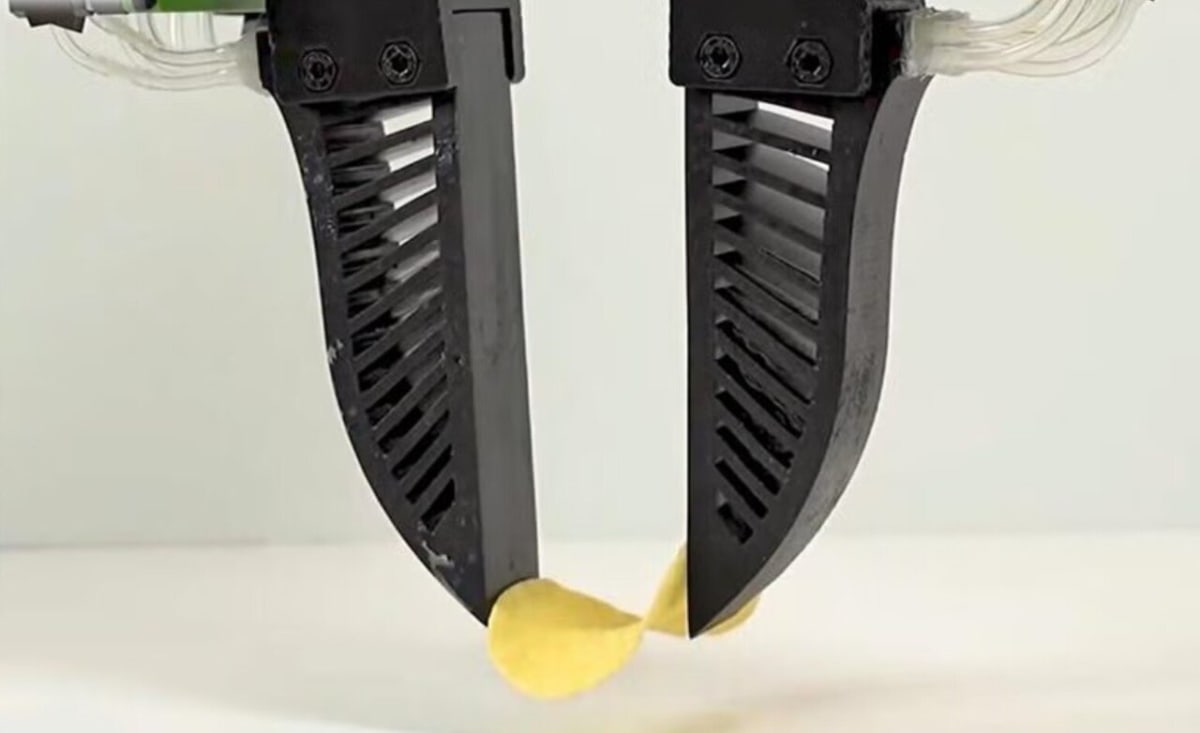
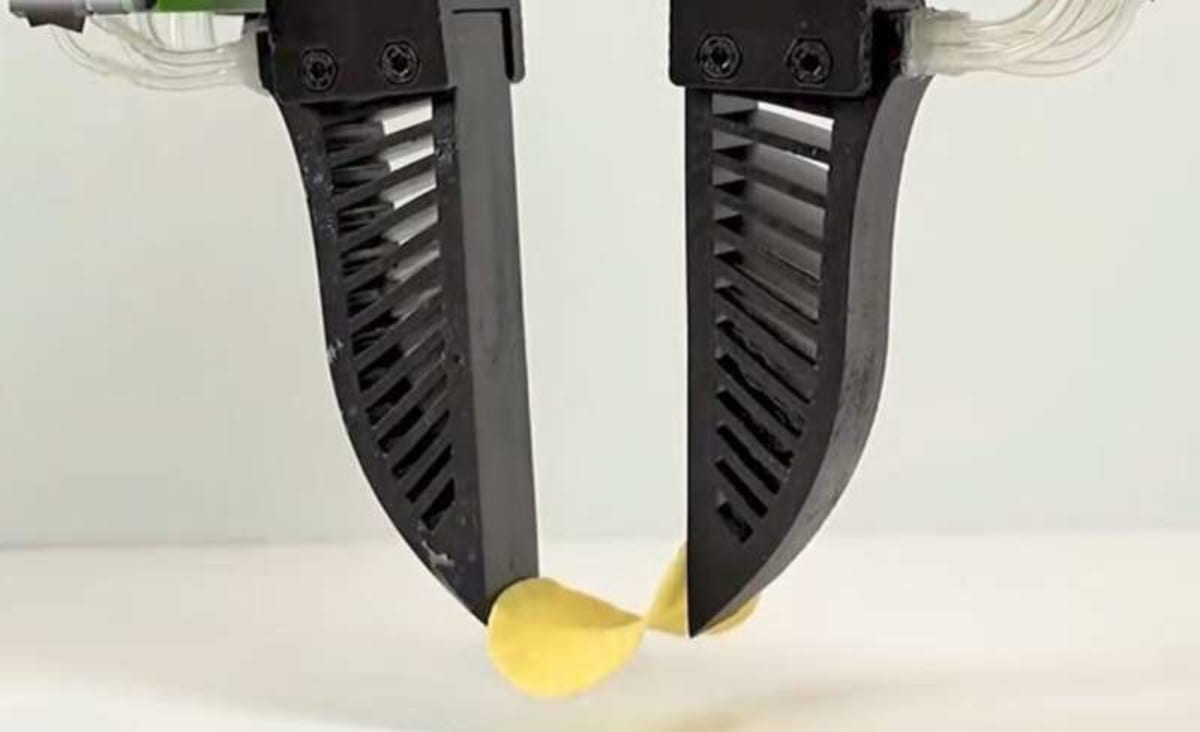
The secret lies in the finger design, inspired by fish fins. Researchers used 3D printing to create fingers with tiny air channels inside that act like sensors. When the fingers grasp something, air pressure shifts, telling the robot exactly how much force to use.
"Humans pick up objects with just the right amount of force," said Professor Lillian Chin. "Too much and you'll crush it, but too little and it'll slip out of your hand."
The team tested their creation on 31 different objects, from slippery billiard balls to delicate raspberries. The system succeeded 92% of the time and detected slips with 100% accuracy. It never mistakenly thought something was slipping when it wasn't, meaning it adjusts its grip only when truly needed.
What sets FORTE apart is speed. Most current force sensors can't react fast enough to mimic human reflexes. These new sensors operate at nearly the same timescale as human hand sensors, making split-second adjustments before damage happens.
Lead researcher Siqi Shang explained the challenge: "Robots can fold a shirt but struggle to carefully pick up your glasses or unpack fruit from your groceries." That gap between big movements and delicate tasks has held robotics back for years.
The Ripple Effect
This breakthrough could reshape entire industries in surprisingly practical ways. Food processing plants waste tons of produce daily because machines can't handle fragile items gently. FORTE could reduce that waste while improving efficiency.
In hospitals, robots could handle delicate medical instruments or biological samples with surgical precision. Manufacturing facilities could safely assemble electronics and glassware without the breakage that comes from clumsy mechanical grippers.
The researchers made their designs and code public so other scientists can build on their work. They're already planning improvements, including making the sensors less sensitive to temperature changes and even better at catching falling objects.
Within a few years, robots might routinely handle the gentle tasks we've always thought required a human touch.
More Images


Based on reporting by Phys.org - Technology
This story was written by BrightWire based on verified news reports.
Spread the positivity!
Share this good news with someone who needs it