Robot Hands Get Sense of Touch in Industry First
A Hong Kong robotics company just released the world's largest dataset teaching robots to feel what they touch, potentially revolutionizing everything from factory work to folding laundry. They're making 10,000 hours of this breakthrough data free for researchers worldwide.
Robots are about to get a lot better at handling delicate tasks, thanks to a company that's teaching mechanical hands to actually feel what they're touching.
DAIMON Robotics, a Hong Kong startup, just released Daimon-Infinity—the world's largest dataset for teaching robots tactile sensing. The collection includes millions of hours of data showing how objects feel when robots grip, fold, slide, and manipulate them in real-world situations.
The secret sauce is a fingertip-sized sensor packed with over 110,000 sensing units. It doesn't just measure pressure—it captures how materials deform, slip, and respond to touch, giving robots something closer to human-like sensitivity.
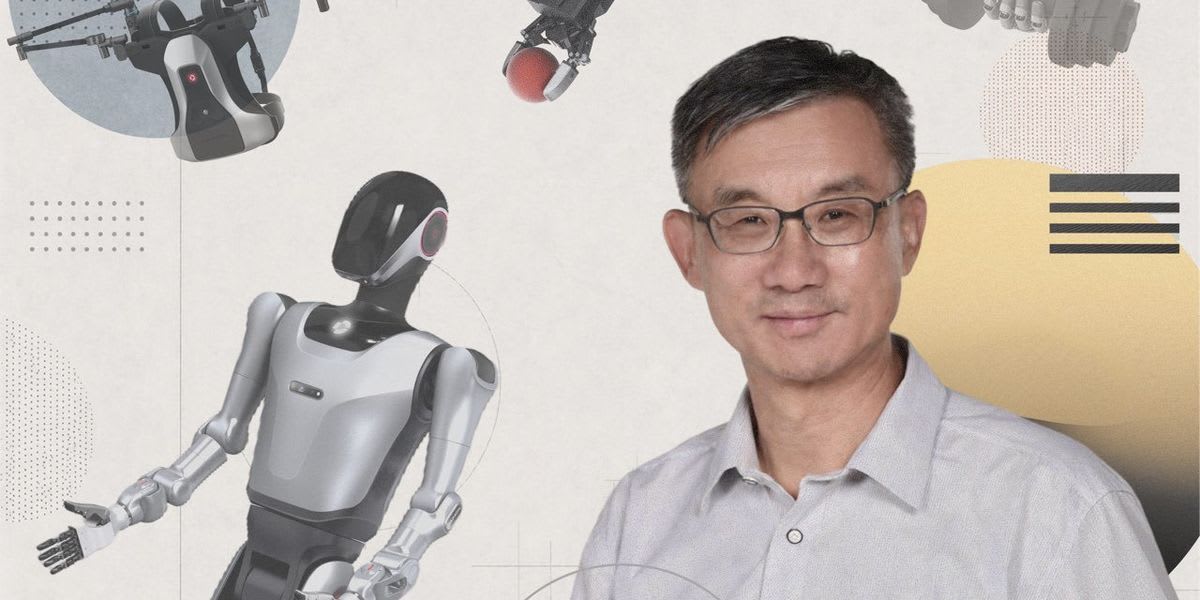
Led by robotics pioneer Professor Michael Yu Wang, an IEEE Fellow who founded Hong Kong University's Robotics Institute, the team partnered with Google DeepMind, Northwestern University, and the National University of Singapore. Together, they've created data spanning 80 real-world scenarios and over 2,000 human skills, from household chores to factory assembly lines.
Here's what makes this significant: most robot learning relies solely on vision, like teaching someone to cook using only their eyes. Adding touch is like giving robots the ability to feel whether fabric is slipping, eggs are cracking, or screws are tightening properly.
Professor Wang spent four decades studying robot manipulation. He realized robots were missing a crucial sense—the insensitivity to touch was holding back their real-world usefulness.
The Ripple Effect
DAIMON isn't hoarding this breakthrough. They've open-sourced 10,000 hours of data, giving researchers and developers worldwide free access to accelerate robot learning. It's a gift that could speed up progress across the entire robotics field.
The company built a distributed collection network capable of generating millions of additional data hours annually. Their vision-based tactile technology is already being used by leading humanoid robotics companies and research institutes.
Beyond labs, the practical applications are coming fast. Hotels in China are testing touch-enabled robots for housekeeping tasks. Convenience stores are exploring robots that can stock shelves without crushing products.
The release signals something bigger than one company's achievement. Professor Wang and his team view large-scale data collection as a responsibility to the broader community, not just a competitive advantage.
By making high-quality tactile data accessible, they're providing the "fuel" needed to power the next generation of helpful robots—ones that can navigate our world with the sensitivity and care it requires.
More Images

Based on reporting by IEEE Spectrum
This story was written by BrightWire based on verified news reports.
Spread the positivity!
Share this good news with someone who needs it