Robot Hands Learn to See, Feel, and Think Like Humans
A South Korean robotics company just taught robot hands to pour coffee, catch moving objects, and handle delicate tasks that have stumped machines for years. The breakthrough could finally bring human-like dexterity to factories and workplaces worldwide.
📺 Watch the full story above
Imagine a robot that can feel when a coffee pot gets lighter as it pours, catch a box moving down a conveyor belt, or twist a tiny nut between metal fingertips. Until now, these everyday human actions have been impossibly hard for machines.
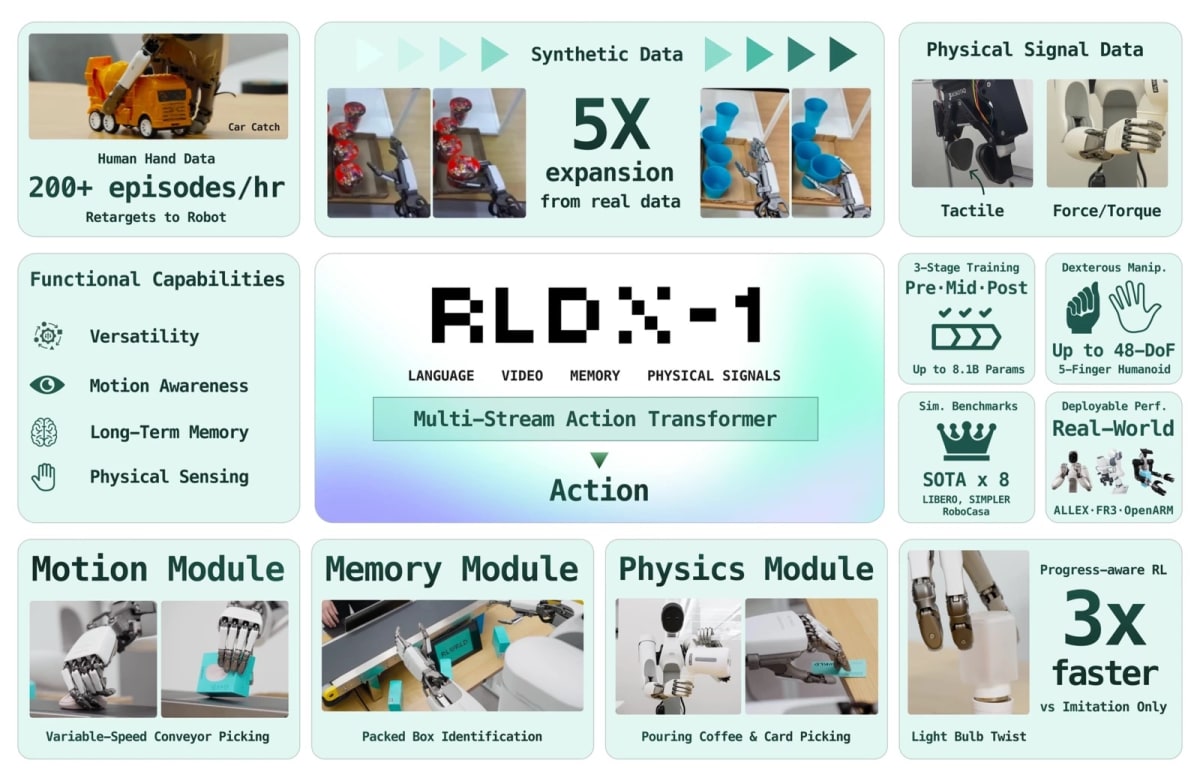
Seoul-based RLWRLD just changed that with RLDX-1, a breakthrough artificial intelligence system designed specifically for robot hands. The model doesn't just see what needs to be done; it feels pressure, remembers past steps, and adapts in real time.
The company identified five key challenges that have kept robots clumsy. First, most machines can't grasp objects with the variety that five-fingered hands allow. Second, they struggle to place their fingers precisely where contact needs to happen. Third, they can't track moving objects fast enough to catch them. Fourth, they miss invisible signals like changing weight or pressure. Fifth, they lack the memory to string together multi-step tasks.
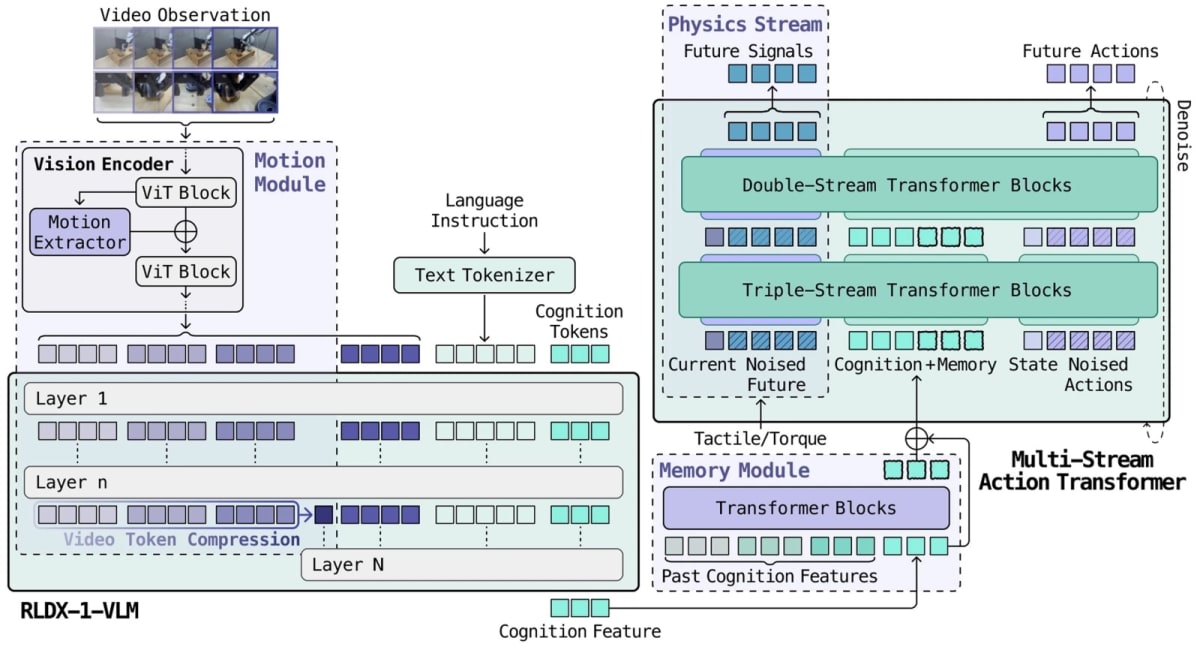
RLDX-1 tackles all five at once. The system uses a specialized vision system that understands spatial relationships between robot hands and objects. A motion tracking module predicts where moving objects will be, not just where they are now. A physics module reads torque and touch signals that cameras can't see, like feeling a coffee pot lighten as liquid drains out.
What makes this different from other robot AI is how it processes information. Instead of forcing all sensor data through one pipeline where some signals get lost, RLDX-1 gives each type of input its own processing stream. Vision, touch, motion, and memory each get dedicated attention before combining for decisions.
The Ripple Effect
This advance arrives at a crucial moment for manufacturing. Factories have automated the easy, repetitive tasks but still need humans for anything requiring a gentle touch or quick adjustment. RLDX-1 could finally close that gap without replacing entire production lines.
The same technology works across different robot bodies, from single-arm machines to dual-arm systems to full humanoid robots. Companies won't need to start from scratch; they can adapt the model to whatever hands they already have.
The breakthrough came from studying real industrial failures rather than lab experiments. Every feature exists because an actual task required it, creating a system built for messy reality instead of perfect simulations.
Robot hands that can truly feel and adapt are no longer science fiction; they're ready for the factory floor.
More Images
Based on reporting by The Robot Report
This story was written by BrightWire based on verified news reports.
Spread the positivity!
Share this good news with someone who needs it