Robot Hits 99% Success Folding Boxes, Fixing Vacuums
A new AI-powered robot can fold laundry, pack phones, and sort parts with 99% accuracy after just one hour of training. The breakthrough brings us closer to affordable home robots that actually work.
📺 Watch the full story above
Imagine a robot that learns to fold your laundry, pack boxes, and even fix vacuum cleaners after spending just an hour getting familiar with its new robotic body. That future just got a lot closer.
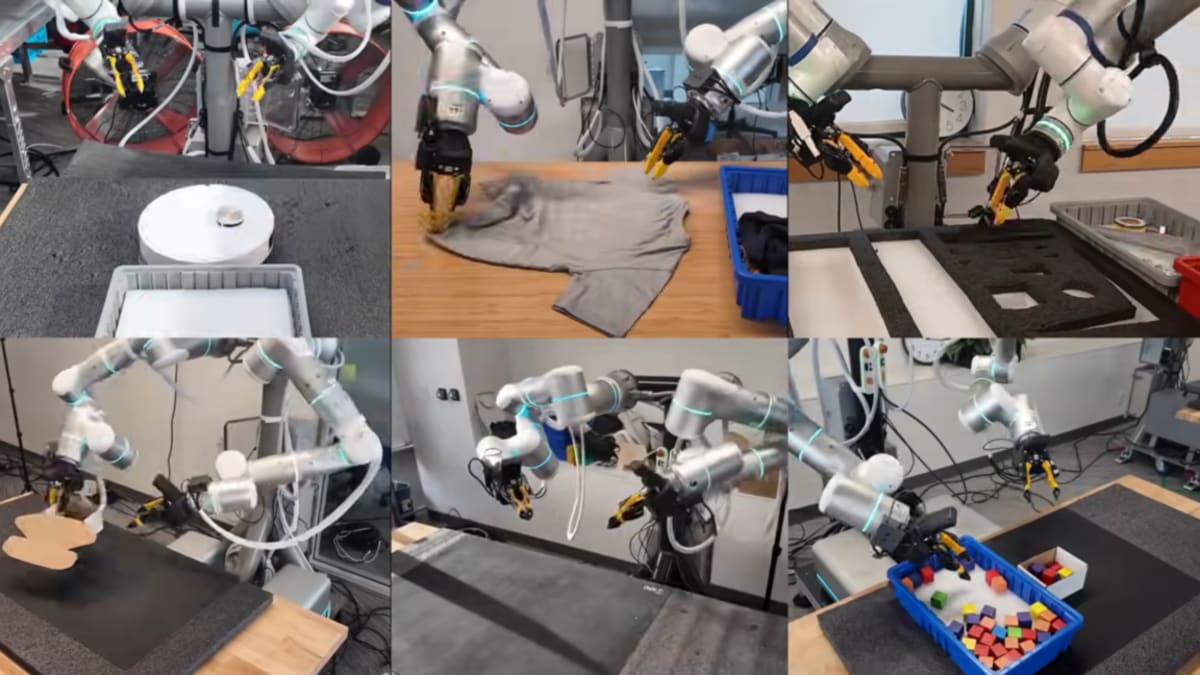
Robotics company Generalist just announced GEN-1, a physical AI system that hits 99% success rates on delicate tasks like folding boxes, packing phones, and servicing robot vacuums. The system works roughly three times faster than its predecessor from just a few months ago.
What makes GEN-1 special isn't just speed or accuracy. It's the robot's ability to improvise when things go wrong, adapting on the fly without explicit programming for every possible scenario.
In one demonstration, the robot gave a plastic bag a little shake to help a plush toy shimmy inside, even though nobody taught it that move. Another video shows robotic hands intelligently adjusting when objects spring out of position or refolding a shirt that gets moved mid-task.
"Nobody has programmed the robot to make mistakes, therefore nobody has programmed the robot to recover from mistakes," says Generalist engineer Felix Wang. "And that just happens for free."
The breakthrough required solving a massive data problem. Unlike language models that train on billions of words from the internet, robotic systems don't have a similar treasure trove of physical interaction data.
Generalist created special wearable sensors called "data hands" that capture micro-movements and visual information as humans perform manual tasks. The company has now collected over half a million hours of this physical interaction data.
The Ripple Effect
This advancement puts physical AI at what Generalist calls a "GPT-3 moment," where the technology crosses from impressive demos into economically useful work. Each new generation should master increasingly complex tasks, opening doors for robots in warehouses, factories, and eventually homes.
Google's Gemini Robotics models and Physical Intelligence's household robots are racing toward similar goals. Meanwhile, Tesla's Optimus robots still aren't doing useful work at Tesla factories, according to CEO Elon Musk's January admission.
The real win here isn't just about faster manufacturing or more efficient warehouses. It's about robots that can truly help with everyday tasks, adapting to the messy, unpredictable reality of the physical world rather than requiring perfectly controlled environments.
Your laundry-folding robot may not arrive tomorrow, but the path forward just got a whole lot clearer.
More Images



Based on reporting by Ars Technica
This story was written by BrightWire based on verified news reports.
Spread the positivity!
Share this good news with someone who needs it