Robot Learns Tennis by Playing Against Humans
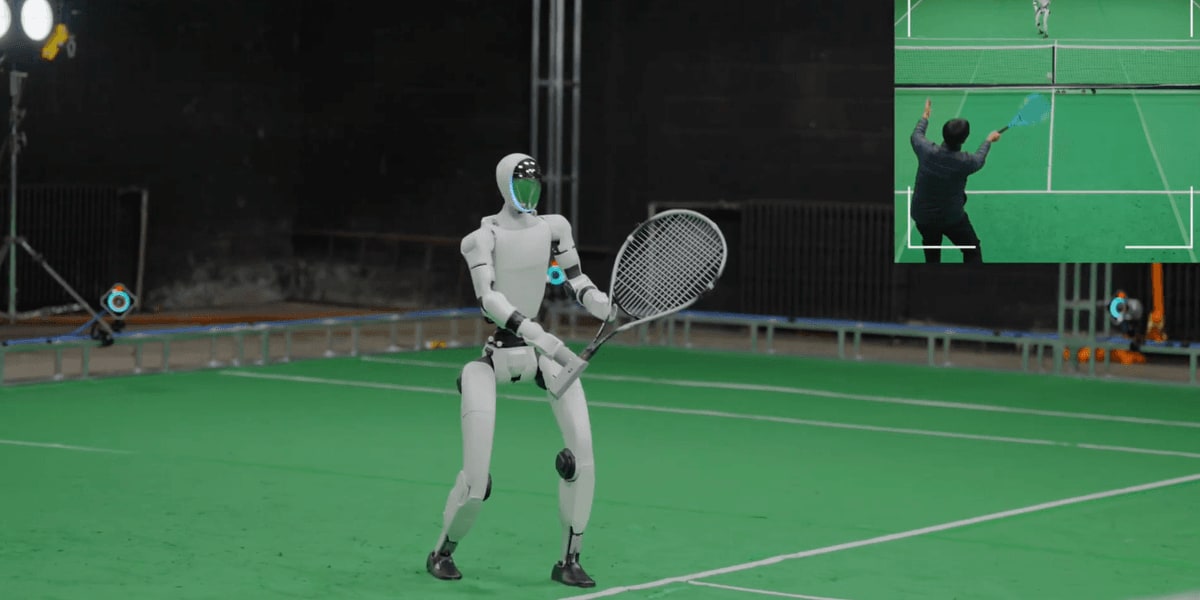
A humanoid robot is teaching itself to play tennis by practicing with human opponents, marking a breakthrough in athletic AI. The system called LATENT masters high-speed rallies without needing perfect motion data.
Teaching a robot to play tennis sounds impossible, but researchers just made it happen using a surprisingly simple approach: let the robot learn by actually playing against people.
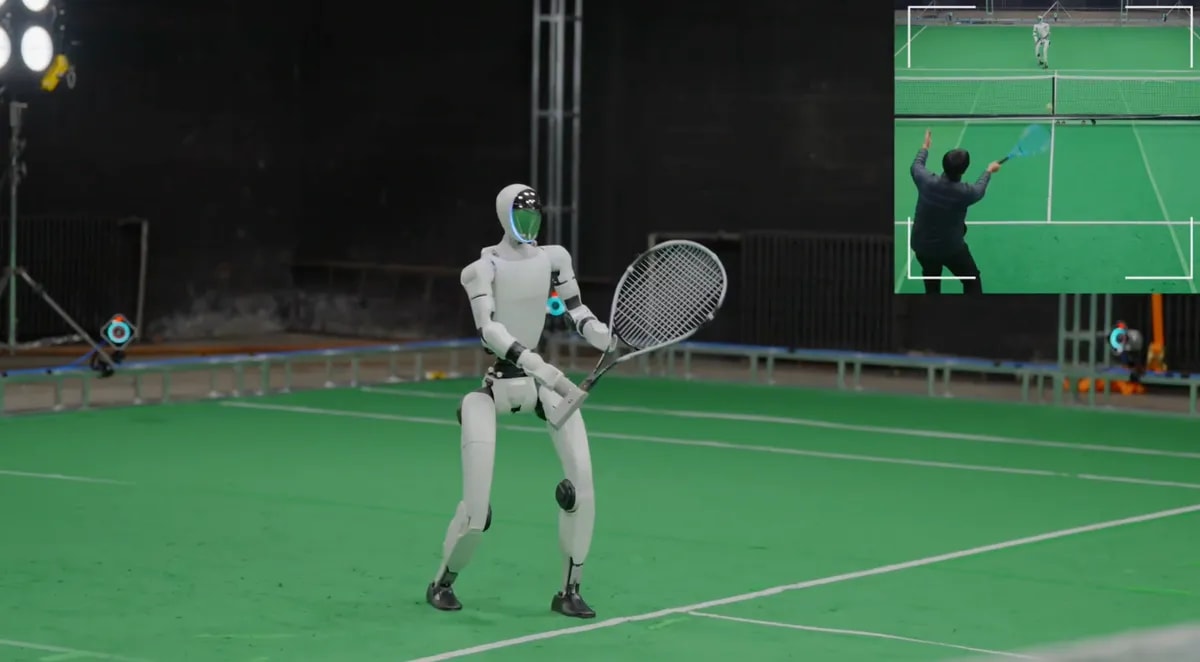
The new system, called LATENT, allows a humanoid robot to develop tennis skills by observing and responding to human opponents during real rallies. Unlike previous approaches that required perfect motion-capture data or pre-programmed movements, this robot learns on the fly.
Human tennis players showcase incredibly complex skills. They track a high-speed ball, adjust their positioning, time their swings, and adapt to their opponent's strategy, all in split seconds. Recreating these abilities in a humanoid robot has stumped engineers for years, partly because collecting perfect reference data for every possible tennis scenario is nearly impossible.
The breakthrough came from flipping the problem. Instead of trying to teach the robot every tennis move in advance, LATENT learns athletic skills from imperfect human motion data and improves through practice. The robot observes how humans move during actual gameplay and adapts its own movements accordingly.
This represents a major shift in how robots can acquire physical skills. Rather than spending months programming every possible movement, the robot develops capabilities through experience, much like a human beginner picking up a racket for the first time.
Why This Inspires
This achievement matters far beyond tennis courts. The same learning approach could help robots master other dynamic, real-world tasks that require split-second adjustments and coordination. Factory robots could adapt to unpredictable situations, rescue robots could navigate unstable disaster zones, and assistance robots could better support people with disabilities.
The research team demonstrated that imperfect data isn't a roadblock. Real-world messiness can actually be valuable training material. This opens doors for robots to learn countless skills simply by practicing alongside humans, without requiring expensive motion-capture studios or months of programming.
Athletic humanoid robots also push the boundaries of balance, speed, and coordination. Solving these challenges brings us closer to robots that can handle the unpredictable physical demands of everyday life, from carrying groceries up stairs to helping elderly people maintain their independence.
The future of robotics might not be about perfect programming but about machines that learn through doing, growing more capable with every rally.
More Images
Based on reporting by IEEE Spectrum
This story was written by BrightWire based on verified news reports.
Spread the positivity!
Share this good news with someone who needs it