Robot Legs Skate, Climb Stairs, and Balance on One Wheel
A new bipedal robot called Roadrunner can roll on wheels, stomp up stairs, and even show off by balancing on just one leg. Created by the team behind Boston Dynamics' famous robots, this 33-pound mechanical marvel hints at an exciting future for robotics.
📺 Watch the full story above
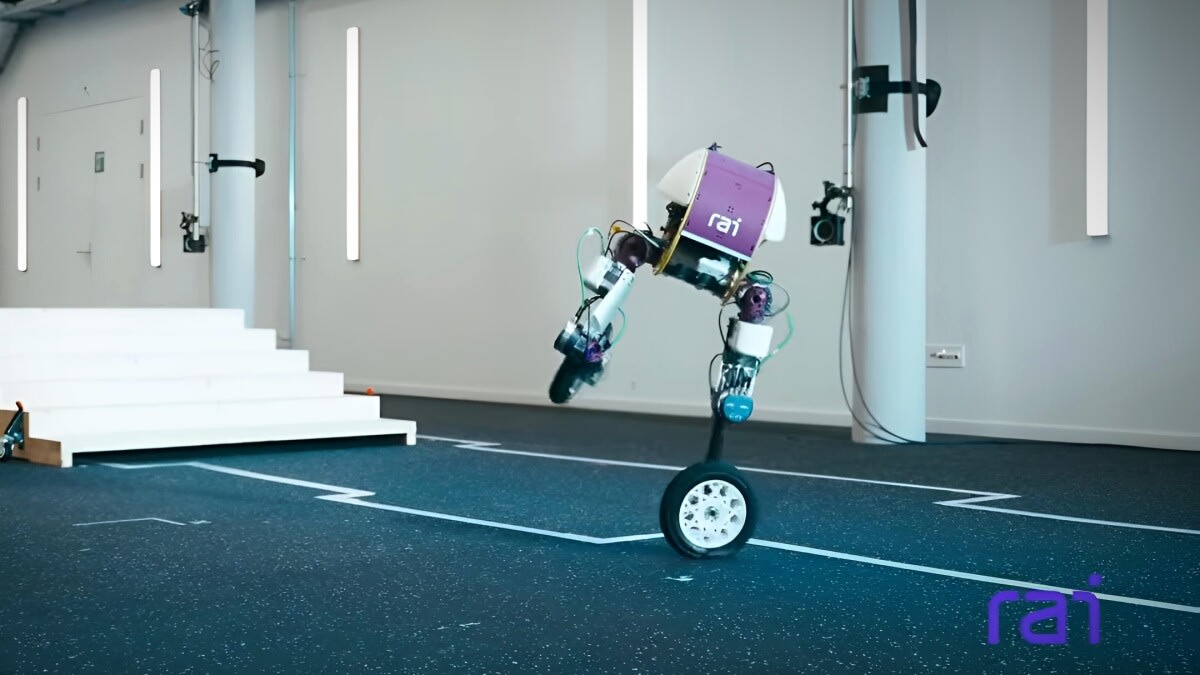
Imagine a pair of robot legs that can skate like a pro, climb stairs like a mountain goat, and pull off one-wheeled stunts that would make a unicyclist jealous. That's exactly what Roadrunner, a new creation from the Robotics and AI Institute, can do.
The 33-pound robot might look simple at first glance. It's basically just two mechanical legs on wheels, with no torso or upper body to speak of.
But what it lacks in anatomy, it more than makes up for in agility. Roadrunner can roll along with its wheels side by side like a skater, then switch to an inline configuration where one wheel trails behind the other.
The robot's secret weapon is its completely symmetric legs. They can bend their "knees" forward or backward, allowing Roadrunner to change directions instantly or navigate around obstacles.
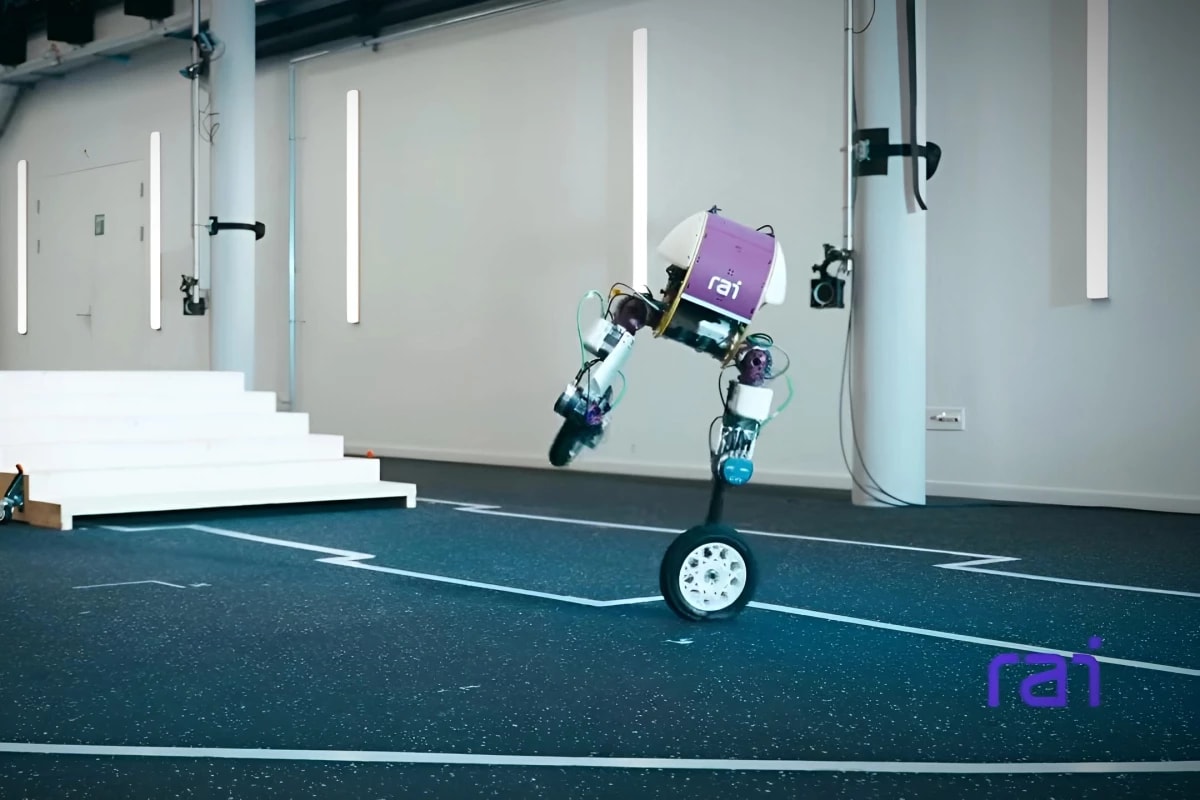
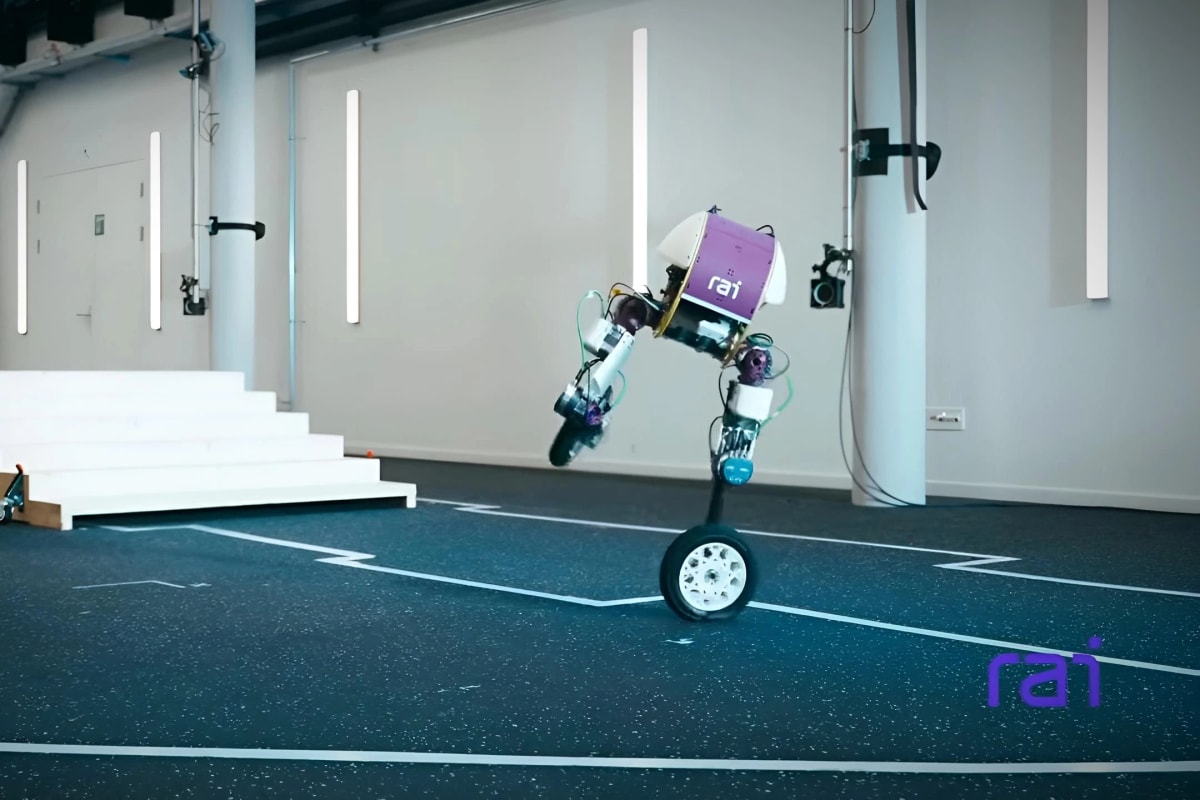
When wheels won't do the trick, Roadrunner locks them and stomps up and down stairs on foot. And in its most impressive party trick, the robot balances perfectly on just one wheel, showing off the kind of stability that took humans millions of years to evolve.
The team behind this mechanical marvel knows a thing or two about impressive robots. The Robotics and AI Institute launched in 2022 with $400 million from Hyundai Motor Group, led by Marc Raibert, founder of Boston Dynamics.
Boston Dynamics created Atlas, the gymnastic humanoid robot, and Spot, the dog-like bot that danced its way onto America's Got Talent last year. With that pedigree, it's no wonder Roadrunner moves with such fluid confidence.
The Ripple Effect
Right now, Roadrunner is a proof of concept, showing what's possible when you combine wheels with walking. But the implications stretch far beyond cool demo videos.
Future versions with added torsos and artificial intelligence could navigate environments that stump traditional robots. They could roll efficiently on flat ground, then switch to legs for stairs or rough terrain.
These versatile robots might one day deliver packages in cities, assist in search and rescue operations, or help people with mobility challenges. The technology proves that robots don't have to choose between wheels and legs when they can master both.
The real breakthrough isn't just that Roadrunner can do all these tricks, but that it seamlessly switches between them, adapting to whatever challenge comes its way.
More Images

Based on reporting by New Atlas
This story was written by BrightWire based on verified news reports.
Spread the positivity!
Share this good news with someone who needs it