Robot Scientists Speed Up Crop Engineering 100-Fold
Scientists at Oak Ridge National Laboratory built a robot that can engineer new crops 100 times faster than humans can by hand. The breakthrough could accelerate solutions for food security, climate-resistant plants, and cleaner energy.
Creating crops that can survive droughts, produce more food, or generate cleaner fuel just got dramatically faster, thanks to a new robot that does in hours what used to take scientists weeks.
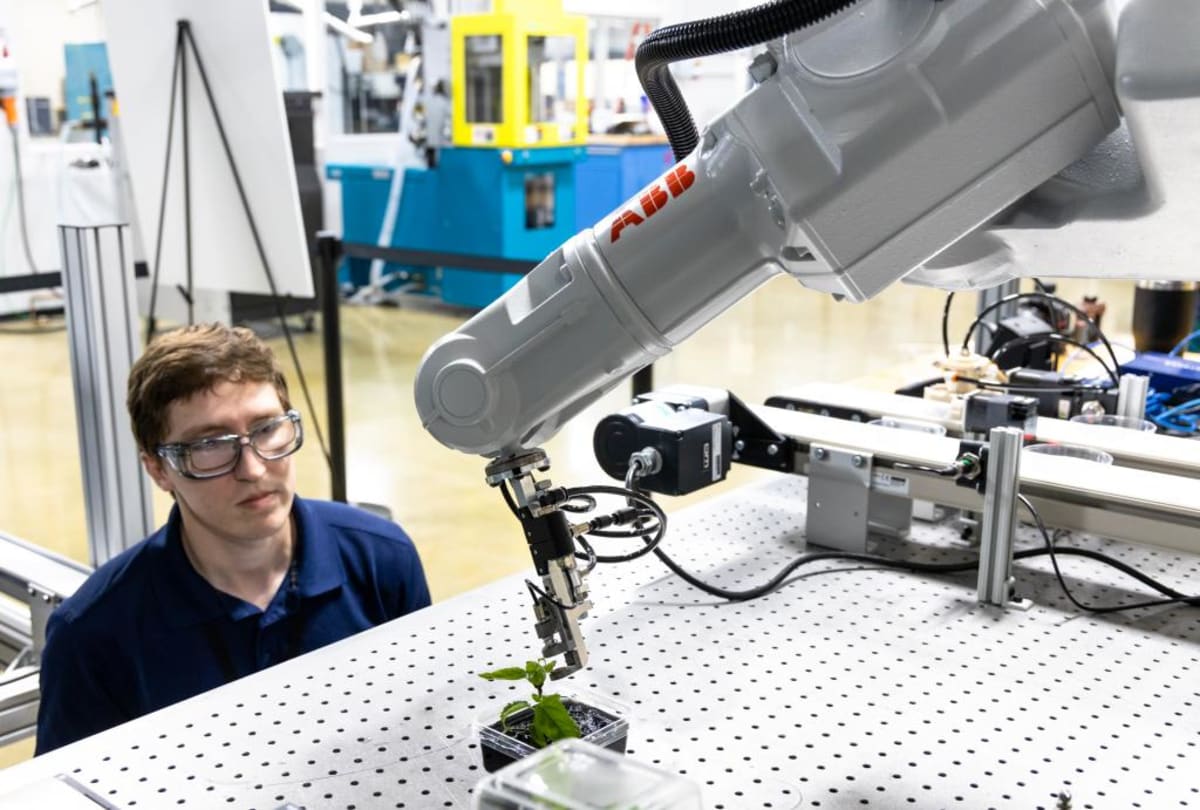
Researchers at Oak Ridge National Laboratory developed SMART Plant 1.0, a robotic system that uses computer vision and precision tools to identify, sample, and transform plant tissue automatically. The breakthrough eliminates the painstaking manual work that has slowed agricultural innovation for decades.
Traditional plant engineering requires technicians to hand-select tissue samples with scissors or hole punches, then manually transfer them through multiple growth stages over several weeks. It's slow, inconsistent, and limits how many experiments scientists can run.
The new system changes everything. SMART Plant 1.0 uses cameras to identify the perfect tissue samples, robotic arms to collect them with minimal damage, and automation to process them through the transformation pipeline. The result is 100 times more efficiency and dramatically better data quality.
"We introduced robotic excision and manipulation of tissue samples using a vision-guided system," said Alex Walters, who led the engineering work. The automation eliminates human inconsistencies and creates reproducible results that scientists can trust.
The real game-changer goes beyond speed. The system collects massive amounts of data that can train artificial intelligence models to predict which genetic modifications will work best. This feedback loop means each experiment makes the next one smarter.
The Ripple Effect
The technology arrives at a critical moment. Climate change threatens global food supplies, and the world needs crops that can tolerate heat, drought, and poor soil conditions while producing more yield.
SMART Plant 1.0 could accelerate development of better biofuel crops that reduce carbon emissions, plants that produce sustainable materials and chemicals, and varieties that recover critical minerals from soil. Food security applications alone could help millions as growing conditions become more challenging worldwide.
The team is already building SMART Plant 2.0, which will run entire experiments autonomously. The upgraded system will integrate with Oak Ridge's Advanced Plant Phenotyping Laboratory, where robots already track plant growth using advanced imaging. Together, these facilities create a comprehensive platform for AI-driven crop development.
The nationwide network of automated plant science labs being developed across Department of Energy facilities represents America's bet on using cutting-edge technology to solve agricultural challenges. What once required months of tedious lab work will soon happen automatically, freeing scientists to focus on the bigger questions about feeding the world sustainably.
Every new stress-tolerant crop variety could mean better harvests for farmers facing unpredictable weather and more affordable food for families everywhere.
More Images

Based on reporting by Google: scientific discovery
This story was written by BrightWire based on verified news reports.
Spread the positivity!
Share this good news with someone who needs it