Robotic Exoskeletons Help Musicians Play Better Together
Scientists in Italy discovered that violinists wearing lightweight robotic exoskeletons actually improved their timing and coordination with fellow musicians. The technology could soon help stroke patients and others relearn movement through therapist-guided rehabilitation.
Playing music together requires split-second timing, and now robots are helping musicians hit every note in perfect sync.
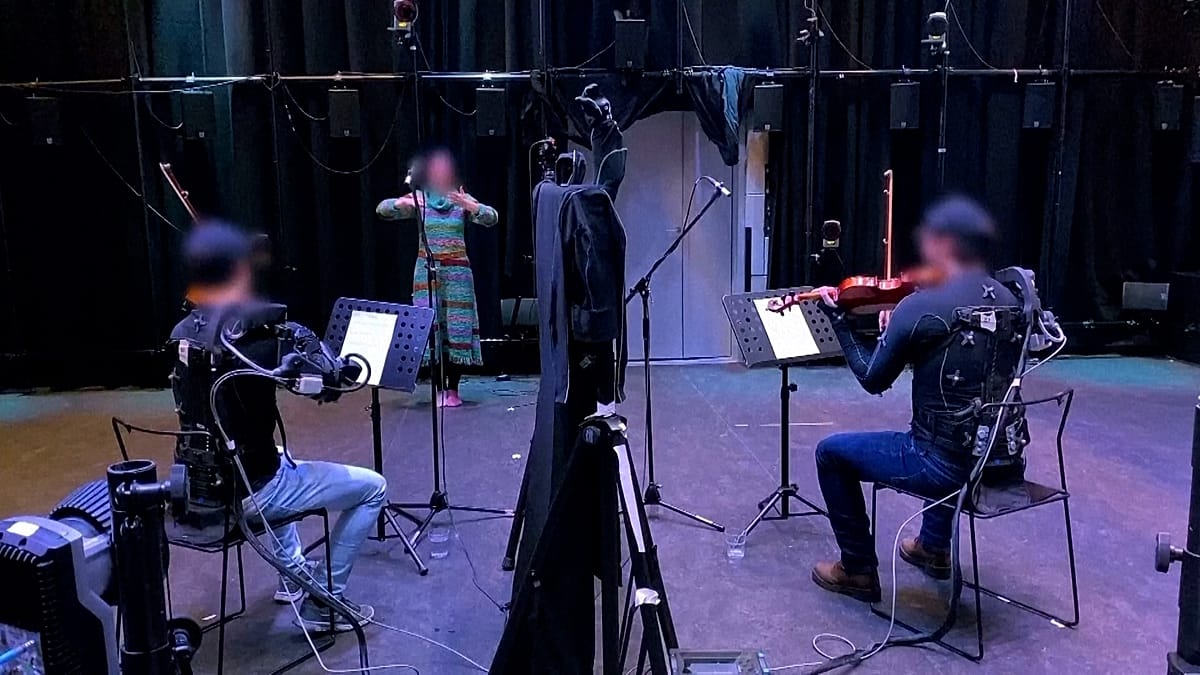
Researchers at Università Campus Bio-Medico in Italy fitted professional violinists with lightweight exoskeletons on their bow-playing arms. The devices delivered gentle haptic feedback, subtle pushes and pulls that helped the musicians coordinate their movements without even realizing where the signals came from.
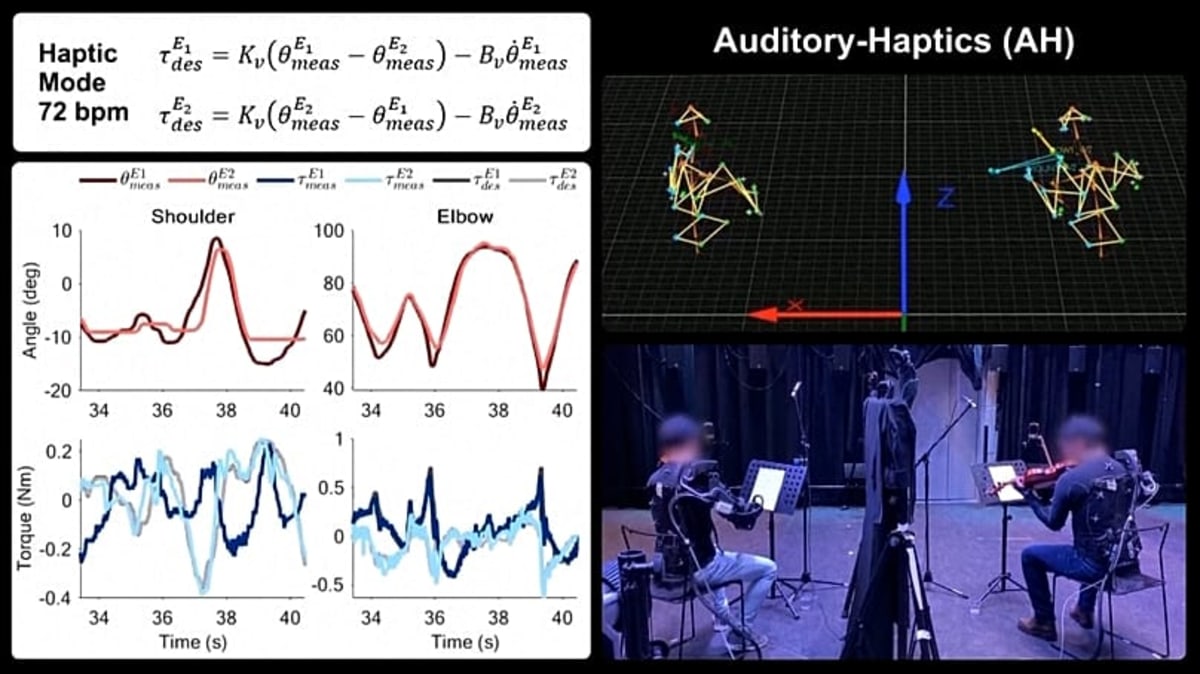
The team tested four different conditions: musicians hearing but not seeing each other, both hearing and seeing, vision blocked with the exoskeleton active, and full sensory feedback combined with robotic assistance. Infrared cameras tracked shoulder positions, arm angles, and bow pressure throughout each performance.
The results surprised everyone. When vision was blocked but haptic feedback was active, the violinists actually played better together than when they could see each other.
"We were able to demonstrate that replacing vision with haptics actually enhances coordination both in kinematics and in musical alignment," said Francesco Di Tommaso, one of the lead researchers. The musicians performed better in their movements and in their musical output.
The exoskeletons created a virtual communication channel between players. When one violinist's movements differed from their partner's, the device sent bidirectional forces to gently guide them back into sync.
Some musicians reported feeling uncomfortable with the mysterious forces they couldn't explain. But those same forces helped them coordinate better, even when they didn't understand their source.
The Ripple Effect
The music experiment opened doors nobody expected. Professor Domenico Formica, a bioengineer on the research team, sees potential far beyond concert halls.
The same technology could transform physical therapy for stroke patients and others relearning movement. Instead of working alone with a robot, patients could receive guidance directly from a therapist through the exoskeleton, creating a bilateral exchange of forces that might speed recovery.
Two patients could even work together, challenging each other and building coordination as a team. The approach turns rehabilitation from a solitary struggle into a shared journey.
The study appears in Science Robotics, marking a new chapter in how humans and machines can work together. What started as a quest to improve musical performance might end up helping people walk, reach, and move again.
More Images


Based on reporting by Euronews
This story was written by BrightWire based on verified news reports.
Spread the positivity!
Share this good news with someone who needs it