Robots Beat Marathon Record in Beijing, Inspiring Young Engineers
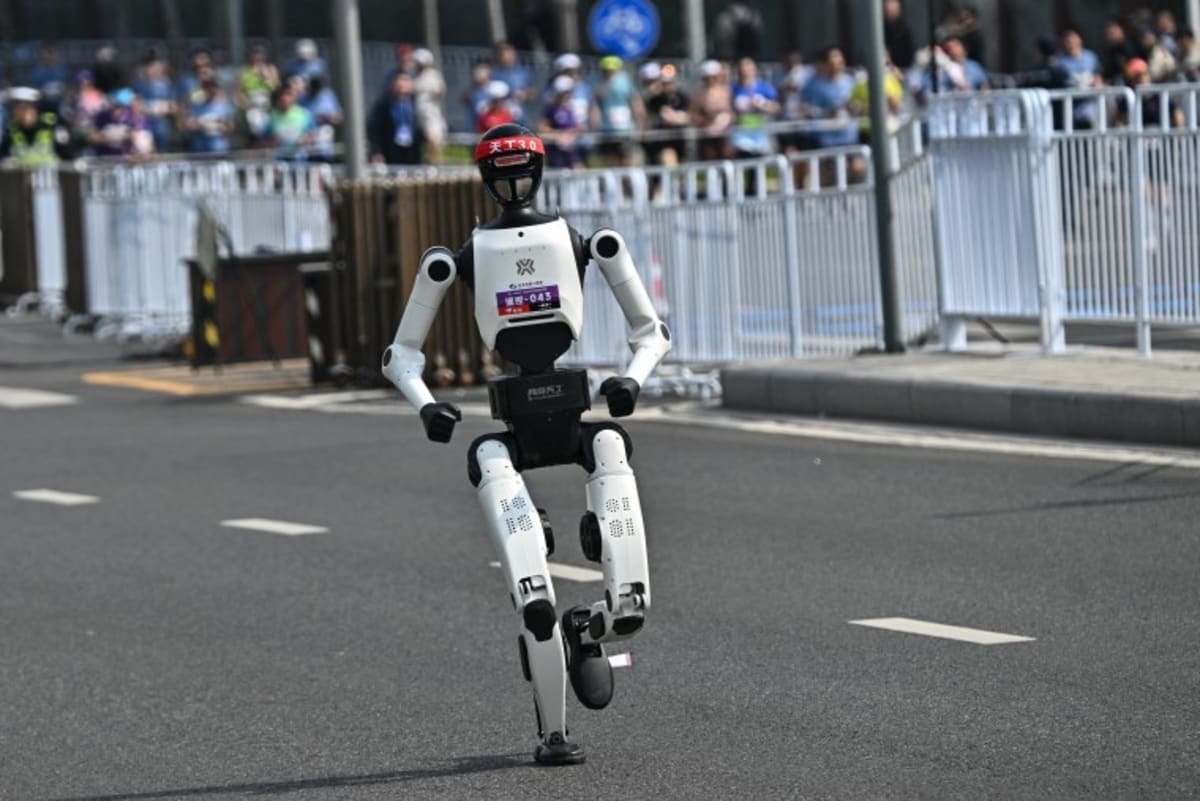
Humanoid robots crushed the half-marathon world record in Beijing, finishing in just over 50 minutes and beating human champions by more than 10 minutes. Just one year after most robots couldn't even finish the race, over 100 teams showcased machines that ran autonomously through 13 miles of challenging terrain.
The future of robotics just got a whole lot faster, and an 11-year-old boy is now dreaming of building the next generation.
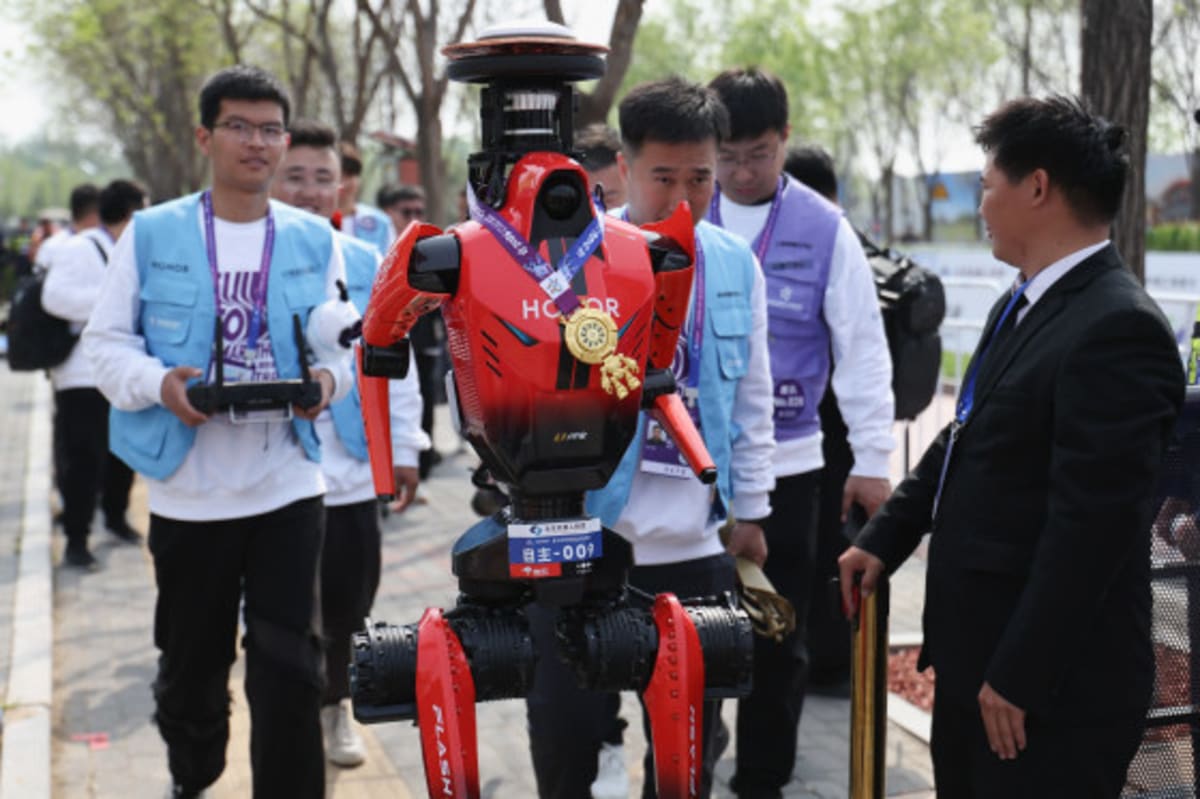
At Beijing's second annual humanoid robot half-marathon on Sunday, dozens of Chinese-made robots didn't just compete—they dominated. The winning robot, built by smartphone company Honor, crossed the finish line in 50 minutes and 26 seconds, beating the human world record set just last month in Lisbon.
The transformation from last year was stunning. In 2025, the robot champion took 2 hours and 40 minutes to finish, more than double the human winner's time. Most robots couldn't even complete the race and were controlled by remote operators.
This year told a completely different story. Nearly half of the 100-plus robot entrants navigated the entire 13-mile course on their own, running alongside 12,000 human participants on parallel tracks. Honor's team swept all three podium spots, each robot posting world-record-beating times while navigating autonomously.
The engineering breakthroughs behind these machines show how quickly robotics technology is advancing. Honor engineer Du Xiaodi explained his team spent a year developing legs 90 to 95 centimeters long to mimic elite human runners. They even borrowed liquid cooling technology from their smartphone division to keep the robots from overheating.
But the real magic happened in the stands. Twenty-three-year-old engineering student Chu Tianqi watched in amazement at how naturally the robots moved. "The humanoid robots' running posture was really quite impressive," he said, noting that AI has only been developing seriously for a short time.
Why This Inspires
For young Guo Yukun, watching robots race past human champions sparked a life-changing decision. The 11-year-old, who already takes robotics classes at his Beijing school and competes in international programming competitions, said the race inspired him to pursue a university degree in robotics.
His generation is growing up in a world where humanoid robots aren't science fiction—they're Sunday entertainment. While experts note these machines still struggle with the manual dexterity needed for factory work, the progress from last year to this year proves the technology is advancing faster than almost anyone predicted.
Du emphasized that faster running times aren't just about athletic prowess. The innovations in structural reliability, cooling systems, and autonomous navigation developed for racing will transfer directly to industrial applications, potentially reshaping manufacturing and dangerous jobs.
China showcased its robotics ambitions at February's national Spring Festival gala, where Unitree humanoids performed martial arts demonstrations with swords and nunchucks alongside children. The country is investing heavily in becoming a global robotics powerhouse through subsidies and infrastructure projects.
The race proved that the impossible becomes ordinary faster than we think, and an inspired generation is ready to build what comes next.
More Images


Based on reporting by Google News - Sports
This story was written by BrightWire based on verified news reports.
Spread the positivity!
Share this good news with someone who needs it