Robots Target Sub-1-Hour Half Marathon at Beijing Race
Humanoid robots will attempt to beat human marathon records at next month's race in Beijing, aiming to cut last year's winning time by more than half. The leap in speed comes from major upgrades in hardware, algorithms, and battery technology that could reshape what robots can do.
Robots are getting ready to run faster than ever before, and they might just outpace human champions in the process.
At next month's half-marathon for humanoid robots in Beijing, several teams plan to target finishing times around one hour. That would put them within striking distance of the human world record of 57 minutes and 20 seconds.
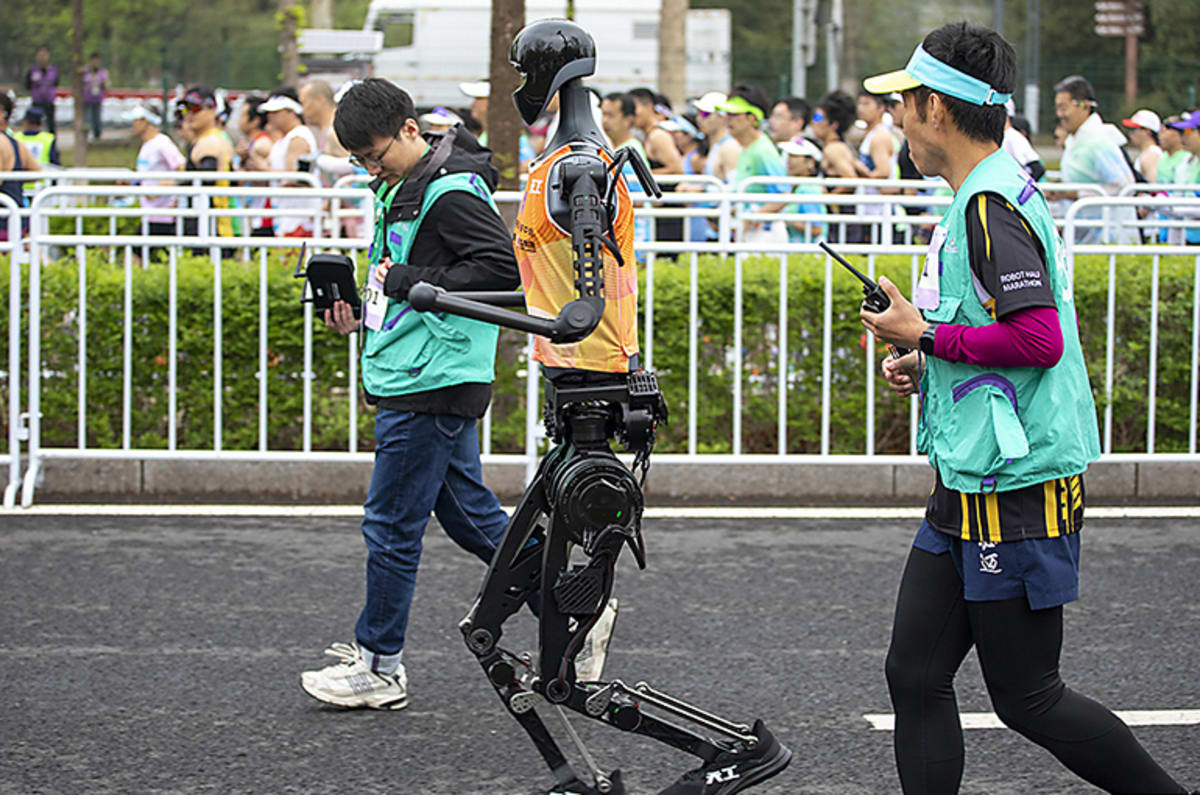
The goal represents a massive leap from last year's inaugural race. The 2024 winner, Tiangong Ultra, finished in two hours, 40 minutes, and 42 seconds. To break the human record, this year's robots need to run twice as fast.
Tang Jian, chief technology officer at Beijing Humanoid Robot Innovation Center, says the dramatic speed boost comes from comprehensive upgrades. The robots feature stronger joint torque and explosive power, plus new cooling systems that keep them running smoothly during intense physical activity.
Motion control systems have also improved, making robot movements more human-like and energy-efficient. Better batteries mean some robots may complete the entire race without stopping to recharge, a first for the competition.
This year's race will test more than just speed. Robots will navigate using electronic maps and make real-time decisions independently, unlike last year when human pacemakers or remote controls guided them. The course features more complex terrain, pushing the limits of robot adaptability.
Why This Inspires
Some people question whether robots running marathons serves any real purpose. Tang sees it as essential testing ground for the technology that will power tomorrow's working robots.
The race puts extreme pressure on both software and hardware, especially testing whether motion control algorithms can stay stable and consistent over long periods. These challenges mirror what robots will face in factories, warehouses, and homes where they need to perform reliably hour after hour.
Wang Xingxing, founder of Unitree Robotics, believes athletic ability forms the foundation for practical robot work. He predicts that by mid-2025, humanoid robots will sprint 100 meters in under 10 seconds, faster than Olympic champion Usain Bolt.
The progress happening on Beijing's marathon course could soon translate to robots that assist in healthcare, handle emergency response, or tackle dangerous jobs alongside humans.
Next month's race will show just how far robotics has come in a single year.
More Images
Based on reporting by Google: marathon world record
This story was written by BrightWire based on verified news reports.
Spread the positivity!
Share this good news with someone who needs it