Robots That Catch Themselves: 81% Better Balance in Tests
A Georgia Tech team taught two-legged robots to recover from stumbles like humans do, boosting stability by 81%. The breakthrough could soon put safer robots on ships, in factories, and eventually in our homes.
📺 Watch the full story above
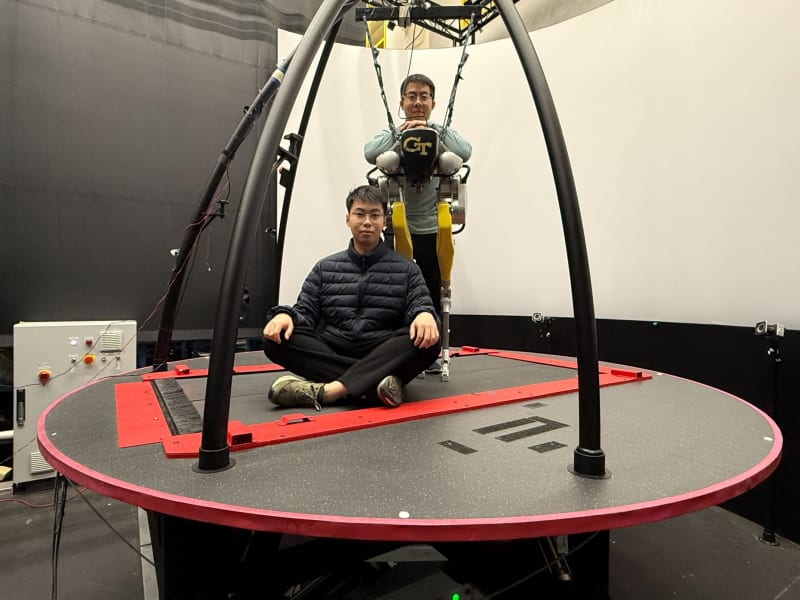
When a two-legged robot named Cassie stumbled on a moving treadmill at Georgia Tech, something remarkable happened. Instead of crashing to the ground, it caught itself mid-fall and kept walking.
Researchers at Georgia Tech's Laboratory for Intelligent Decision and Autonomous Robots have created a thinking system that helps bipedal robots stay upright when the ground shifts beneath them. The breakthrough addresses a critical problem: robots that work on ships, construction sites, or uneven outdoor terrain need to handle unexpected jolts without tumbling over.
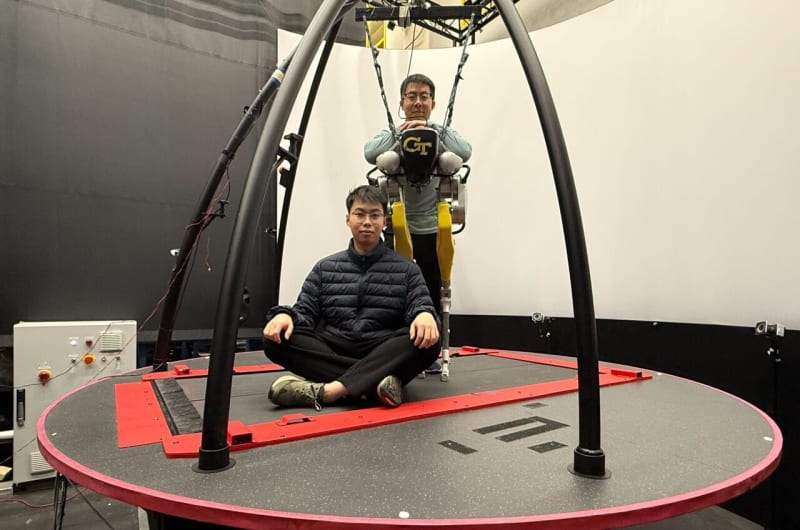
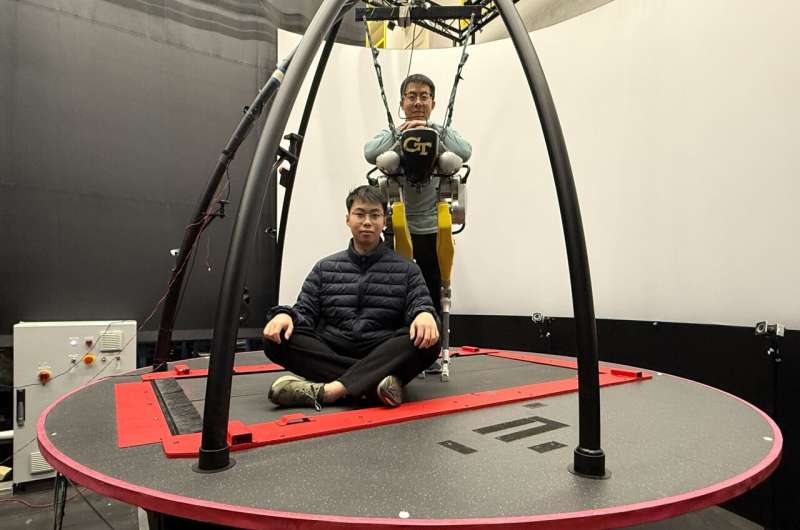
Led by Professor Ye Zhao and robotics student Zhaoyuan Gu, the team developed rules that let robots make split-second decisions without human help. When Cassie senses its current plan might fail, it instantly adjusts its next few steps to stay balanced.
The researchers tested Cassie on a specialized treadmill that moves unpredictably in different directions. When that wasn't challenging enough, they added a system that creates sudden jerks to really stress-test the robot's walking ability. Previous robots without this framework struggled to find solutions and often fell.
The results speak for themselves. The new framework outperforms existing methods with faster decisions, better obstacle avoidance, and reliable walking on moving platforms. Overall, it increased Cassie's recovery ability by 81% compared to older approaches.
The technology isn't flawless yet. Cassie struggles moving downhill, which requires riskier steps and less efficient walking. The robot only completely failed during one extreme test involving a very wide step on a narrow treadmill, where recovery simply wasn't physically possible.
Why This Inspires
This breakthrough matters because walking robots are heading into the real world soon. The Office of Naval Research plans to test the technology at sea, where robots could take over dangerous maintenance work currently done by sailors. Factory floors, logistics warehouses, and even homes could benefit from robots that reliably stay on their feet.
The team's next goal is teaching robots to hop when they lose balance, just like humans do naturally. That human-inspired recovery could make the difference between a useful helper and an expensive liability.
"Humanoid robots are coming to your homes, coming to the factories, coming to logistics," said Gu. The key is making sure they arrive safely.
More Images

Based on reporting by Phys.org - Technology
This story was written by BrightWire based on verified news reports.
Spread the positivity!
Share this good news with someone who needs it