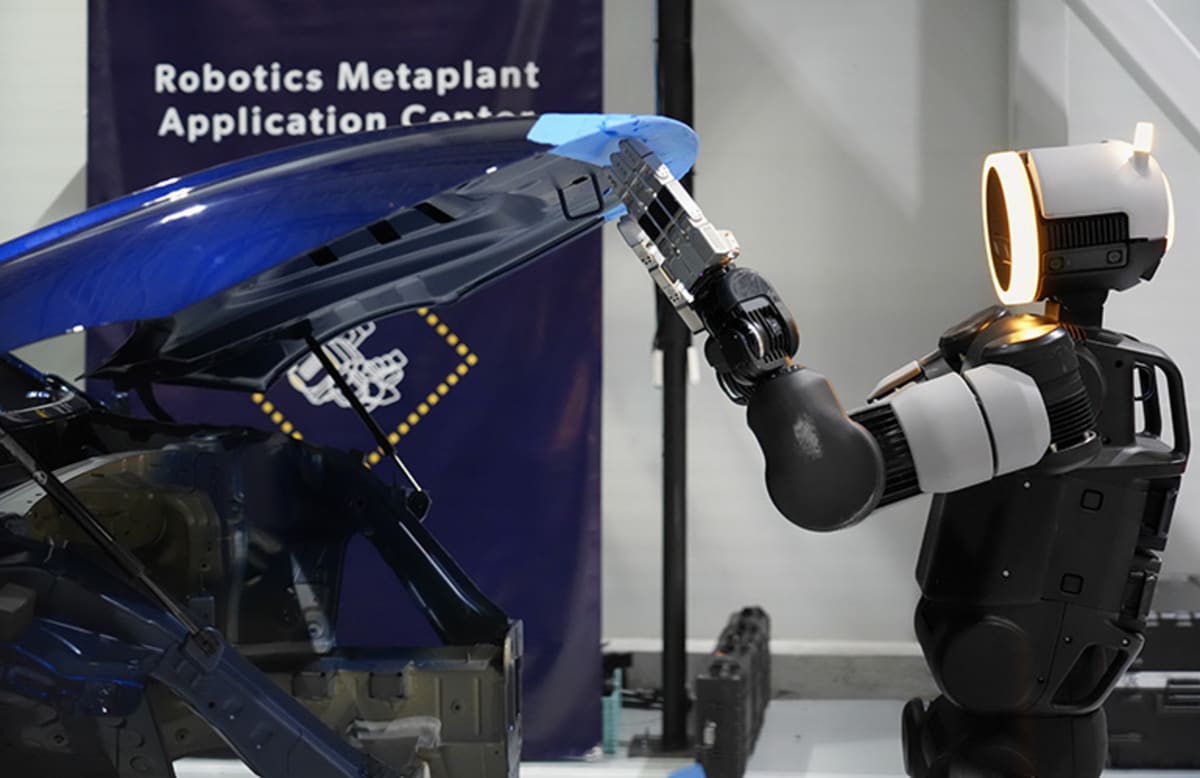
Robots That Learn Like Humans Now Working in Warehouses
Smart robots powered by "physical AI" are transforming factories and warehouses, learning to adapt to messy, unpredictable environments just like people do. Major companies like Amazon are already using this breakthrough technology to solve real-world challenges.
📺 Watch the full story above
Robots are finally learning to think on their feet, and they're already showing up for work in warehouses and factories across America.
For years, AI meant chatbots and language models living on screens. Now, a new wave called "physical AI" is giving robots the ability to see, adapt, and learn in real time, handling messy jobs that used to require human judgment.
The breakthrough combines computer vision and advanced learning systems to give machines something like spatial intelligence. Instead of following rigid scripts, these robots can navigate crowded hallways, sort jumbled materials, and adjust their movements on the fly.
Amazon has already integrated humanoid robots into daily operations. In electronics factories, collaborative robots now work safely alongside humans, adjusting their grip strength in real time when handling delicate components. Automated inspection systems catch microscopic defects invisible to human eyes and get better at their jobs with every shift.
The secret sauce is training robots in hyper-realistic digital simulations. They practice millions of times in virtual environments before ever touching real equipment, slashing development time and costs.
One major robotics company partnered with manufacturing platform Fictiv to bring production back to the United States. The shift optimized material flow, reduced operational risks, and got products to market faster while improving cost predictability.
The Ripple Effect
This isn't just about cool technology. Physical AI is solving a fundamental problem: how to bring digital efficiency to the physical world of making things.
The impact reaches beyond individual companies. Autonomous mobile robots now move goods through warehouses and interact with inventory at both ends of their routes. Quality assurance systems learn from every defect they find, getting smarter every day. Precision cobots handle components that would challenge even skilled human workers.
The shift requires rethinking how we build things. Creating 10,000 identical robot units demands different skills than perfecting one prototype. Companies are learning to design for mass manufacturing from day one, using digital platforms that provide real-time visibility into supply chains.
Legacy factories are getting upgrades too. Installing charging infrastructure, high-speed connectivity, and new safety protocols transforms old facilities into homes for intelligent machines.
The companies succeeding in this space treat hardware innovation as seriously as software. They recognize that world-class AI means nothing without robust manufacturing behind it. The goal isn't flashy demo videos but robots that thrive on actual production lines, day after day.
Physical AI represents more than incremental improvement. It's the bridge that brings digital-world speed and adaptability to factories, warehouses, and hospitals where real work happens.
The robots learning to work beside us today are proving that the future of manufacturing isn't just automated—it's intelligent.
More Images


Based on reporting by The Robot Report
This story was written by BrightWire based on verified news reports.
Spread the positivity!
Share this good news with someone who needs it