Rocket Engine Burns 5 Minutes Straight, Breaks Record
A Pittsburgh company just fired a revolutionary rocket engine for five minutes without stopping, shattering records and bringing wildly efficient space travel closer to reality. The breakthrough could make lunar missions cheaper and open up deep space exploration.
A rocket engine that works more like a controlled explosion than a steady flame just proved it can run long enough to power real missions to the moon and beyond.
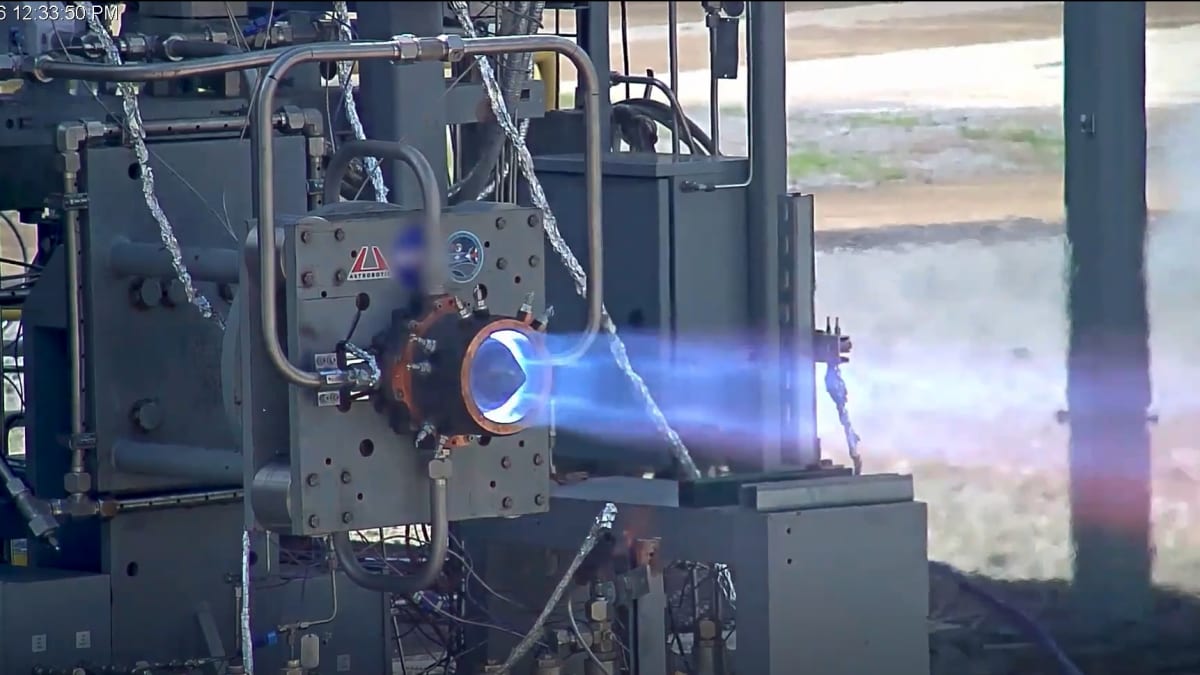
Pittsburgh-based Astrobotic completed a record-breaking test of its Chakram engine at NASA's Marshall Space Flight Center in Alabama. The engine burned continuously for 300 seconds (five full minutes) without showing any signs of damage, likely setting the world record for this type of propulsion system.
What makes this engine special is how it burns fuel. Traditional rocket engines ignite propellant in a steady, controlled burn inside a chamber. Chakram uses a rotating detonation rocket engine design, where a continuous circular wave of explosions travels around a ring-shaped chamber at incredible speed.
Think of it like the difference between a candle flame and a firecracker going off thousands of times per second in a circle. The constant detonations create higher pressure and efficiency, producing more thrust while using less fuel.
The two Chakram prototypes tested together racked up more than 470 seconds of firing time across multiple tests. Each engine produced over 4,000 pounds of thrust and reached stable operating temperatures, proving this isn't just a laboratory curiosity but technology ready for the real world.
Why This Inspires
For years, rotating detonation engines existed mostly in theory and brief lab tests. The engineering challenge of keeping controlled explosions running smoothly seemed almost impossible to solve for actual spacecraft.
This breakthrough changes that equation. A 10 to 15 percent efficiency improvement might not sound dramatic, but in space travel, where every ounce of weight and drop of fuel matters enormously, it could transform what missions are possible.
Astrobotic plans to use Chakram on future versions of its Griffin lunar lander and on spacecraft designed to move cargo between Earth and the moon. Those applications could make establishing a permanent lunar presence far more affordable.
The company developed Chakram through NASA Small Business Innovation Research contracts, showing how public-private partnerships can tackle challenges too risky for either sector alone. What started as experimental technology now stands ready to help humanity expand operations throughout cislunar space.
Bryant Avalos, Astrobotic's lead investigator for the project, said the engine "more than exceeded our expectations," with the 300-second burn serving as "the cherry on top."
Space exploration just got a more powerful, efficient engine to carry us forward.
More Images


Based on reporting by Space.com
This story was written by BrightWire based on verified news reports.
Spread the positivity!
Share this good news with someone who needs it