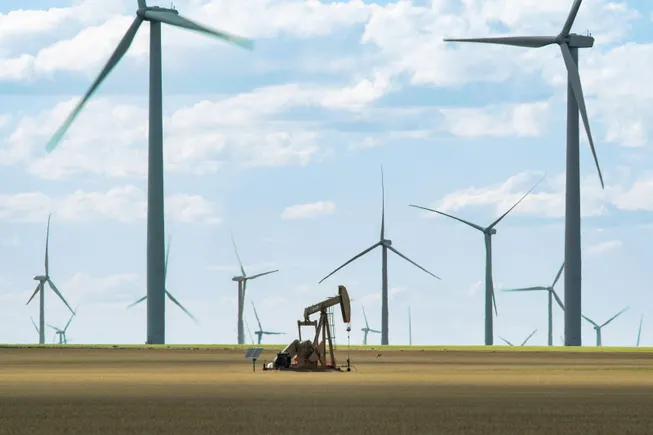
Rural Towns See 7% GDP Boost From Wind and Solar Farms
A new University of Missouri study reveals wind and solar projects are bringing significant economic gains to rural communities across the Midwest. Counties hosting renewable energy saw major increases in jobs, wages, and GDP without hurting local farms.
Rural communities embracing wind and solar energy are seeing their economies grow in ways that surprised even the researchers tracking them.
A University of Missouri study tracking rural counties from 2001 to 2023 found communities hosting wind farms saw their GDP jump by approximately 7 percent. Solar projects brought even more direct benefits, creating 10 to 20 percent increases in employment and wages across utilities, construction, and transportation sectors.
Lead researcher Adrienne Ohler compared counties with renewable power plants to similar counties without them. Her team discovered something important: renewable energy development didn't harm agricultural activity at all.
"Neither wind nor solar development were associated with declining agricultural GDP, employment or wages," the study found. This matters because one of the biggest fears in rural areas has been losing valuable farmland to energy projects.
James Owen from Renew Missouri points out that while these projects don't create many permanent jobs, they deliver something rural counties desperately need: reliable tax revenue for schools, fire districts, and ambulance services. Local communities can count on this funding year after year.
The data comes at a crucial time. Nearly 70 percent of large solar farms and 94 percent of wind installations are built on rural cropland, making these projects increasingly common neighbors for farming communities.
Josh Moenning, director of New Power Nebraska, sees clear patterns in the data. "Those counties who have said yes to the opportunity have seen benefits," he said.
The Ripple Effect
The economic boost is spreading across the Midwest and Great Plains in measurable ways. Construction workers find new projects. Transportation companies gain contracts. Utility sectors expand their workforce.
More counties are now creating thoughtful guidelines for renewable development rather than simply saying no. In Iowa, Minnesota, Nebraska, and South Dakota, counties with renewable energy ordinances grew by 45 percent in just two years.
Heather Sparks from the Center for Rural Affairs sees this as progress. "The relationship between counties and developers is maybe maturing a little bit," she said.
Iowa shows what's possible when communities embrace renewable energy early. Wind power now generates more than 50 percent of the state's electricity while supporting rural economies.
Owen adds another advantage these communities gain: energy independence. "Solar and wind do not go through the Strait of Hormuz. It can be produced right here," he said.
The study gives rural leaders concrete evidence that renewable energy can strengthen their communities economically while preserving the agricultural heritage that defines them.
More Images


Based on reporting by Google News - Wind Energy
This story was written by BrightWire based on verified news reports.
Play Today’s BrightWire Positive Mini Crossword & Word Game
Keep your mind sharp with our free 5-minute uplifting daily crossword and positivity word puzzle.
Spread the positivity!
Share this good news with someone who needs it