Salt-Sized Brain Implant Reads Thoughts Wirelessly
Scientists at Cornell University created a neural implant smaller than a grain of salt that can wirelessly read brain activity for over a year. The device uses light instead of wires, opening doors to safer brain monitoring for medical treatments.
Imagine a brain implant so tiny it could sit on a grain of salt, yet powerful enough to read your thoughts and transmit them wirelessly for more than a year.
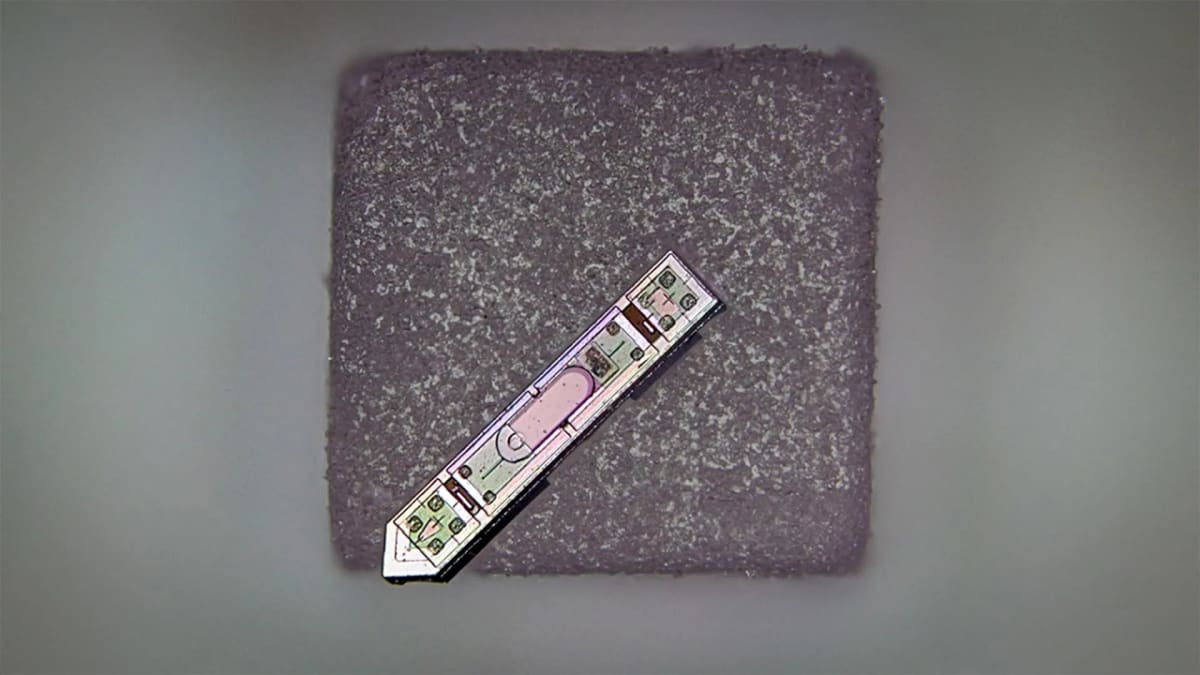
Scientists at Cornell University just made this a reality. Their microscale optoelectronic tetherless electrode, or MOTE, measures just 300 microns long and 70 microns wide, making it the smallest wireless brain implant ever created.
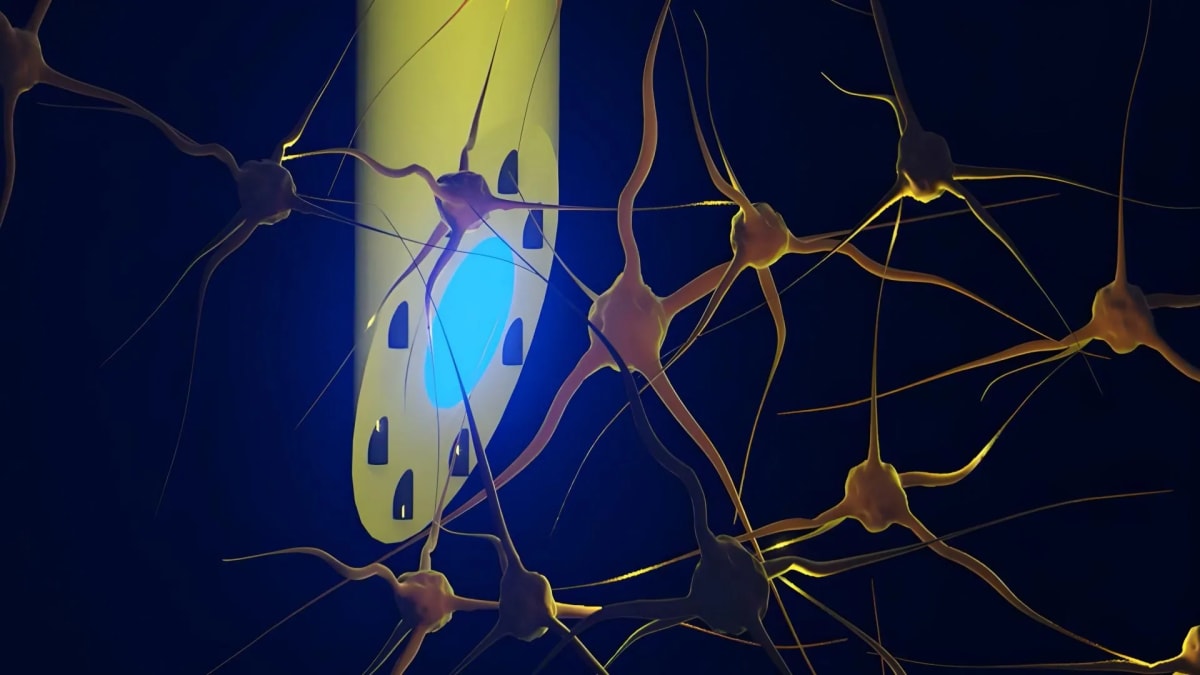
The device works like a microscopic lighthouse. Red and infrared laser beams safely pass through brain tissue to power the implant, which then sends brain activity data back through tiny pulses of infrared light. No wires, no batteries, no surgery to replace worn-out parts.
Professor Alyosha Molnar, who led the development team, explains that the device uses the same communication code as satellite systems. This allows it to transmit data using incredibly little power while still capturing accurate brain signals.
At the heart of the MOTE sits a semiconductor diode made from aluminum gallium arsenide. This single component does double duty, capturing incoming light for power while also emitting light to send data back out. The implant also includes a low-noise amplifier and an optical encoder, all built with the same technology found in everyday computer chips.
The team has already tested the device in living animals, where it successfully transmitted brain activity data for over a year. The longevity and reliability mark a major step forward from larger, more invasive brain monitoring systems that require constant maintenance or replacement.
The Ripple Effect
This breakthrough could transform medical care in ways that seemed impossible just years ago. The materials used in the MOTE could allow doctors to record brain activity during MRI scans, something current implants can't do because they interfere with the magnetic fields.
The technology might help people with epilepsy by monitoring seizure activity without bulky equipment. Patients with Parkinson's disease could benefit from more precise brain monitoring to adjust their treatments. Researchers studying brain disorders could gather data without the complications of traditional implants.
The device could also be adapted for other parts of the body, including the spinal cord. Scientists envision combining this technology with future innovations like optoelectronics embedded in artificial skull plates, creating seamless brain-computer interfaces.
Because the implant is so small and powered by light, doctors could potentially place dozens or even hundreds of them throughout the brain. This would create a detailed map of neural activity that current technology simply can't match.
The research team, which included assistant professor Sunwoo Lee from Nanyang Technological University, published their findings in Nature Electronics. Their work shows that microelectronic systems can operate at scales previously thought impossible.
The path from laboratory to medical treatment still requires years of testing and regulatory approval, but the foundation is now in place for a revolution in how we monitor and treat brain conditions.
Based on reporting by Science Daily
This story was written by BrightWire based on verified news reports.
Spread the positivity!
Share this good news with someone who needs it