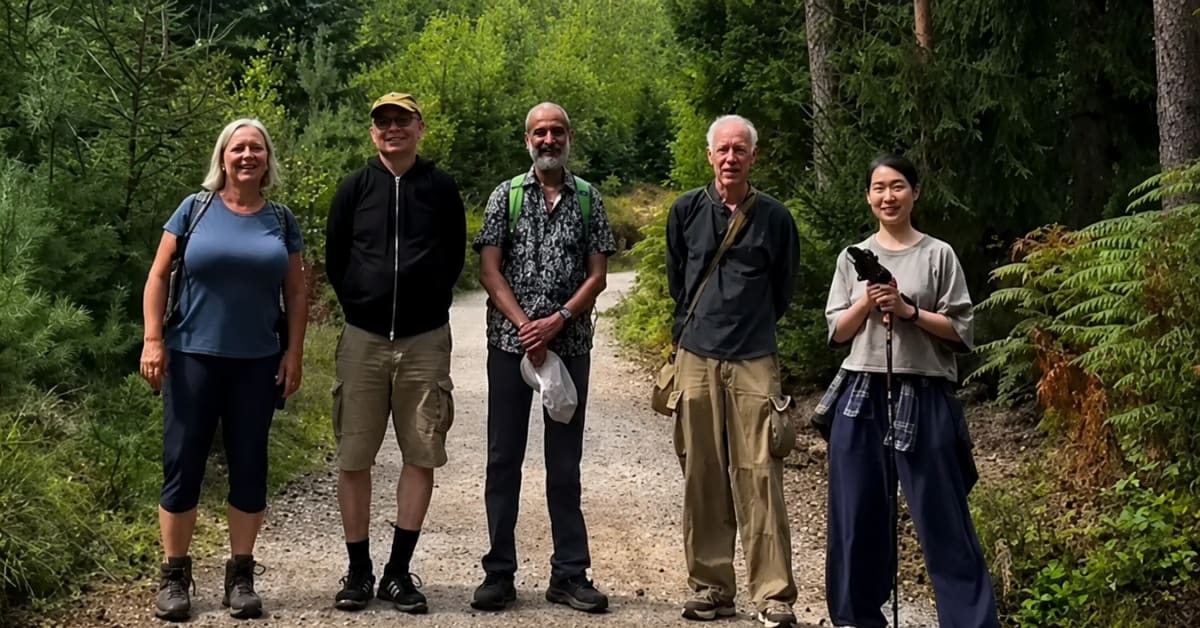
Sanskrit Learners Turn German Mountain Hike Into Language Lab
International students hiked Germany's Elbe Sandstone Mountains while speaking only Sanskrit, transforming the ancient language into a tool for everyday conversation. The informal experiment showed how classical languages can describe modern experiences like steep trails, shared meals, and yoga breaks.
A group of language students walked through Germany's Elbe Sandstone Mountains discussing the steep terrain, checking on each other, and planning their picnic. The catch? They were doing it all in Sanskrit.
The international learners turned their hike into an impromptu language lab, using the 3,500-year-old classical language to describe what they saw and experienced in real time. When they spotted something interesting on the trail, they described it in Sanskrit. When someone needed help navigating rocky paths, they asked in Sanskrit.
The informal practice session happened outside any structured class or summer program. The hikers simply decided to make Sanskrit their conversation language for the day, finding words for modern experiences that weren't part of the ancient texts where many students first encounter the language.
Sanskrit is usually studied through grammar books and historical texts like the Rigveda, which dates back to around 1500 BCE. The language holds important places in Hindu, Buddhist, and Jain traditions, with a literary history spanning thousands of years.
But memorizing vocabulary and analyzing old manuscripts only takes learners so far. The German hike showed participants what happens when you need to use those words right now, to describe what's happening around you.
A steep section of trail created immediate need for words about difficulty and encouragement. Tea and food during their break brought out vocabulary for eating and sharing. The landscape itself became a prompt for conversation that might otherwise stay trapped in textbook exercises.
Some participants even practiced yoga while speaking Sanskrit, blending physical activity with language practice. For international students learning together, the experience created chances to use the language while doing something they enjoyed.
The Ripple Effect
The hike raises an interesting question about keeping classical languages alive. Preserving manuscripts and teaching grammar matters deeply, but actually using a language adds another layer of vitality.
These learners were using Sanskrit to talk about experiences the language's ancient writers never imagined. A mountain hike in modern Germany, casual conversations between international students, discussions about being tired from climbing—none of these scenarios appear in classical texts.
Yet Sanskrit had words for all of them. The hikers just needed the opportunity to find and use those words.
The experiment doesn't replace formal Sanskrit education, where literature, history, and structured learning remain essential. But it demonstrated something simple: languages need opportunities to be spoken, not just studied.
For Sanskrit, those opportunities can happen anywhere learners have something to say to each other—even on a walking trail thousands of miles from where the language was born.
More Images
%2Fenglish-betterindia%2Fmedia%2Fmedia_files%2F2026%2F09%2F02%2Fhike-2-2026-09-02-15-16-28.png)


%2Ffilters%3Aformat(webp)%2Fenglish-betterindia%2Fmedia%2Fmedia_files%2F2026%2F09%2F02%2Fhike-1-2026-09-02-14-15-28.png)
Based on reporting by The Better India
This story was written by BrightWire based on verified news reports.
Spread the positivity!
Share this good news with someone who needs it