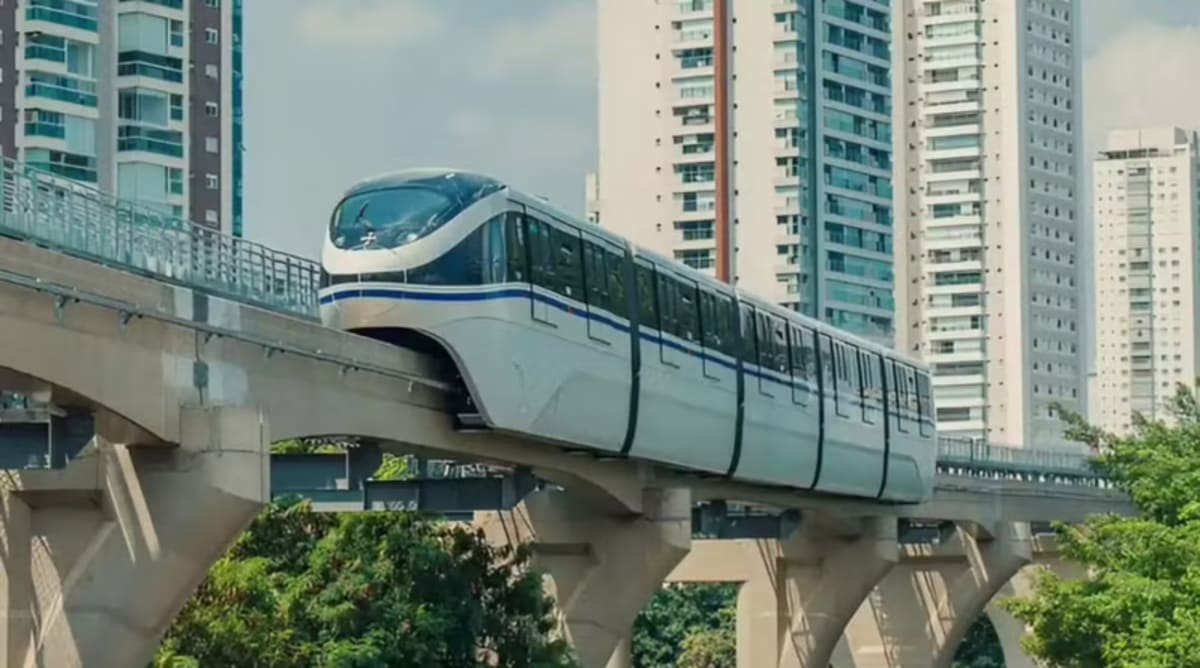
São Paulo Opens Electric SkyRail Connecting Airport
A decade-late transit project finally launched in São Paulo, delivering a compact electric rail system that fits where traditional metros can't. The new Line 17 uses battery backup and automated trains to connect dense neighborhoods to Brazil's second-largest airport.
📺 Watch the full story above
After years of delays, São Paulo just proved that sometimes the wait is worth it when you get the solution right.
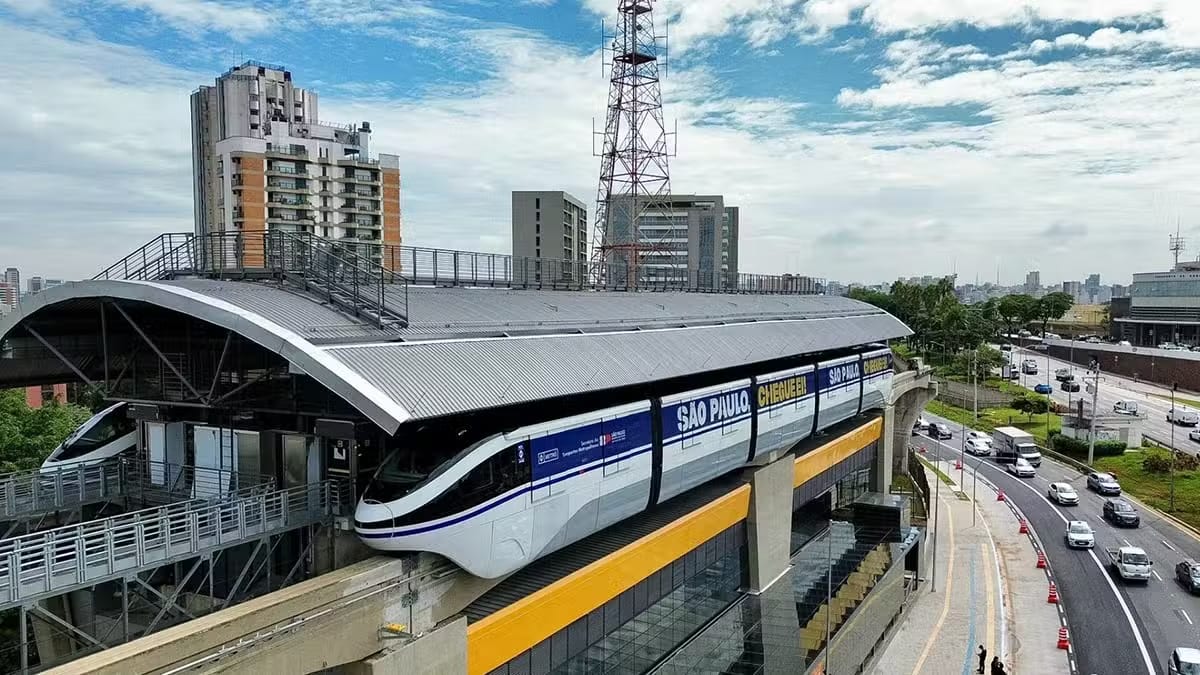
Line 17 opened on March 31st, bringing electric rail service to neighborhoods that never had room for traditional metro lines. Built by Chinese company BYD using their SkyRail technology, the system rides on a single narrow concrete beam that snakes through tight urban spaces where conventional rails would never fit.
The secret is geometry. The track can handle sharp 45-meter curves and steep 10-percent grades, allowing it to follow the existing city layout instead of bulldozing through it. That narrow 800-millimeter beam means no tunnels, no wide corridors, and no massive land purchases in already-crowded districts.
For riders heading to Congonhas Airport, the system offers something subway lines can't: continuity even when power fails. Each five-car train carries the same lithium-iron-phosphate batteries used in electric vehicles, storing enough energy to reach the next station during outages. Passengers experience delays instead of mid-air evacuations.
The trains run completely autonomously at Grade 4 automation, with no onboard operators. Software manages spacing between trains using real-time communication, while systems constantly monitor everything from battery health to tire condition.
The Ripple Effect
The environmental math adds up beyond just electric propulsion. Regenerative braking feeds energy back into the system every time trains slow down. Officials project tens of thousands of tonnes of CO₂ savings annually, though the real impact depends on how many car trips the line replaces.
What makes Line 17 significant isn't cutting-edge technology. It's execution in a city that desperately needed better options. São Paulo got stuck between diesel commuter lines that pollute and traditional metros that cost too much and take too long to build.
The narrow-beam approach solves a problem facing dense cities worldwide: how to add transit capacity without tearing up entire neighborhoods. The same design flexibility that let engineers thread Line 17 through São Paulo could work in other space-constrained cities still relying on buses and cars.
Governor João Doria emphasized the practical win: connecting a major airport, linking dense districts, and relieving chronically jammed roads. BYD executive Stella Li announced plans to establish a local research center, partnering with São Paulo universities to advance electric transit technology.
A project that stalled for a decade is now moving passengers through corridors where conventional rail seemed impossible.
More Images
Based on reporting by CleanTechnica
This story was written by BrightWire based on verified news reports.
Spread the positivity!
Share this good news with someone who needs it