Satellite Captures Stunning 'Ring of Fire' Eclipse From Space
A European satellite photographed February's annular solar eclipse from orbit, revealing spectacular views most people on Earth couldn't see. The images show the moon creating a perfect glowing ring as it passed between our planet and the sun.
Most of us missed the first solar eclipse of 2026, but a spacecraft orbiting Earth just gave everyone a front-row seat to the cosmic show.
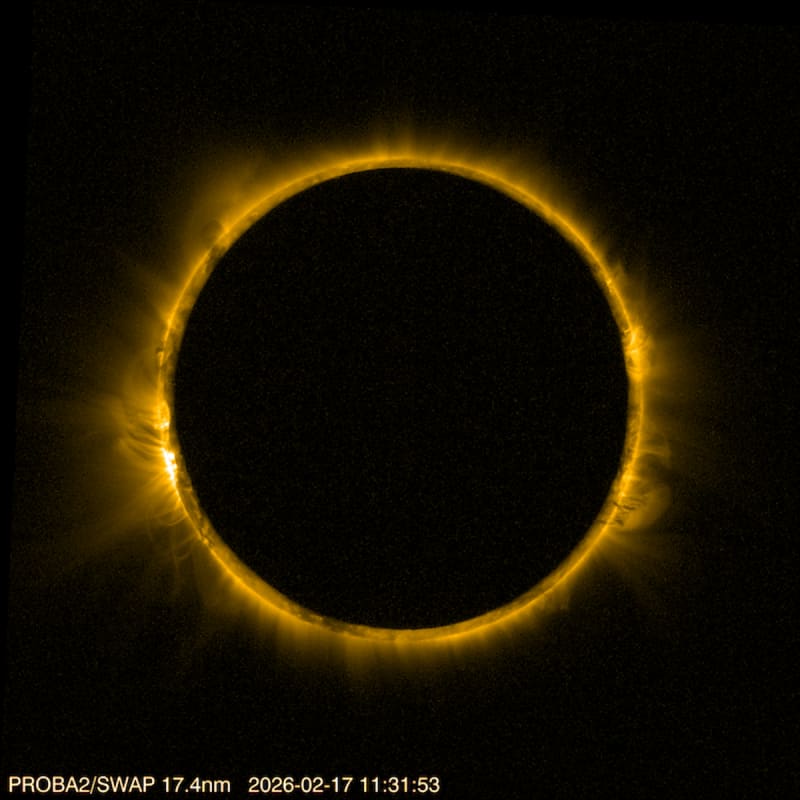
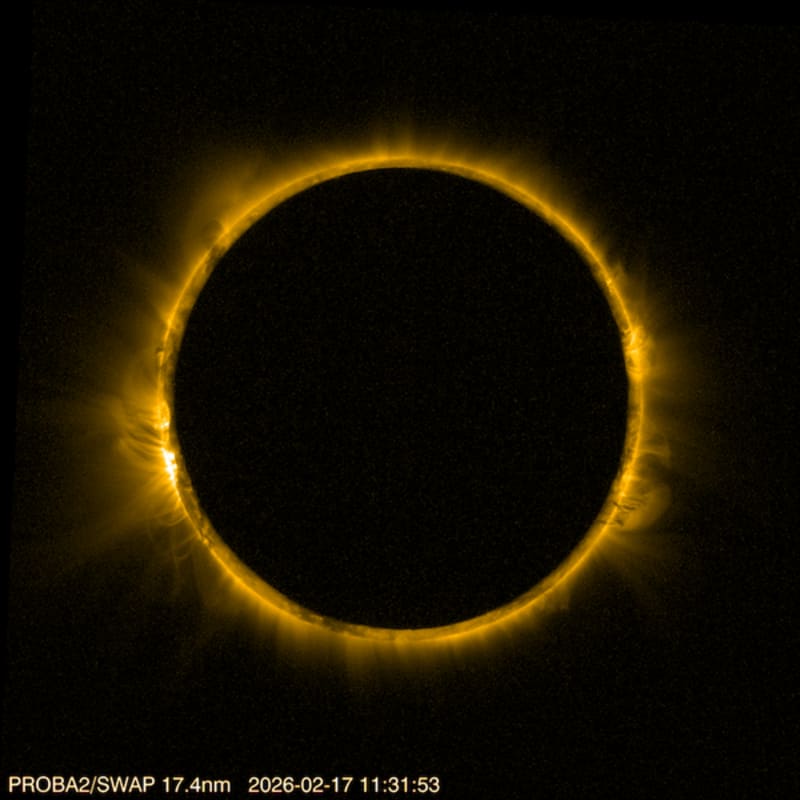
On February 17, the European Space Agency's PROBA-2 satellite captured breathtaking images of an annular solar eclipse as it orbited our planet. The small spacecraft, designed to study the sun and space weather, photographed the eclipse at least four times during its passes over the event.
The resulting images reveal a perfect "ring of fire" blazing in space. This stunning effect happens when the moon passes directly between Earth and the sun but appears slightly too small to completely block our star's light. Instead of total darkness, viewers see a brilliant glowing halo around the moon's dark silhouette.
Only a lucky few witnessed this eclipse in person. The full spectacle was visible exclusively from Antarctica and the waters just off its coast. At Concordia Station in Antarctica, observers watched the ring blaze for about two minutes before it faded.
PROBA-2's orbital vantage point offered something no ground observer could experience: multiple views of the same eclipse from different angles as the satellite circled Earth. The spacecraft's instruments captured the event in all its "plasmatic glory," as the agency described it, revealing details invisible to the naked eye.
Why This Inspires
This story reminds us that space technology doesn't just push boundaries. It democratizes wonder. When geography puts a natural phenomenon out of reach for billions of people, satellites become our eyes in the sky, ensuring everyone can share in Earth's most magnificent moments.
The images also showcase how tools built for scientific research create unexpected gifts. PROBA-2 exists to monitor space weather and study our sun, but its eclipse photos serve a different purpose: connecting humanity to the universe we inhabit.
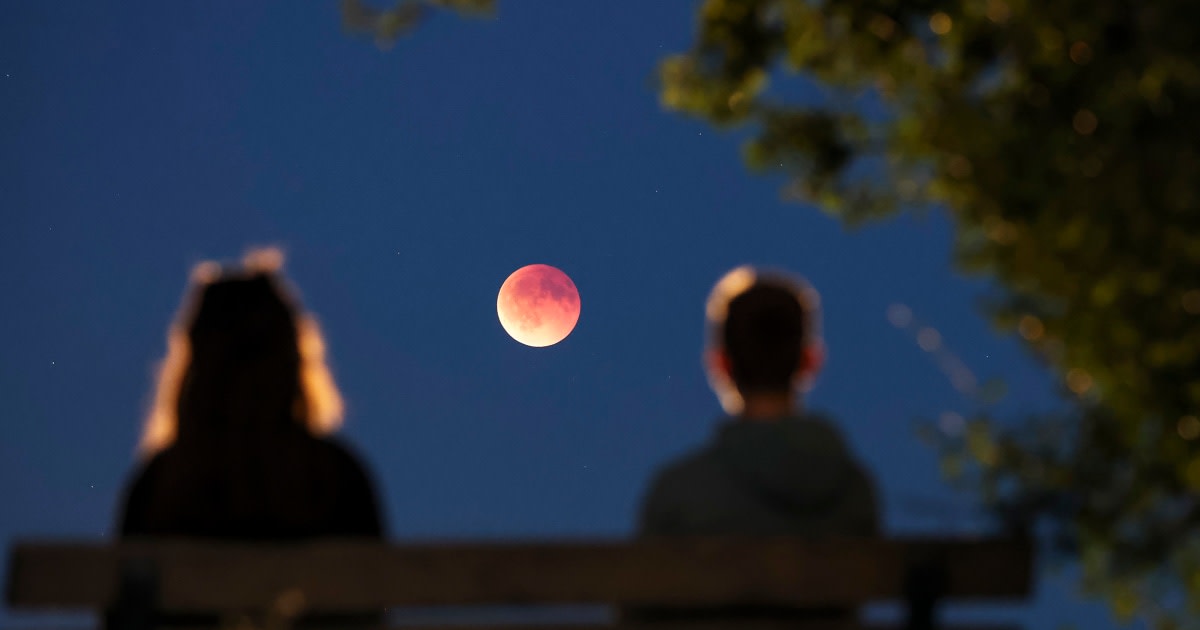
Sky watchers won't wait long for the next show. A total lunar eclipse begins March 3, painting the moon red as Earth's shadow falls across it. Unlike February's ring of fire, this "blood moon" will be visible to much of Asia, Australia, the Pacific Islands, and the Americas.
Thanks to spacecraft like PROBA-2, missing an eclipse no longer means missing the experience entirely.
More Images

Based on reporting by Scientific American
This story was written by BrightWire based on verified news reports.
Spread the positivity!
Share this good news with someone who needs it