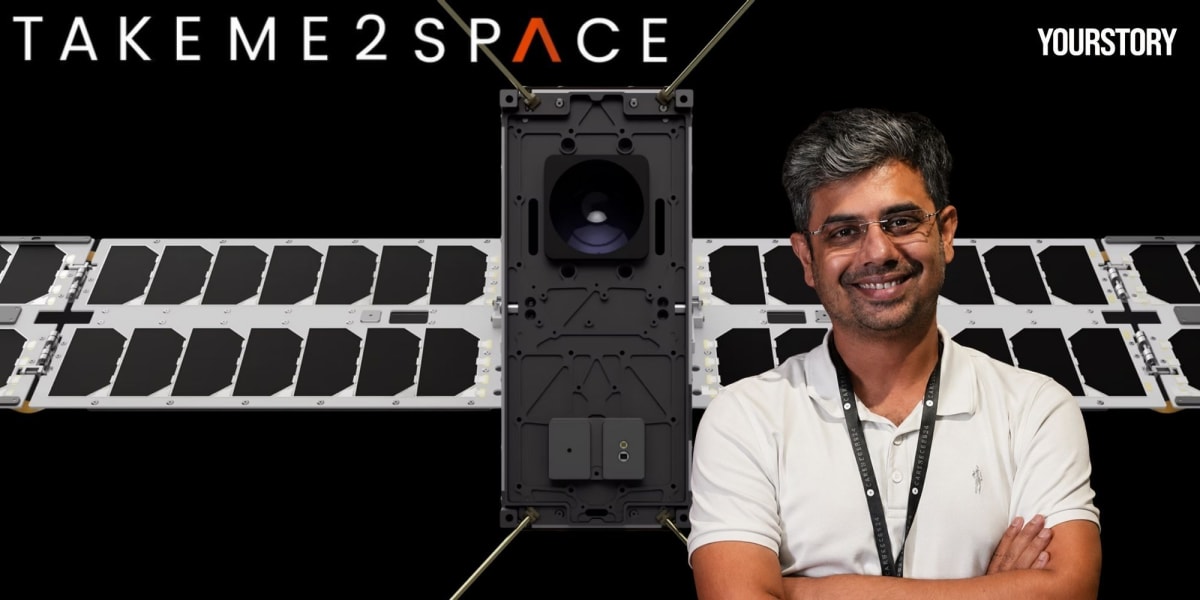
Satellite Startup Processes AI in Space at $2 Per Minute
An Indian startup is solving a massive space problem by running artificial intelligence directly on satellites, sending back answers instead of raw data. After surviving a rocket failure, TakeMe2Space is preparing to launch a constellation that turns orbit into a computing platform.
Satellites collect far more data than they can send home. The camera works perfectly, but the connection to Earth is too narrow and too brief to handle the flood of information pouring in from space.
TakeMe2Space found an elegant solution: process the data where it lives. Instead of beaming down gigabytes of raw images, their satellites run AI analysis in orbit and send back compact answers.
The Hyderabad company calls its service OrbitLab, and anyone can use it. Students, researchers, and businesses upload their AI models to a satellite, run them there, and get encrypted results back. The cost is two dollars per minute of computing time.
Founder Ronak Samantray previously built software company NowFloats before selling it to Reliance Industries in 2019. This time, he's tackling a harder problem: making standard electronics survive the radiation bombardment of space.
The company developed RadShield, a protective coating that lets ordinary computer chips operate in orbit instead of expensive radiation-hardened parts. In January 2025, they proved the concept worked during a fourteen-day test aboard ISRO's rocket testbed, uploading models, running code, and downloading results.
Then disaster struck. Their first operational satellite, MOI-1, was destroyed when a PSLV rocket failed in January 2026. The mission ended 12 minutes after liftoff due to a third-stage malfunction.
The team didn't quit. A replacement satellite, MOI-1a, is scheduled to launch from California in October 2026. The company raised five million dollars in seed funding to expand from one satellite to six, aiming for five kilowatts of computing power connected by optical links in orbit.
Samantray's long-term vision stretches much further. He's seeking 55 million dollars to build a 50-kilowatt orbital data center, a building block toward an eventual gigawatt facility. The company designs and builds nearly everything in-house except solar panels and propulsion systems.
TakeMe2Space has grown from 17 employees toward a target of 60, with planned operations in India, the United States, and Australia. They're also developing StarSense, an AI-powered star tracker that helps spacecraft figure out which direction they're pointing.
Why This Inspires
Space used to mean billion-dollar agencies and decade-long timelines. Now a startup in Hyderabad lets a graduate student rent satellite computing time for the cost of a coffee. The company survived a rocket explosion and came back stronger, proving that the new space economy rewards persistence as much as innovation.
The real breakthrough isn't just technical. It's democratizing access to space infrastructure the same way cloud computing opened up Earth-based processing power to anyone with an idea and a credit card.
Space is becoming a place where answers get made, not just data collected.
More Images




Based on reporting by YourStory India
This story was written by BrightWire based on verified news reports.
Spread the positivity!
Share this good news with someone who needs it