Saudi Cave Discovery Could Bring Cheetahs Home After 100 Years
Scientists discovered remarkably preserved cheetah remains in Saudi Arabian caves, some dating back over 4,000 years. The find could help bring these lightning-fast cats back to landscapes they once called home.
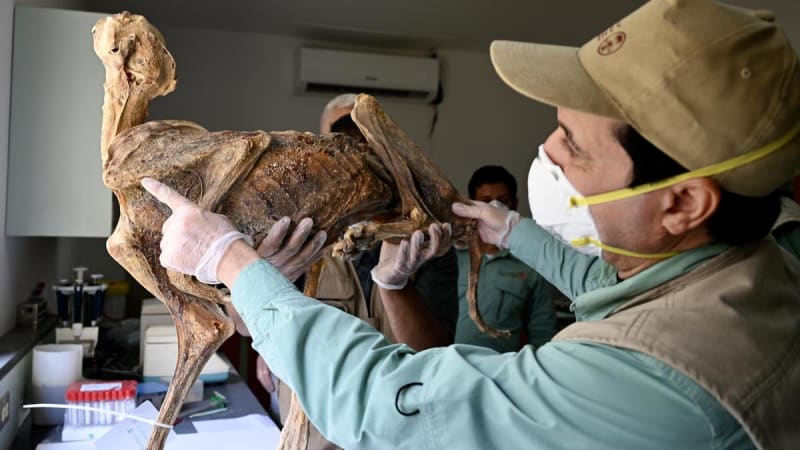
Deep in Saudi Arabia's northern caves, scientists just found something extraordinary: naturally mummified cheetahs that could change the future of wildlife restoration in the Arabian Peninsula.
Researchers unearthed remains from seven mummified cheetahs and 54 skeletal specimens in the Lauga cave network. Some date back 4,223 years, while others disappeared just over a century ago, offering a genetic treasure map for bringing cheetahs back to their ancient homeland.
The DNA told an exciting story. These Saudi cheetahs belonged to two subspecies: the critically endangered Asiatic cheetah and the northwest African cheetah. Neither roams the Arabian Peninsula today, but that could change.
Cheetahs once blazed across most of Africa and Asia, from the Arabian Peninsula to India. Today, they've vanished from 91% of their historical range, with fewer than 50 Asiatic cheetahs surviving in Iran.
But Saudi Arabia has been quietly preparing the ground. Over the past 50 years, the kingdom transformed its approach to wildlife, successfully restoring Arabian oryx, Arabian gazelles, and Nubian ibex to landscapes where they had disappeared.
As these prey animals bounce back, the timing feels right for apex predators to return. The caves themselves likely served as denning sites for cheetah families, protected spaces where mothers raised their cubs in the desert heat.
The Ripple Effect
This discovery does more than map one country's restoration path. It demonstrates how ancient DNA preserved in arid caves can guide modern conservation across entire regions.
Wildlife biologist Ravi Chellam notes that successful reintroduction requires at least 100,000 square kilometers of quality habitat with healthy prey populations and minimal road traffic. Saudi Arabia's restored ungulate populations suggest such spaces might now exist.
The cheetahs would likely come from East or Southern African subspecies, since the critically endangered Asiatic and northwest African populations need every individual to survive. What once seemed impossible now has a roadmap written in bones and preserved tissue thousands of years old.
These cave discoveries prove that with patience, science, and commitment, we can reverse even century-old extinctions. The world's fastest land mammal might soon sprint across Arabian sands again.
Based on reporting by The Hindu
This story was written by BrightWire based on verified news reports.
Spread the positivity!
Share this good news with someone who needs it