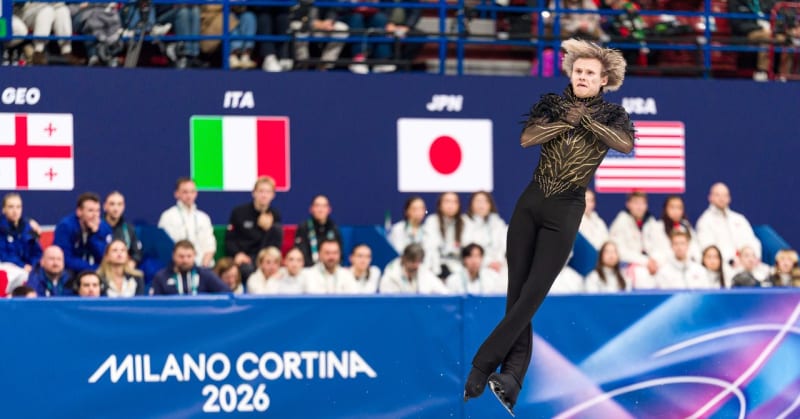
Science Unlocks Secret to Figure Skating's Hardest Jump
Researchers finally figured out why the quadruple axel seemed impossible until Ilia Malinin mastered it at age 17. The answer? Jump higher than anyone thought necessary.
For decades, figure skating's quadruple axel was considered a beautiful impossibility, requiring four and a half rotations in midair before landing on a thin blade of steel.
Then US skater Ilia Malinin changed everything. In 2022, the teenager became the first person to land the jump in competition, earning him the nickname "Quad God." Now he's dominating at the 2026 Winter Olympics, and scientists finally understand his secret.
A 2024 study published in Sports Biomechanics by researcher Seiji Hirosawa revealed the key breakthrough. Malinin and other elite skaters attempting the quad axel jumped significantly higher than previous research suggested was necessary. We're talking 20 inches off the ice.
"This suggests a strategic shift toward increasing vertical height to master quadruple axel jumps," Hirosawa concluded. The extra height provides precious milliseconds of flight time, allowing skaters to complete those additional rotations.
The axel is already the trickiest jump in figure skating. Unlike other jumps, it starts with a forward takeoff, automatically adding half a rotation to the count. That means a single axel requires one and a half turns, while a quadruple demands four and a half spins before your blade touches down again.
Previous biomechanical studies assumed jump height didn't change much between difficulty levels. Hirosawa proved that assumption wrong by analyzing Ice Scope tracking system footage of two skaters attempting the quadruple axel in competition.
Why This Inspires
This discovery represents more than skating science. It shows how questioning long-held assumptions can unlock human potential we thought was out of reach.
Coaches and athletes now have concrete data to guide their training. Instead of just spinning faster, skaters can focus on explosive vertical power to achieve what seemed impossible just years ago.
The study provides "valuable insights into training strategies for managing complex jumps," giving the next generation of skaters a roadmap to their own quad axel moments.
For athletes chasing the seemingly impossible, the message is clear: sometimes the answer isn't working harder at what everyone else is doing, but looking up and aiming higher.
More Images




Based on reporting by Wired
This story was written by BrightWire based on verified news reports.
Spread the positivity!
Share this good news with someone who needs it