Scientist Helped Bald Eagles Soar Back in Virginia
Mitchell Byrd spent 50 years tracking and protecting birds in Chesapeake Bay, helping bald eagles recover from just dozens of breeding pairs to thriving populations across Virginia. His patient fieldwork and community partnerships became the blueprint for saving endangered species.
When Mitchell Byrd first took to the skies over Virginia's rivers in the late 1970s, he could count the state's remaining bald eagle nests on his fingers.
The College of William & Mary scientist had just a few dozen breeding pairs to track. Decades of DDT poisoning had nearly wiped out America's national bird across the entire Chesapeake region.
But Byrd believed that patient observation could turn the tide. Year after year, he climbed into small planes and flew low over marshes and shorelines, mapping every nest and recording every change.
At first, progress came so slowly it was almost invisible. But Byrd kept flying, kept counting, and kept building relationships with the landowners whose property hosted eagle habitat.
His approach combined hard science with something equally important: conversation. He talked to farmers and developers, framing conservation not as restriction but as stewardship of something precious they all shared.
The data he collected became the foundation for protecting critical habitats. His surveys informed land use decisions across the region, helping secure the spaces eagles needed to rebuild their populations.
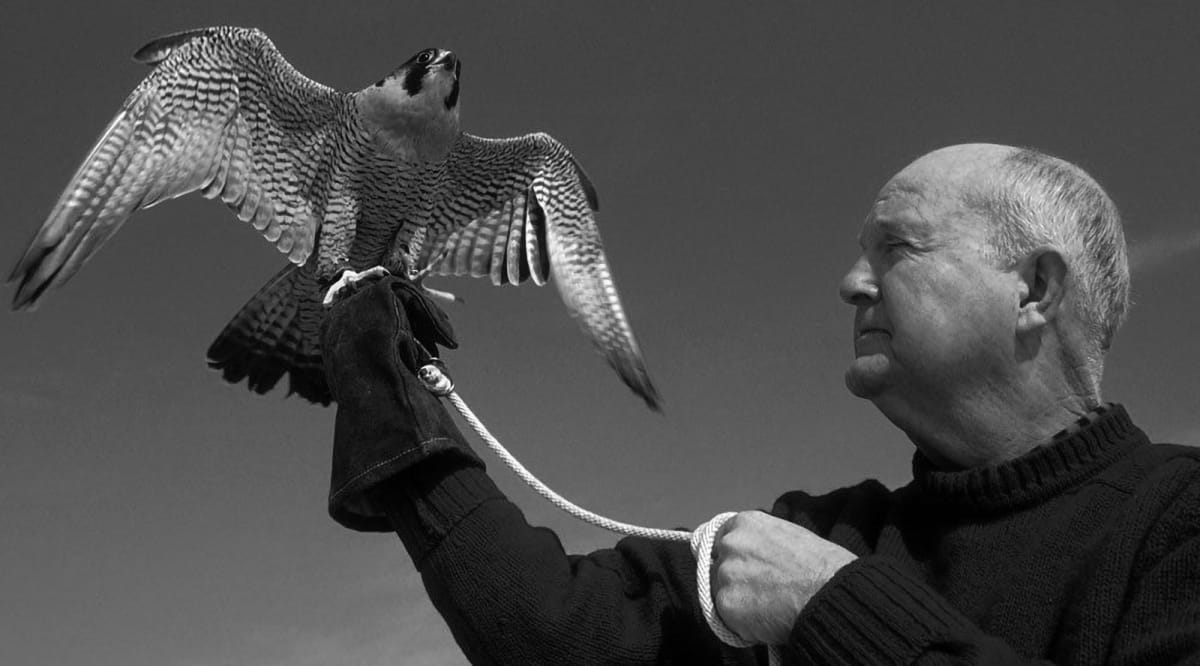
Beyond eagles, Byrd worked to reintroduce peregrine falcons to the eastern United States after pesticides had eliminated them entirely. He studied countless other bird species across the Chesapeake watershed, always with the same careful attention.
In 1992, he co-founded the Center for Conservation Biology to ensure this work would continue for generations. At a time when academic biology was moving indoors to laboratories, Byrd insisted that real conservation happened in the field.
The Ripple Effect
Byrd trained hundreds of students who carried his methods across the country and around the world. His former students now lead conservation efforts from coastal wetlands to mountain ranges, applying the patient fieldwork and community engagement he modeled.
The eagles themselves tell the success story. Virginia now hosts hundreds of breeding pairs, their distinctive white heads visible along rivers where they vanished for decades.
Even in his later years, Byrd continued his aerial surveys, still collecting data, still watching over the birds he'd helped save. His concern never wavered: numbers alone weren't enough if the landscapes supporting them disappeared.
Recovery is rarely dramatic, but it can be complete when someone commits to watching, measuring, and protecting for the long haul.
More Images

Based on reporting by Mongabay
This story was written by BrightWire based on verified news reports.
Spread the positivity!
Share this good news with someone who needs it