Scientists 3D Print Lab Tools for $10 Instead of Thousands
Researchers worldwide are slashing costs and accelerating discoveries by 3D printing their own lab equipment for pennies on the dollar. What once cost thousands now costs less than lunch money.
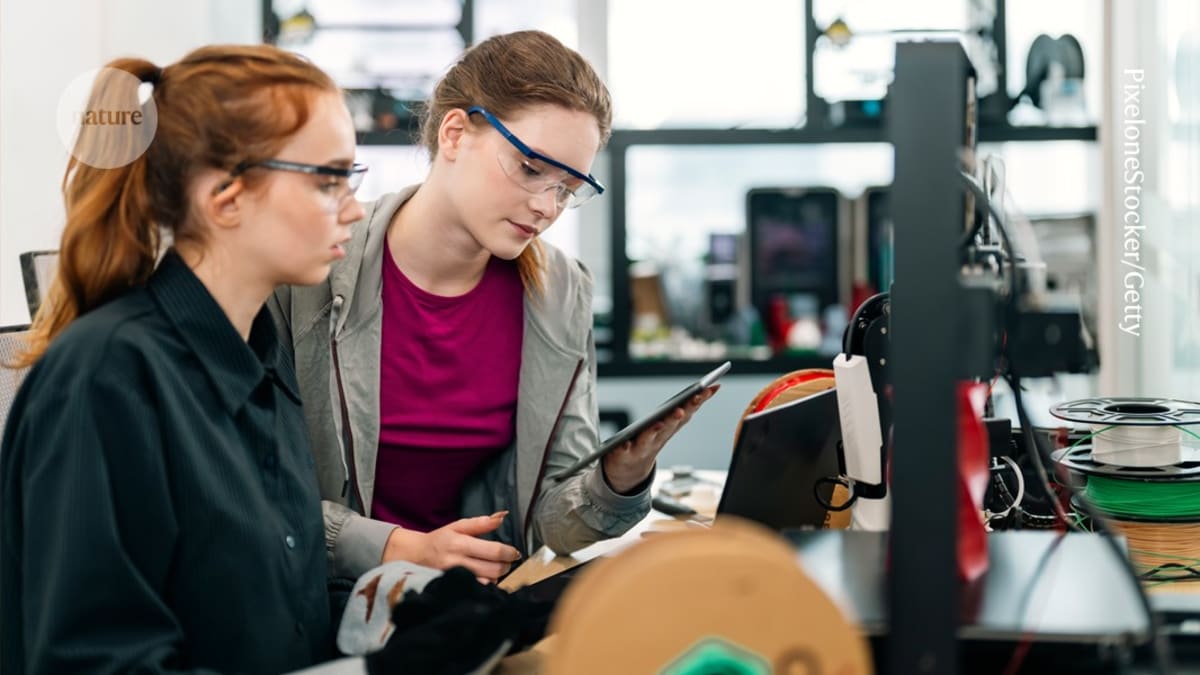
Plant scientist Trevor Rife spent years placing tiny ceramic beads into wells by hand, one tedious scoop at a time. Automated bead dispensers existed, but at thousands of dollars each, his lab at Clemson University couldn't afford them.
Now Rife builds his own dispensers using a 3D printer. Each one costs about $10 and saves him hours of monotonous work every week.
Across labs worldwide, researchers are discovering that 3D printing is revolutionizing how science gets done. Entry-level printers now cost as little as $200, and scientists are using them to create everything from seed counters to anatomically accurate skulls for hearing research.
The savings are staggering. Chemical engineer Magda Barecka at Northeastern University builds flow reactors that normally sell for $6,000 each. Her 3D-printed versions cost less than $5.
At Chiba University in Japan, electrical engineer Irwansyah needed realistic human skulls to study bone conduction for better hearing aids. Commercial dummy heads weren't suitable for his research and cost a fortune. He 3D-printed his own from MRI scans, covering them with custom silicone skin that transmits vibrations just like human tissue.
The technology exploded during COVID-19 when supply chains broke down. "Companies weren't shipping materials to labs, but you could get the printer filament and 3D-print your own tube racks," Rife explains.
Today's printers from companies like Bambu Lab and Prusa cost between a few hundred and a few thousand dollars. Rife owns several, including a Bambu X1C for about $1,200.
The Ripple Effect spreads far beyond individual labs. Rife shares all his designs on GitHub and websites like Thingiverse, making them free for anyone to download and customize. His bead dispenser can be adapted for different plate sizes, and his seed counter adjusts to different seed dimensions.
"It's so much easier to email someone a design file than it is to ship a piece of equipment," Rife says. This matters especially for researchers in developing countries who face high shipping costs and import delays.
The customization possibilities are endless. Irwansyah can add ear canals to his skulls or place sensors where cochleae would be. Rife designed his files so that changing one parameter automatically adjusts others, preventing overlaps or spacing errors.
"You have the opportunity to make these bespoke tools for science," Rife says. "It's only really limited by your creativity and your imagination."
For scientists worldwide, that limitation is proving surprisingly small.
More Images



Based on reporting by Nature News
This story was written by BrightWire based on verified news reports.
Spread the positivity!
Share this good news with someone who needs it