Scientists Achieve 3.16% Efficiency in Solar Hydrogen Production
University of Michigan researchers have created quantum materials that split water into clean hydrogen using only sunlight, achieving record efficiency outdoors. This breakthrough could help produce carbon-free fuel for trucks, trains, and ships without burning fossil fuels.
Imagine fueling a semi-truck with nothing but sunlight and water, leaving only water vapor behind. Scientists just took a major step toward making that dream real.
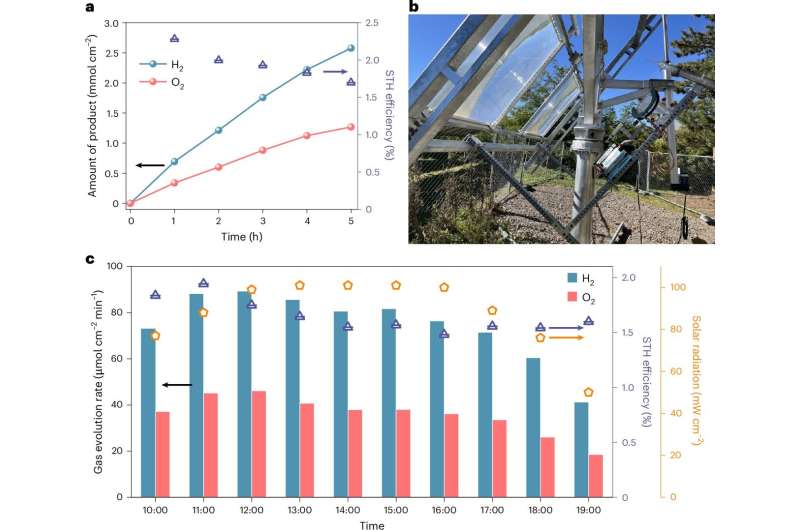
Researchers at University of Michigan have developed new quantum materials called excitonic quantum superlattices that convert sunlight and water directly into hydrogen fuel. In outdoor tests, the materials achieved 1.64% efficiency under concentrated sunlight, with lab tests reaching 3.16%.
These results might sound small, but they represent a significant leap forward for clean hydrogen production. Most hydrogen today comes from burning fossil fuels, which defeats the purpose of using a clean fuel in the first place.
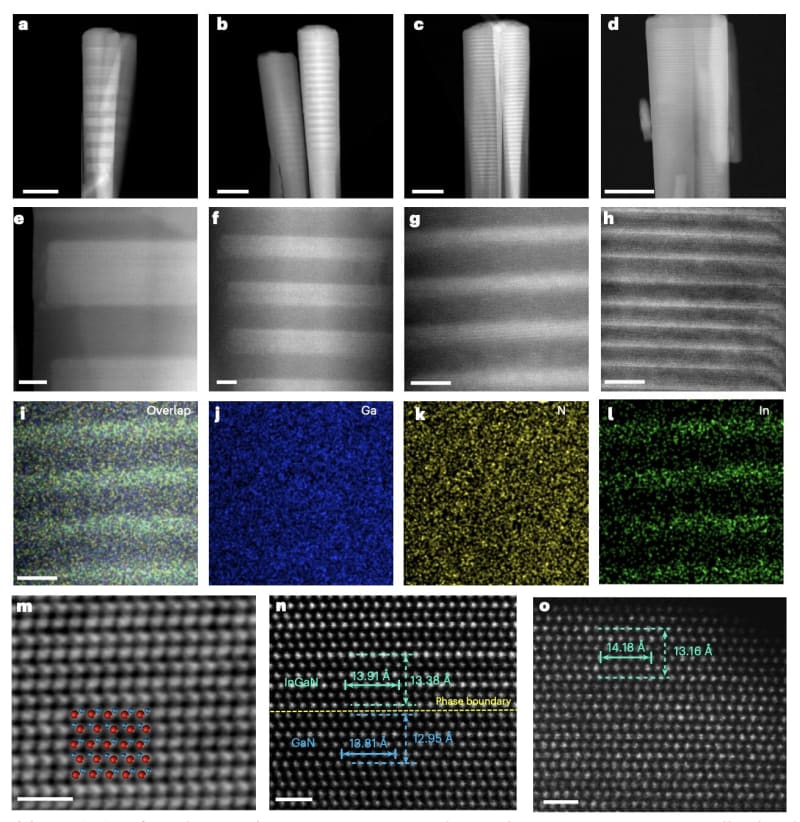
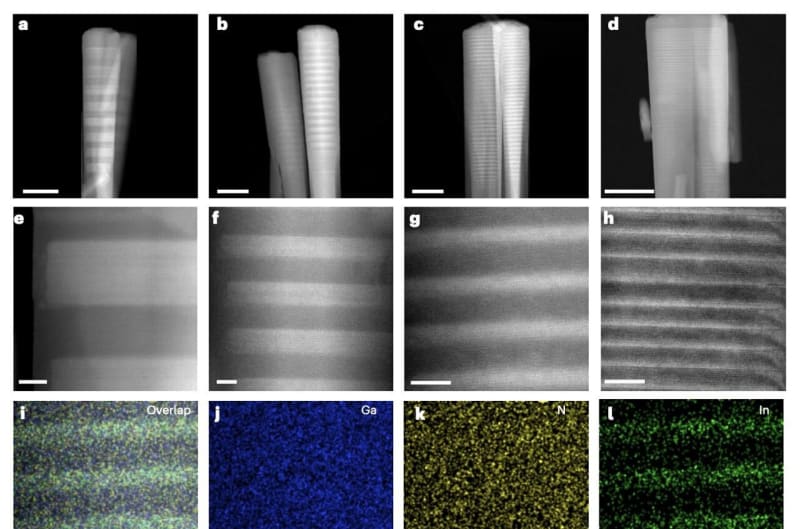
The innovation lies in how the materials work. The team combined gallium nitride and indium gallium nitride into ultra-thin layered structures just nanometers thick. When sunlight hits these layers, they create excitons, which are pairs of electrons and holes that work together to split water molecules.
The researchers cleverly extended how long these excitons survive using something called the quantum-confined Stark effect. The longer lifespan gives the particles more time to break apart water, producing hydrogen and oxygen more efficiently than previous attempts.
Lead researchers Yuyang Pan and Bingxing Zhang tested their materials both in controlled lab settings and outdoors in real-world conditions. The outdoor demonstration proved the technology works beyond the laboratory, a crucial step toward practical applications.
Why This Inspires
This breakthrough matters because hydrogen could transform how we power heavy transport and industry without adding greenhouse gases to our atmosphere. Trucks, trains, ships, and industrial heating all need powerful, reliable fuel that batteries can't yet provide efficiently.
The quantum superlattice design also opens doors for other researchers to build on this approach. As efficiency improves through refinement and new designs, solar-powered hydrogen production could become cost-competitive with traditional methods.
The path from 1.64% efficiency to commercial viability still requires work, but proving the concept works outdoors shows we're moving from theory to reality. Each percentage point gained brings us closer to fueling our world with nothing but sunshine and water.
Clean hydrogen production once seemed like distant science fiction, but today it's happening in Michigan laboratories and outdoor test sites, turning sunlight into the fuel of tomorrow.
More Images

Based on reporting by Phys.org - Technology
This story was written by BrightWire based on verified news reports.
Spread the positivity!
Share this good news with someone who needs it