Scientists Build Chip That Slows Light on Command
Researchers have created a programmable chip that can slow down light whenever needed, solving a major bottleneck in optical computing. The breakthrough could make AI servers and data centers faster, cheaper, and far more energy efficient.
Scientists just cracked a challenge that's been holding back the future of computing: how to make light wait.
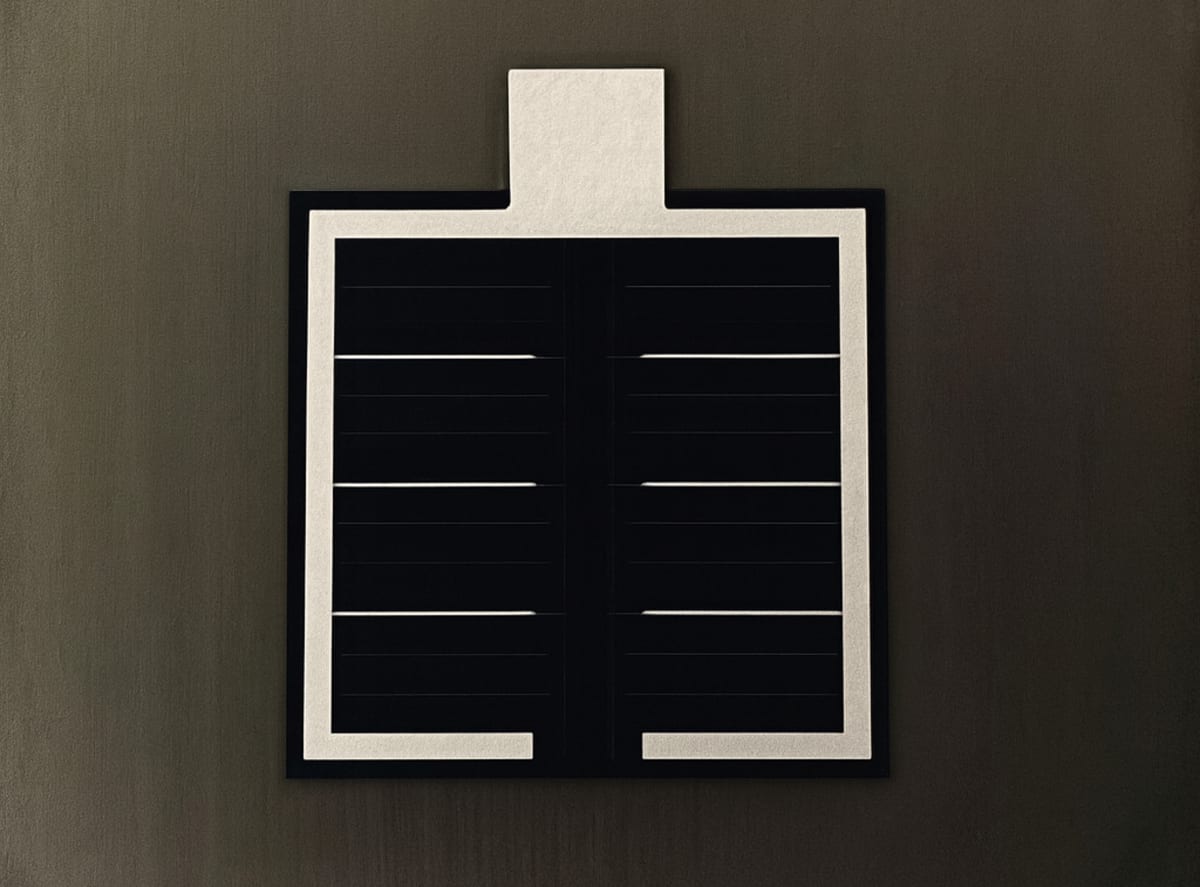
Researchers at Seoul National University and the University of Seoul have built a programmable photonic chip that can slow light on demand. The innovation gives engineers precise control over how fast optical signals move through circuits, something that's been nearly impossible until now.
The breakthrough comes at a crucial time. Generative AI and large language models are consuming massive amounts of computing power, pushing traditional electronic chips to their limits. Data centers worldwide are struggling with skyrocketing energy costs and speed constraints that can't keep up with demand.
Optical computing, which uses light instead of electrical signals to process information, has long promised a solution. Light moves data at incredible speeds while using less power than electronics. But there's been one stubborn problem: light naturally travels at a fixed speed, making it nearly impossible to create the delays and memory functions that computers need.
The research team, led by Professors Namkyoo Park and Sunkyu Yu, found an elegant workaround. They designed a chip using a technique called coupled-resonator-induced transparency, or CRIT, which uses interference among multiple optical resonators to control light's behavior. Their design adds two programmable loop couplers that work together to adjust how light moves through the circuit.
Previous CRIT devices were locked into one configuration after manufacturing. Engineers who needed different capabilities had to build entirely new chips. The new design changes that by treating two optical states as one unified control system, letting the same chip perform multiple tasks.
The researchers demonstrated they could adjust not just the speed of light signals, but also their bandwidth, shape, and how efficiently they travel through the system. A single programmable chip could eventually replace several separate devices currently used in data centers.
The Ripple Effect extends far beyond faster computers. AI servers consume enormous amounts of electricity, contributing significantly to global energy use. More efficient optical chips could dramatically reduce that footprint while processing information faster. Data centers could handle more computational work without building new facilities or installing additional cooling systems.
The technology could also lower costs for cloud computing services and make advanced AI tools more accessible. When computing becomes more efficient, those savings typically flow through to users and businesses that rely on these systems.
The study, published in Advanced Science, represents years of work solving fundamental physics challenges. The team proved their concept works in practice, not just in theory, bringing optical computing closer to widespread reality.
Future data centers might run on light instead of electricity, processing information at speeds that make today's fastest systems look sluggish while using a fraction of the power.
Based on reporting by Science Daily - Technology
This story was written by BrightWire based on verified news reports.
Spread the positivity!
Share this good news with someone who needs it