Scientists Build $4,000 Robot That Mimics 60M Years of Evolution
University of Michigan researchers created an affordable, shapeshifting robot that lets scientists test evolutionary theories in 20 minutes instead of years. The open-source design helps biologists answer questions about animal movement that experiments on living creatures never could.
Scientists just cracked open a time machine for studying evolution, and it costs less than a used car.
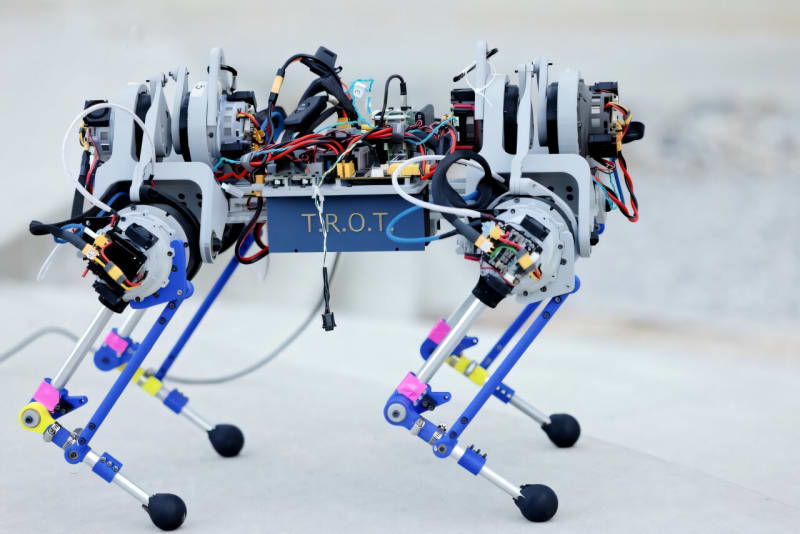
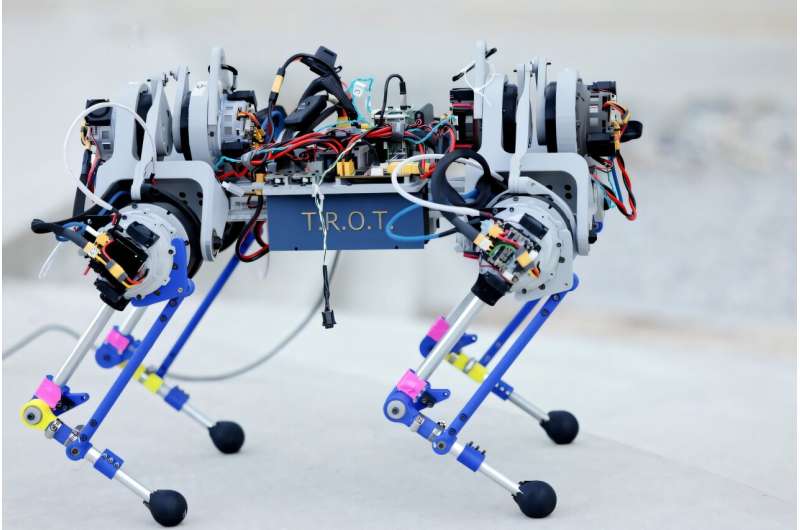
Researchers at the University of Michigan built a robot called TROT (The Robot of Theseus) that can transform its body to mimic different animal species in just 20 minutes. The open-source design uses 3D-printed parts and costs under $4,000, making it accessible to labs that could never afford custom robotics before.
The breakthrough solves a problem that has frustrated evolutionary biologists for decades. When studying why cheetahs run so fast or wolves have such endurance, researchers can't isolate individual factors because living animals come as complete packages. Change one thing, and you change everything.
TROT changes that game completely. Scientists can now test specific theories by swapping out limb lengths, adjusting joints, or redistributing weight while keeping everything else constant.
Assistant Professor Talia Moore, who led the project, wanted to understand how extinct animals moved based on their fossilized bones. Traditional robots that precisely mimicked one extinct species took years to build. Her team needed something faster and more flexible.
The modular design delivers three major advantages. First, researchers without robotics degrees can build and customize it using equipment available at most universities. Second, the robot can model most mammals and theoretical designs that evolution never tried, helping scientists understand why certain body plans succeeded or failed. Third, it uses backdrivable motors instead of springs to mimic muscle energy storage, making measurements more accurate.
The team already proved TROT's value by solving a 50-year-old mystery. A 1974 experiment compared running cheetahs and goats but couldn't measure how much energy the cheetah's tapered legs actually saved because too many other factors differed between the animals. TROT isolated just the weight distribution in limbs and measured the exact energetic benefit for the first time.
Lead author Karthik Urs, a recent master's graduate, designed TROT with simplicity in mind. The low part count and foolproof assembly mean scientists can fabricate pieces in-house, assemble quickly, and iterate fast on both robot and experimental designs.
Why This Inspires
This robot democratizes cutting-edge research in the most beautiful way. Labs without million-dollar budgets or engineering departments can now tackle questions about evolution, biomechanics, and animal movement that were previously out of reach.
The team designed TROT for teaching too, acknowledging that some 3D-printed parts break easily but are simple to fix. That philosophy means students can learn by doing, making mistakes without costly consequences.
Future studies with TROT could even improve commercial robot designs. Most four-legged robots today have identical front and back legs, but this research platform could reveal how to optimize leg design for specific tasks and terrain.
Sixty million years of evolution, compressed into 20 minutes of assembly work, now belongs to any researcher with a 3D printer and curiosity.
More Images


Based on reporting by Phys.org - Technology
This story was written by BrightWire based on verified news reports.
Spread the positivity!
Share this good news with someone who needs it