Scientists Build Robots That Redesign Themselves in Minutes
Researchers at Northwestern University created modular robots that automatically reconfigure their own bodies and immediately run through outdoor terrain. The breakthrough could finally unlock robots that adapt on the spot to any challenge.
Scientists just cracked one of robotics' biggest puzzles: how to make machines that redesign themselves in the field and keep moving without missing a beat.
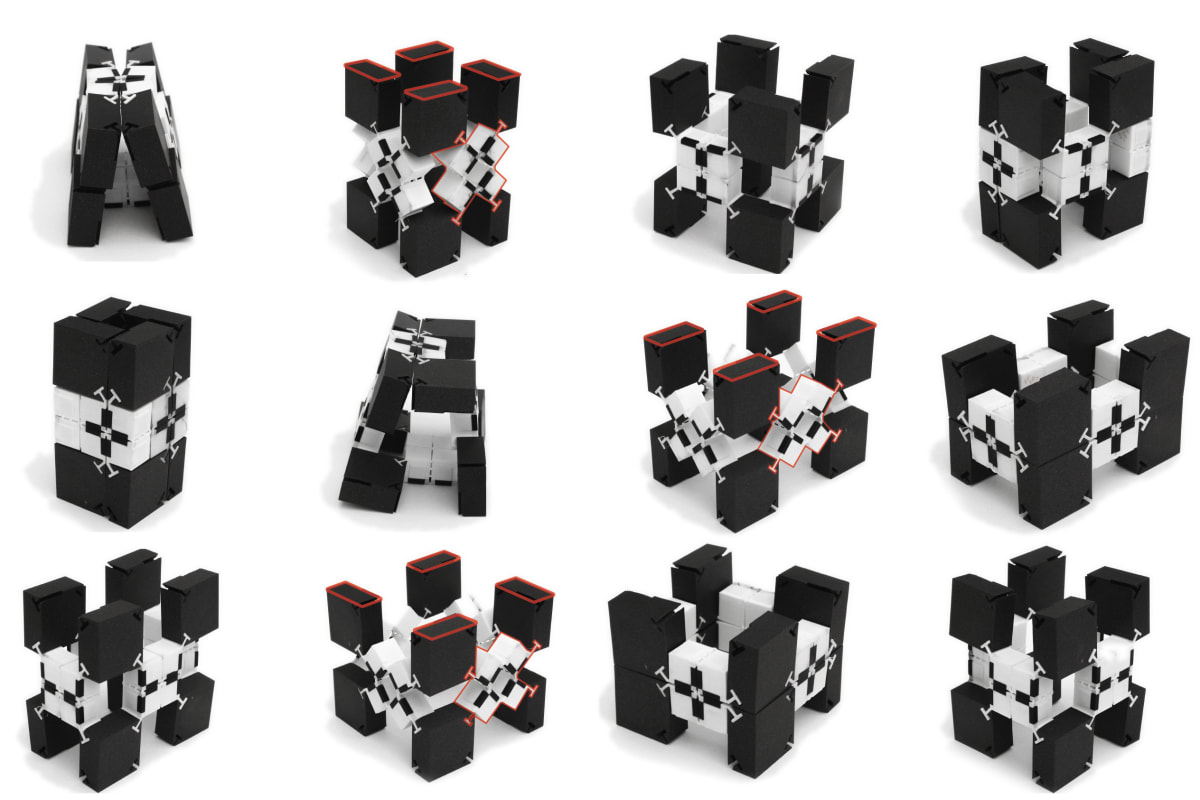
A team at Northwestern University's Center for Robotics and Biosystems built athletic modular blocks that snap together into entirely new robot designs. These aren't clunky prototypes that need days of programming—they hit the ground running in actual outdoor environments.
Until now, every agile robot in the wild had a body plan locked in by human designers before it ever left the lab. That manual process kept us stuck with mostly four-legged designs, because creating and testing new forms took too long to be practical.
The Northwestern team solved this by creating smart building blocks that work like robotic LEGO pieces on steroids. Each module knows how to move and coordinate with others, so when they combine into a new configuration, the whole system figures out how to walk, run, or climb immediately.
The Ripple Effect
This breakthrough opens doors across industries that desperately need adaptable machines. Search and rescue teams could deploy robots that reconfigure to crawl under rubble, then stand tall to scan for survivors.
Space agencies could send fewer robots that morph for different missions instead of packing specialized machines for every task. Infrastructure inspectors could use one system that reshapes to navigate pipes, climb towers, or squeeze into tight spaces.
The modular approach also means cheaper, more sustainable robotics. Instead of building entirely new robots for each job, teams could swap and rearrange components they already own.
Other researchers are taking notice. Carnegie Mellon University recently showcased their own reconfigurable robot responding to a simulated nuclear contamination leak, hot-swapping its camera from standard to thermal when lights went out.
The technology proves that nature's approach—one body plan, one purpose—doesn't have to limit machines. Robots can be shapeshifters that adapt as fast as their environment demands.
We're watching robotics grow beyond its awkward teenage phase into something genuinely useful for the messy, unpredictable real world.
More Images

Based on reporting by IEEE Spectrum
This story was written by BrightWire based on verified news reports.
Spread the positivity!
Share this good news with someone who needs it