
Scientists Capture Amazing 'Spark of Vision' in Breakthrough Eye Research
For the first time ever, researchers have witnessed the magical moment when our night-vision cells spring into action, capturing a tiny "twitch" that could revolutionize how we detect and treat eye diseases. This groundbreaking discovery promises earlier diagnoses and better outcomes for millions facing vision loss.
In an exciting breakthrough that brings hope to millions worldwide, an international team of scientists has achieved something truly remarkable—they've captured the very first moment our eyes' night-vision cells detect light, witnessing a microscopic "twitch" that represents the spark of vision itself.
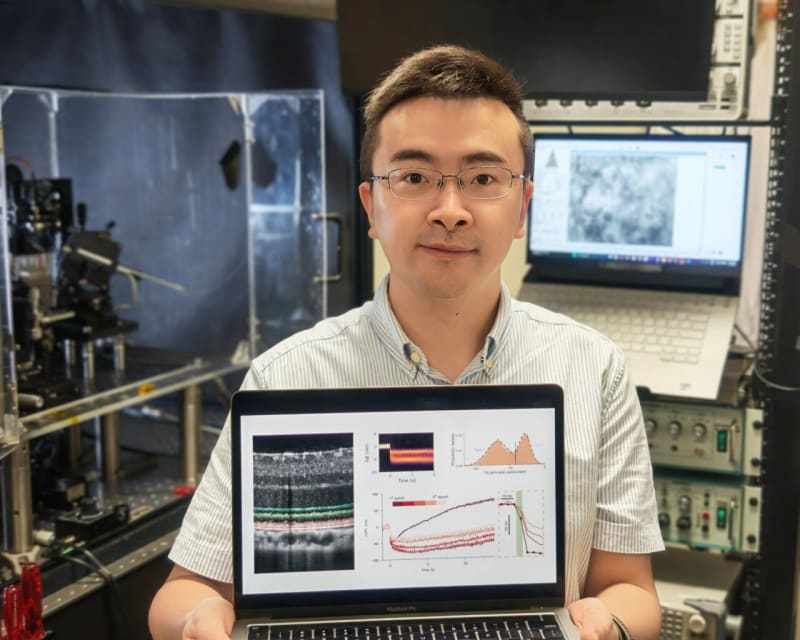
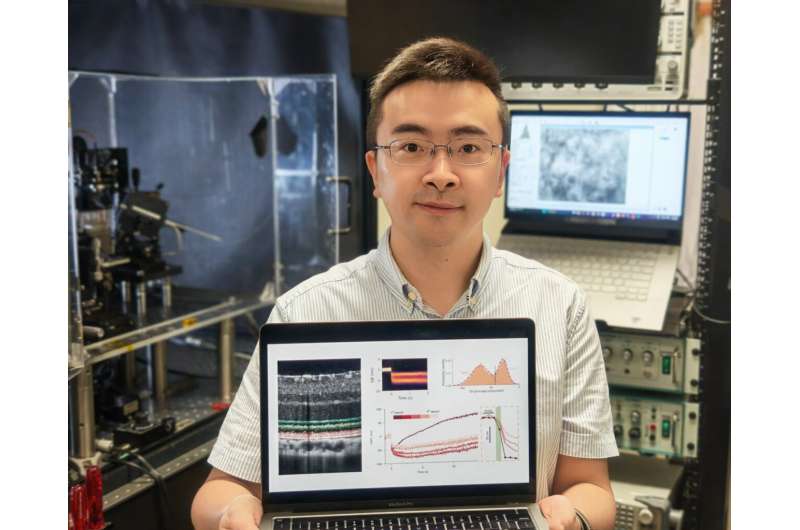
Led by researchers at Nanyang Technological University in Singapore, this pioneering team has opened a window into one of nature's most fundamental processes. Using an innovative imaging technique called optoretinography, they observed rod photoreceptors—the specialized cells that allow us to see in dim light—contracting by just 200 nanometers in a mere 10 milliseconds when light reaches them. That's faster than a hummingbird's wing beats!
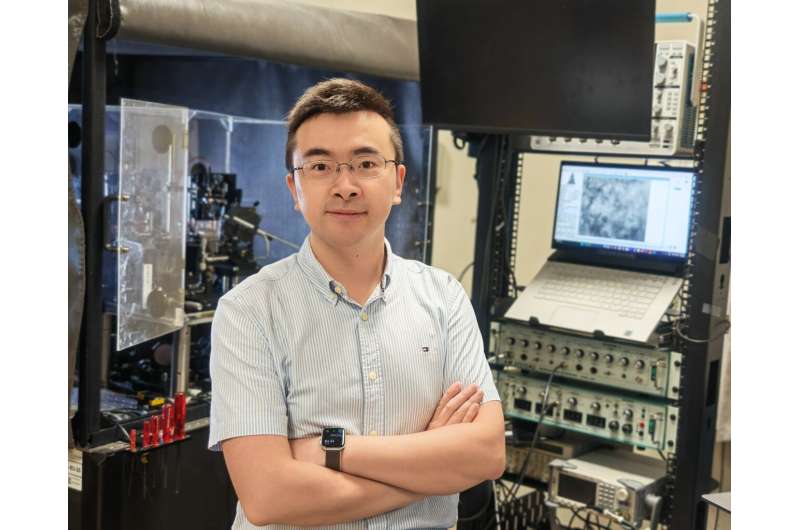
"The 'twitch' of the eye's night-vision cells is akin to the ignition spark of vision," explains Dr. Tong Ling, the study's lead investigator and Nanyang Assistant Professor at NTU. This discovery reveals something scientists have long theorized but never witnessed: the mechanical movement accompanying the electrical signals these crucial cells produce.
What makes this breakthrough particularly exciting is its promise for patients. Rod photoreceptors make up about 95% of all light-detecting cells in our retinas, and they're often the first to deteriorate in conditions like age-related macular degeneration and retinitis pigmentosa. Until now, doctors had limited tools to assess these vital cells, and existing methods could be uncomfortable for patients.
The new technique changes everything. It's completely noninvasive, requiring no dyes, labels, or uncomfortable procedures. Patients can simply have their eyes imaged while doctors gain unprecedented insight into how their rod cells are functioning at the most fundamental level.
Professor Ramkumar Sabesan from the University of Washington School of Medicine, who collaborated on the research, emphasizes the clinical significance: "Being able to directly monitor the rods' response to light gives us a powerful tool for disease detection and tracking treatment responses earlier and with greater sensitivity than any conventional diagnostic instrument."
Independent experts are equally enthusiastic. Professor Jost Jonas, an ophthalmologist at Heidelberg University in Germany, calls the technique "clinically and scientifically very interesting and promising," noting that it could enable earlier diagnosis of retinal diseases and help us better understand how retinal cells work together.
The research represents a beautiful example of international scientific collaboration, bringing together biomedical engineers, physicists, and clinical scientists from institutions across Singapore, the United States, and beyond. Their combined expertise made this breakthrough possible.
Looking ahead, this discovery opens exciting new avenues for both understanding vision and protecting it. By detecting rod dysfunction earlier than ever before, doctors may be able to intervene sooner, potentially saving sight for countless individuals. For the millions of people at risk of vision loss, this research represents genuine hope—a chance for earlier detection, better monitoring, and ultimately, better outcomes.
The findings, published in the prestigious journal Light: Science & Applications and presented at a major ophthalmology conference, mark just the beginning of what promises to be a transformative approach to eye care.
More Images
Based on reporting by Medical Xpress
This story was written by BrightWire based on verified news reports.
Spread the positivity! 🌟
Share this good news with someone who needs it
More Good News
 🚀 Innovation
Philanthropists Launch Revolutionary Space Telescope to Democratize Cosmic Discovery
 🚀 Innovation
Ancient Moroccan Fossils Illuminate Our Fascinating Human Story
 🚀 Innovation
Ancient Innovation: 60,000-Year-Old Discovery Reveals Our Ancestors' Remarkable Intelligence
Joke of the Day
Why did the librarian get kicked out of class?
Explore Categories
Quote of the Day
"Do not go where the path may lead, go instead where there is no path and leave a trail."
— Ralph Waldo Emerson