Scientists Capture Trees Glowing During Storms for First Time
After 70 years of theory, researchers finally caught trees producing ghostly electrical glows during thunderstorms. These tiny bursts of electricity might secretly help clean our air.
Scientists driving a minivan packed with telescopes just proved something nature has been hiding for decades: trees actually glow during storms.
In June 2024, Penn State researchers chased Florida thunderstorms for three weeks without success. But on their drive home through North Carolina, they finally captured what no one had seen before outside a lab.
William Brune and his team parked at the University of North Carolina at Pembroke during a two-hour thunderstorm. They aimed their special UV-sensitive telescope at a sweetgum tree 100 feet away and watched their screens light up with 859 tiny electrical bursts called corona discharges.
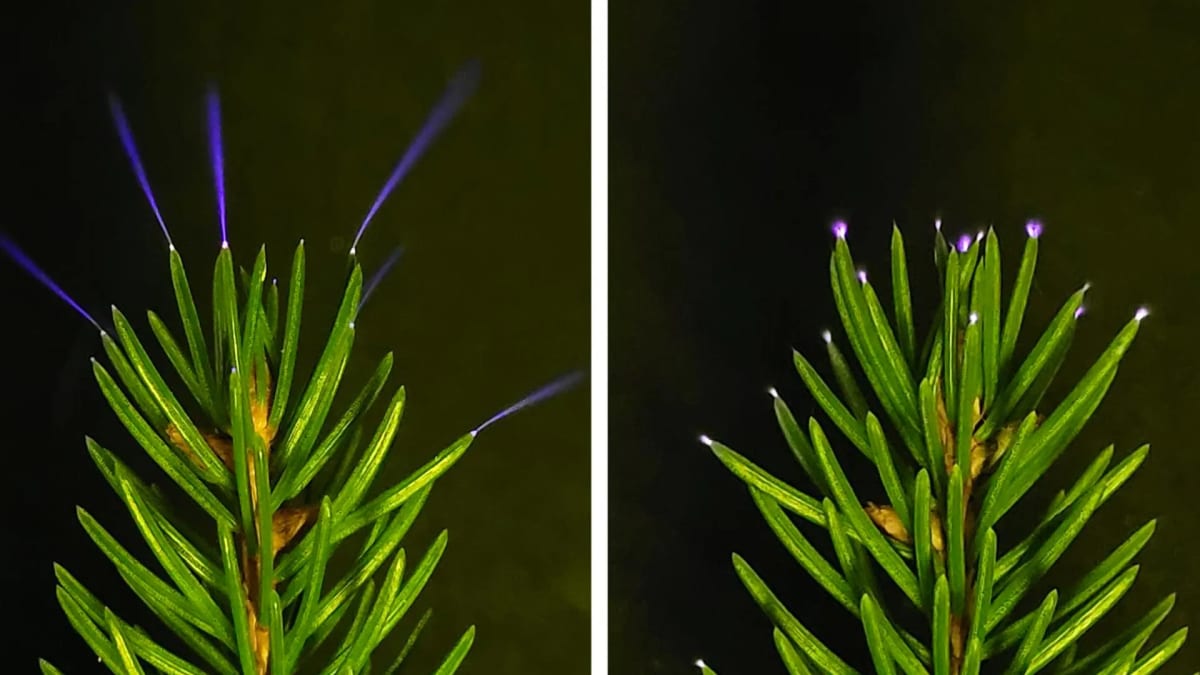
These faint glows happen when storm clouds create massive electrical imbalances. Positive charges race up through trees and concentrate at leaf tips, creating fields so intense they produce visible flashes in ultraviolet light.
The team also caught 93 corona events on a nearby loblolly pine as the storm weakened. Patrick McFarland, the doctoral student who led the study, called it pure discovery science after more than half a century of speculation.
Why This Inspires
Here's where it gets really exciting: those tiny electrical bursts might be cleaning our air right now. The UV radiation breaks apart water vapor molecules and creates hydroxyl, which works like nature's scrub brush for the atmosphere.
Hydroxyl reacts with pollutants and transforms them into substances easier to eliminate. That includes methane, a major greenhouse gas, along with other chemicals floating through forest canopies.
The researchers had tested this in labs before by zapping tree branches with electricity. They found strong links between corona discharges and hydroxyl production, confirming the air-cleaning effect.
To catch it happening in nature, they built the Corona Observing Telescope System from scratch. The device mounts on a modified 2013 Toyota Sienna with a telescopic arm extending from the roof and includes sensors to measure atmospheric electricity.
The system blocks normal solar UV light so only corona, lightning, and fire show up. This specificity let them distinguish tree glows from other natural phenomena during the storm.
Their findings, published in Geophysical Research Letters, open new questions about how forests interact with our atmosphere. If trees routinely produce these glows during storms worldwide, the cumulative air-cleaning effect could be significant for both air quality and climate.
The team noticed minor leaf damage where corona formed, showing the electrical intensity at those tiny points. But that small cost might come with a big environmental benefit we never knew forests were providing.
What started as a long shot road trip turned into proof that nature still has surprises waiting in plain sight.
Based on reporting by Science Daily
This story was written by BrightWire based on verified news reports.
Spread the positivity!
Share this good news with someone who needs it