Scientists Clone Female Mice From Males to Save Species
Japanese researchers used gene editing to create fertile female mice from male cells, a breakthrough that could help save endangered species when only males remain. The team successfully bred these opposite-sex clones with their original donor, producing healthy offspring.
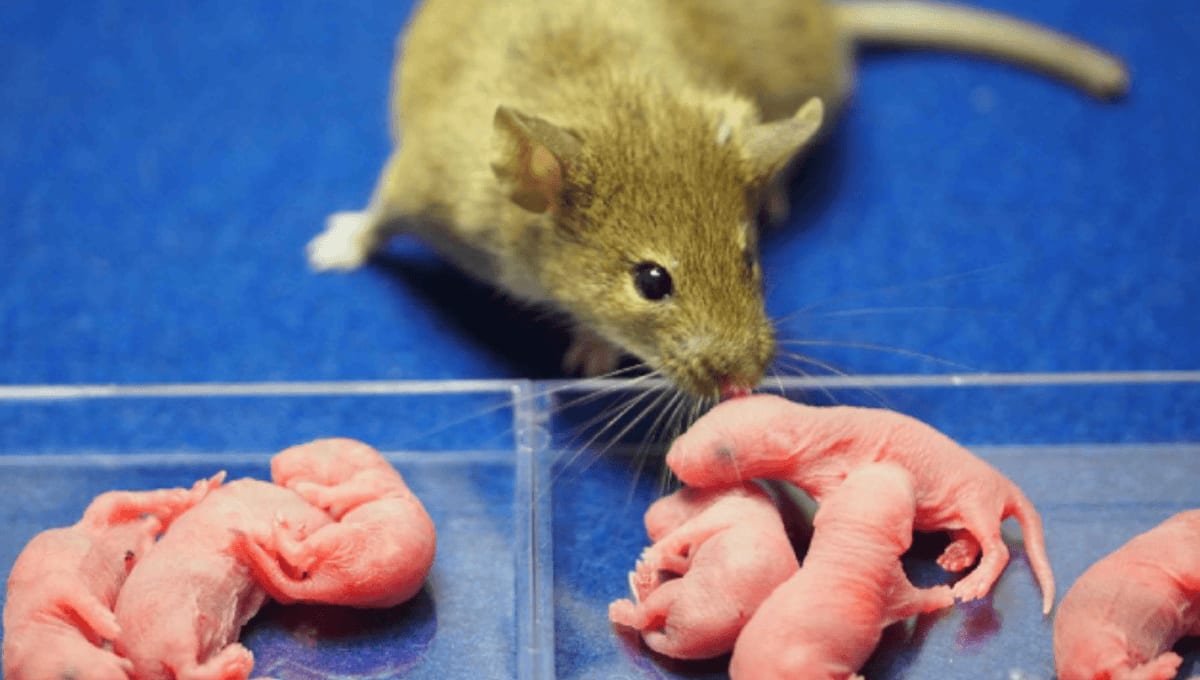
Scientists in Japan have achieved something that sounds like science fiction: they created fertile female mice from male donors, then successfully bred them to produce a new generation.
The research team at RIKEN BioResource Research Center used CRISPR gene editing to remove the Y chromosome from male mouse cells early in development. The result was female mice with XO chromosomes (one X, no Y) that were genetically identical to the original male, except for that single missing chromosome.
"Seeing female pups born from a male donor was quite remarkable," said Dr. Shogo Matoba, the senior researcher who led the study. While this had happened accidentally before, this marks the first time scientists intentionally created opposite-sex clones.
The team pushed the experiment further by mating these female clones with their original male donor. They produced healthy, fertile offspring, proving that a complete reproductive cycle could start from a single male genome.
The Ripple Effect
This breakthrough could become a lifeline for critically endangered species, especially those down to their last male individual. Conservation facilities worldwide store frozen cells from rare animals in biobanks like the Frozen Zoo. When only male cells exist from a valuable individual, this technique could theoretically expand reproductive options by creating both sexes from that single genetic source.
Think of Lonesome George, the last Pinta Island tortoise, or Toughie, the final Rabbs' fringe-limbed tree frog. If this technology could work in other species, it might offer a chance to restart populations from single male survivors.
The technique faces real challenges beyond mice. Most mammals don't function well with just one X chromosome. In cattle, pigs, dogs, and horses, XO individuals often have reproductive problems or can't breed at all. Humans with XO chromosomes develop Turner syndrome, which causes infertility.
The research hasn't been peer-reviewed yet, so other scientists need to verify these results. Even if the technique proves sound, adapting it to work in endangered species will require extensive research to determine which animals could produce viable, fertile XO females.
The genetic diversity would also be extremely limited, since all offspring would come from a single male's genes. But conservationists see this as one tool among many, potentially buying time while they develop other solutions like gene editing or locating undiscovered individuals.
For now, this "strange and fascinating" experiment shows that nature's rules aren't as fixed as we thought, and that creativity in science might help us undo some of the damage we've done to the natural world.
More Images



Based on reporting by Google: species saved endangered
This story was written by BrightWire based on verified news reports.
Spread the positivity!
Share this good news with someone who needs it