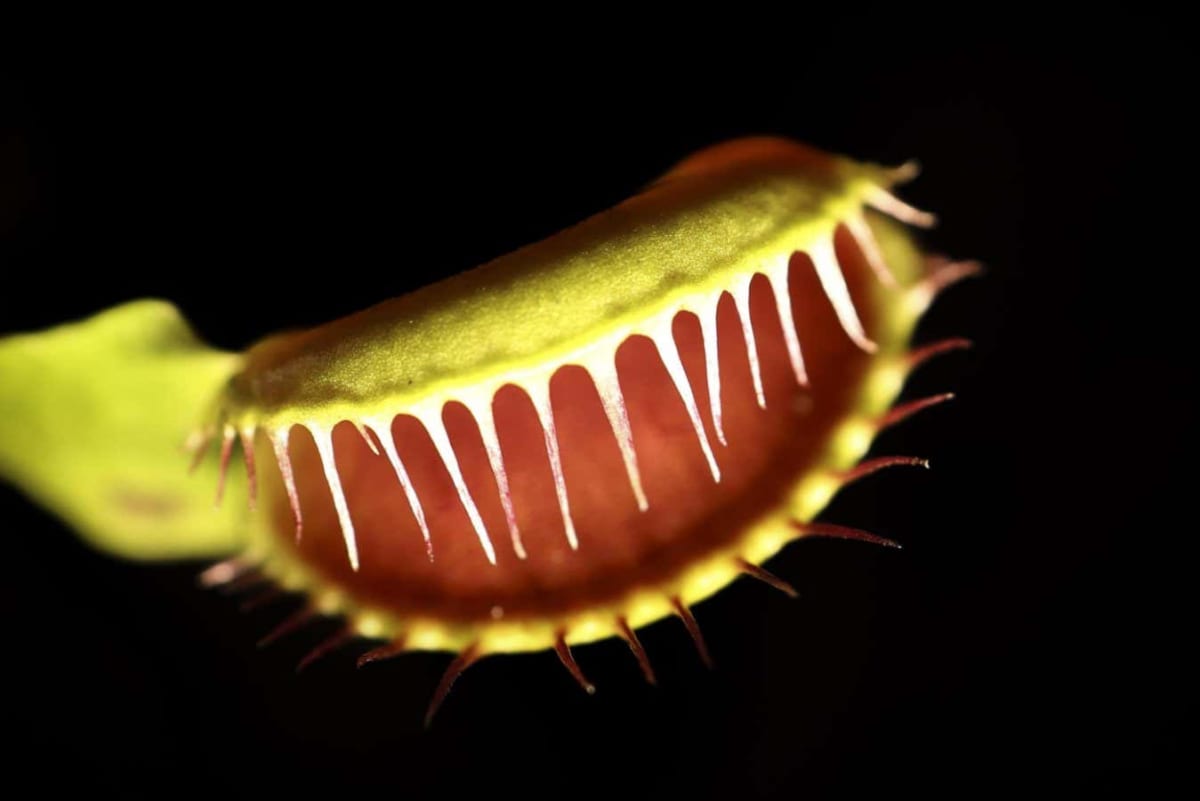
Scientists Crack 200-Year Mystery of Venus Flytrap Speed
French researchers finally discovered how Venus flytraps snap shut fast enough to catch insects, solving a puzzle that stumped scientists since Charles Darwin's time. The secret lies in cells that soften in milliseconds, not water movement as previously thought.
A mystery that has baffled botanists for two centuries may finally have an answer.
Scientists at Aix-Marseille University in France discovered how Venus flytraps close their jaw-like leaves in less than a second, fast enough to trap unsuspecting insects. The breakthrough challenges everything researchers thought they knew about these remarkable plants.
Venus flytraps snap shut when tiny hairs inside their traps are touched twice in quick succession. Charles Darwin himself studied these carnivorous plants, yet the mechanism behind their lightning-fast movement remained elusive until now.
For years, scientists believed water pumping from one side of the trap to the other caused the snap. One side would shrink while the other swelled, creating the curve needed to close. It made sense in theory.
Researcher Yoël Forterre and his team put that theory to the test. They measured how long water actually takes to move through the trap tissue and found it needs 30 to 60 seconds. An insect would be long gone by then.
The real answer revealed itself when the team noticed something unexpected. The trap's surface became bumpier after being triggered, suggesting the cell walls were becoming less stiff.
Using tiny probes, they measured mechanical forces inside the plant's cells and discovered the outer cell walls rapidly soften when triggered. This happens through an electric signal and wave of calcium ions that race across the leaf like a nervous system impulse.
The softened outer surface releases stored tension in the tissue, allowing pressurized inner cells to expand. The outer edges lengthen while the inner surface stays rigid, causing the trap to bend and close in a fraction of a second.
Why This Inspires
This discovery shows that nature still holds secrets waiting to be unlocked, even in plants we've studied for generations. The Venus flytrap's solution to catching fast-moving prey turns out to be more elegant than anyone imagined, using controlled softening rather than brute force water movement.
The research opens doors for understanding how plants can move rapidly without muscles or nerves. Engineers might one day apply these principles to create new soft robotics or quick-response materials.
The team still doesn't know which molecules trigger the rapid cell wall transformation, meaning more exciting discoveries await. Sometimes the best answers lead to even better questions.
More Images




Based on reporting by New Scientist
This story was written by BrightWire based on verified news reports.
Spread the positivity!
Share this good news with someone who needs it