Scientists Create Blueprint to Protect World's Largest Delta
Researchers have developed groundbreaking monitoring methods to safeguard Canada's Peace-Athabasca Delta, a wetland the size of Delaware that's home to Indigenous communities and remarkable biodiversity. Their seven-year study offers hope that this UNESCO World Heritage Site can be protected for generations.
After 25 years of studying one of Earth's most vital ecosystems, scientists have finally cracked the code on how to protect it.
The Peace-Athabasca Delta in northeastern Alberta spans 6,000 square kilometers, making it the world's largest freshwater boreal delta. It's recognized as a Ramsar Wetland of International Importance and forms part of Wood Buffalo National Park, a UNESCO World Heritage Site that serves as traditional territory for Indigenous nations.
But this remote wilderness faces mounting pressures. Hydroelectric dams upstream, nearby oilsands operations, and climate change have raised concerns about shrinking water supplies and rising pollution for decades.
In 2014, the Mikisew Cree First Nation petitioned UNESCO to list the park as endangered, which would mark a Canadian first. The warning sparked urgent calls for better monitoring, but the delta's massive size and complexity made tracking changes seem nearly impossible.
Then researchers had a breakthrough. Working with local communities and stakeholders, they launched an intensive seven-year study in 2015 that's now showing results.
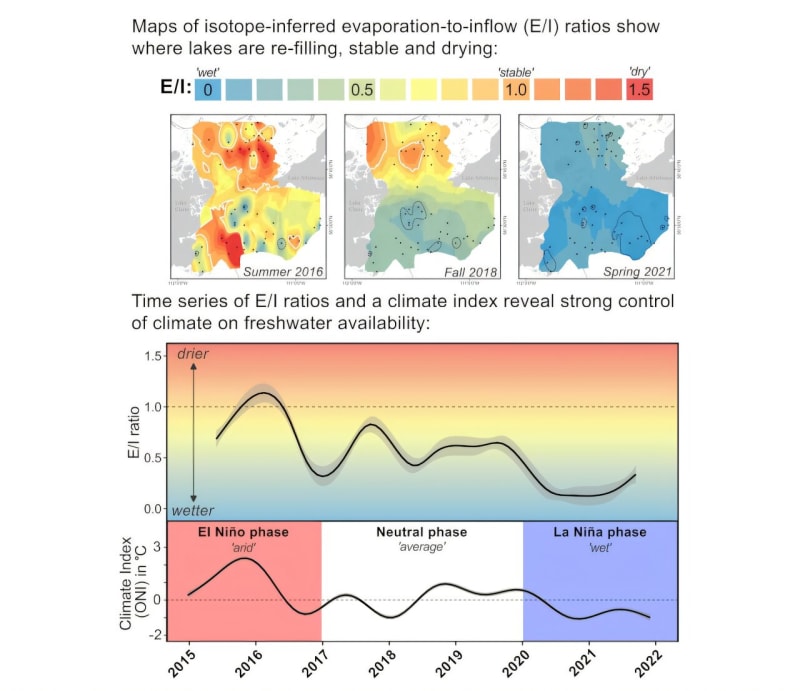
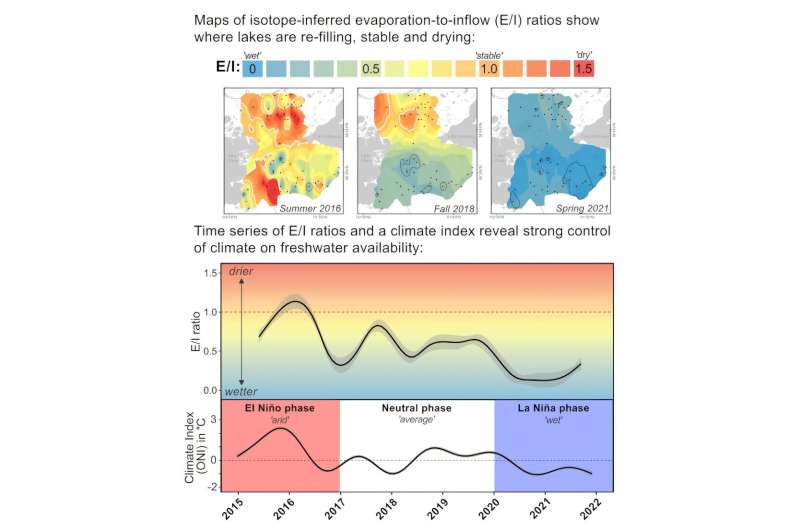
The team discovered that water isotope tracers, which measure naturally occurring hydrogen and oxygen variations in water molecules, can effectively track freshwater availability across vast distances. The method reveals which lakes are drying up from evaporation and which ones receive healthy inflows from rivers and rain.
Their data from 60 lakes shows that climate patterns strongly influence water availability. Any departure from these patterns would signal threats from human activities, giving managers an early warning system.
The researchers also solved another mystery. Before their work, nobody knew the natural baseline levels of contaminants in the delta before industrial development began, making pollution impossible to measure accurately.
By analyzing lake sediment layers deposited before and after oilsands mining started, they established those crucial baseline measurements. Their vanadium testing shows that while contamination exists near mines, it hasn't reached delta lakes yet.
Why This Inspires
This research comes at a critical moment. Policymakers are considering releasing water from the W.A.C. Bennett Dam to boost delta water levels and potentially allowing treated mine wastewater into the Athabasca River for land remediation.
These aren't easy decisions. They involve costs, risks, and environmental tradeoffs that affect Indigenous communities who've lived here for generations.
But now decision-makers have the tools they need. The monitoring methods developed through this research can measure whether interventions actually work, turning guesswork into science.
The approach transforms how we can protect fragile ecosystems everywhere. By combining advanced isotope analysis with sediment records, scientists created a replicable blueprint for monitoring remote wetlands worldwide.
After decades of uncertainty, one of Earth's most precious freshwater ecosystems finally has guardians equipped with the right tools to protect it.
More Images


Based on reporting by Phys.org - Earth
This story was written by BrightWire based on verified news reports.
Spread the positivity!
Share this good news with someone who needs it