Scientists Create Cheaper Path to Clean Hydrogen Energy
Researchers at Washington University in St. Louis developed a new catalyst that produces hydrogen from water without expensive platinum metals, potentially making renewable energy storage affordable for widespread use. The breakthrough could finally unlock hydrogen's promise as a practical clean fuel.
Clean hydrogen energy just got a lot closer to reality, thanks to a team that found a way around one of the biggest roadblocks holding it back.
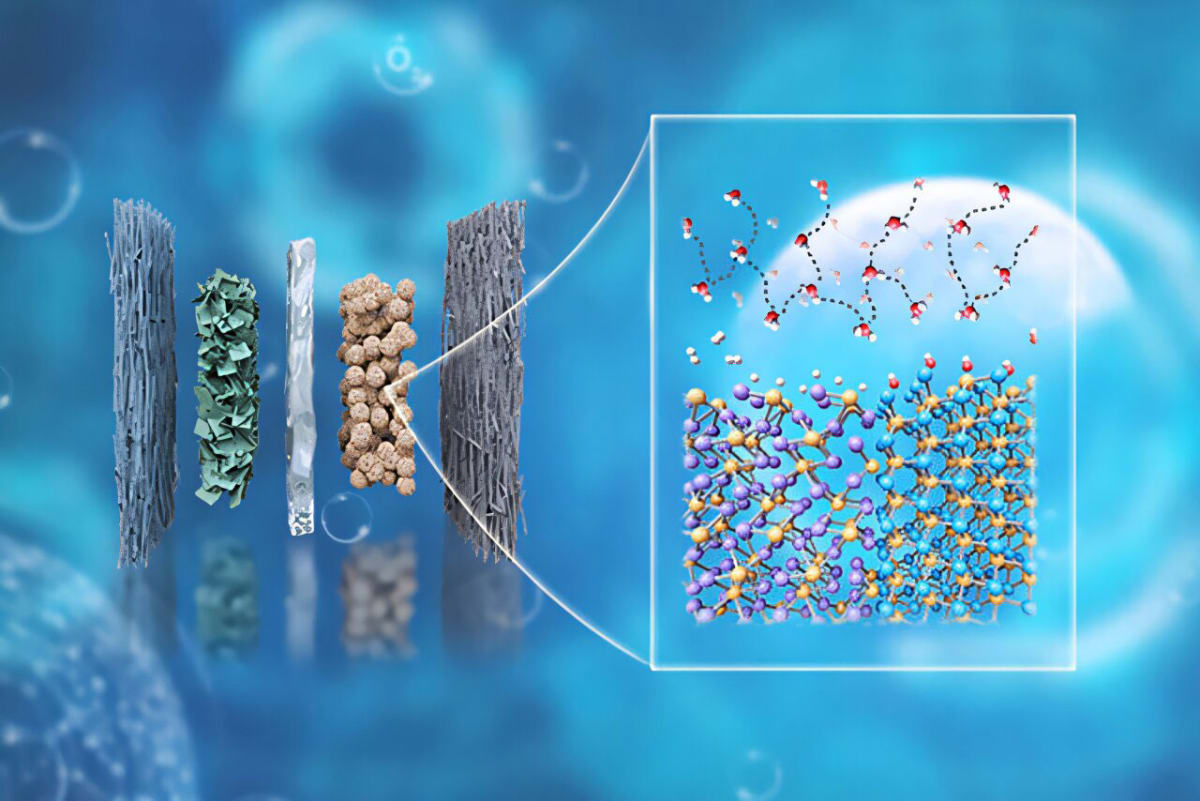
Professor Gang Wu and his team at Washington University in St. Louis created a new catalyst that splits water into hydrogen using renewable electricity. The breakthrough? It works without platinum, the expensive rare metal that has kept hydrogen production costs sky high.
Hydrogen has always been the dream fuel for renewable energy. It produces zero carbon emissions when used and can store power from solar panels and wind turbines for later use. But making it affordably has been the missing piece of the puzzle.
The team combined two materials, rhenium phosphide and molybdenum phosphide, into a single catalyst that works better together than apart. Rhenium handles grabbing and releasing hydrogen, while molybdenum speeds up the water splitting process that creates it.
When tested, the new catalyst outperformed other non platinum alternatives and even matched platinum benchmarks. More importantly, it kept working efficiently for over 1,000 hours at industrial strength levels, proving it could handle real world demands.
The Ripple Effect
This discovery matters far beyond the lab. Affordable hydrogen production could transform how we store renewable energy, solving one of the biggest challenges facing solar and wind power: what to do when the sun isn't shining or the wind isn't blowing.
Hydrogen can power vehicles, heat homes, and fuel manufacturing without releasing greenhouse gases. Industries that are hardest to electrify, like steel production and shipping, could finally have a clean alternative.
The cost barrier has kept hydrogen from reaching its potential for decades. By eliminating the need for scarce platinum group metals, Wu's catalyst could make clean hydrogen competitive with fossil fuels on price.
The team conducted their experiments at laboratory scale, but they're already planning tests for industrial applications. If the catalyst performs as well at larger scales, manufacturers could start producing affordable hydrogen within years, not decades.
"Going from water to hydrogen is a very desirable way we are able to store energy for different applications," Wu explained. The catalyst's durability and performance make it one of the most promising options for practical hydrogen production systems.
The path to a hydrogen economy just got clearer, and it's paved with materials we can actually afford.
More Images
Based on reporting by Google News - Clean Energy
This story was written by BrightWire based on verified news reports.
Spread the positivity!
Share this good news with someone who needs it