Scientists Create Circuit Boards That Break Down Like Leaves
Researchers at the University of Glasgow invented circuit boards that are 99% compostable, offering a breakthrough solution to the growing mountain of electronic waste. The zinc-based circuits can safely decompose in soil or dissolve in vinegar while performing just as well as traditional boards.
Your old phone might soon help your garden grow instead of poisoning a landfill.
Scientists at the University of Glasgow have created circuit boards that break down almost completely in ordinary compost. Unlike traditional electronics that leak toxic chemicals into soil for decades, these new boards safely dissolve using nothing more than backyard composting or household vinegar.
The innovation couldn't come at a better time. In 2024 alone, the world threw away 62 million metric tons of electronic waste. Less than 17% got recycled in the EU, with the rest ending up in landfills where conventional circuit boards release harmful substances into surrounding land.
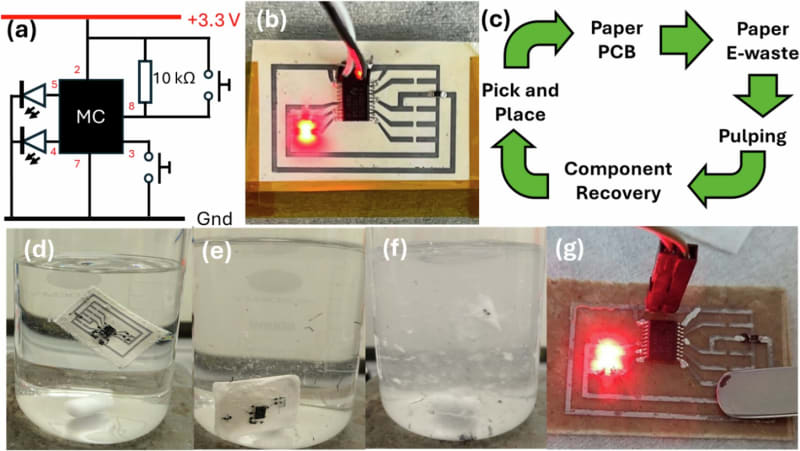
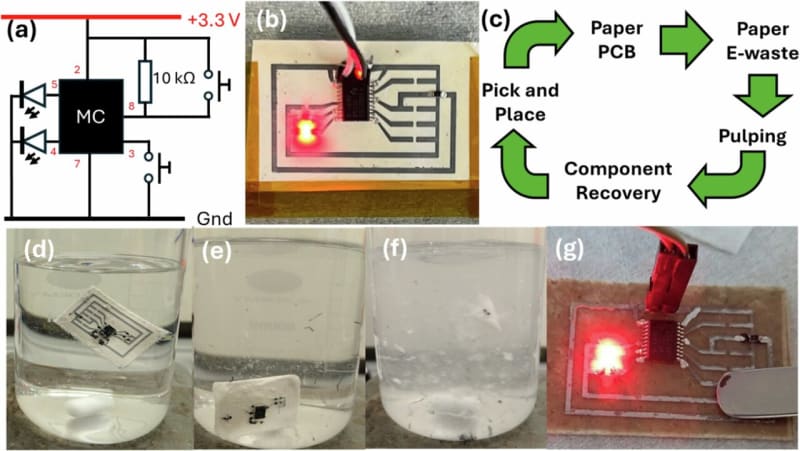
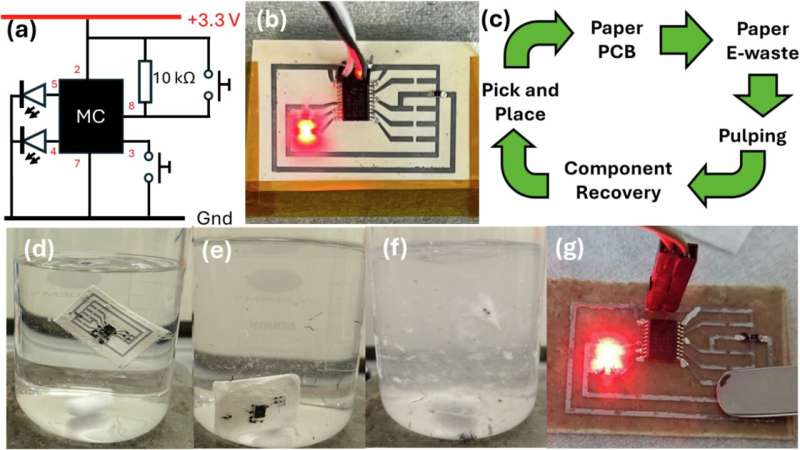
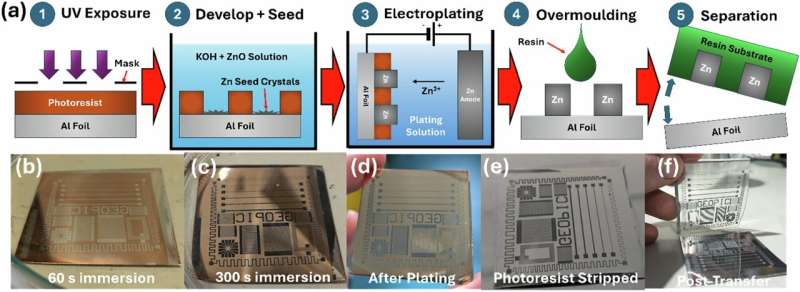
The breakthrough replaces copper circuits with zinc and prints them on biodegradable materials like paper and bioplastics. Dr. Jonathon Harwell, who led the research, explained that 99% of the materials can be safely disposed of once the device reaches the end of its life.
The team tested their compostable circuits in real devices including temperature sensors, LED displays, and touch-sensitive controls. Every test showed performance matching traditional boards, and the materials stayed stable for over a year in normal storage conditions.
Professor Jeff Kettle, the project's lead researcher, demonstrated the technique's versatility by printing circuits on chocolate. While probably not practical for your next smartphone, it proves the method works on almost any biodegradable surface.
The Ripple Effect goes far beyond individual gadgets. A life cycle assessment revealed these eco-friendly boards could reduce global warming impact by 79% and slash resource depletion by 90% compared to conventional electronics.
The technology opens doors for disposable medical sensors, internet-connected devices, and consumer electronics designed from the start to return safely to the earth. The researchers are already exploring applications in moldable electronics and biosensing.
This work is part of the University of Glasgow's Responsible Electronics and Circular Technology Center, where teams are tackling electronic waste from multiple angles including better recycling processes for existing devices.
The circuits prove that throwaway technology doesn't have to mean permanent trash.
More Images
Based on reporting by Phys.org - Technology
This story was written by BrightWire based on verified news reports.
Spread the positivity!
Share this good news with someone who needs it


