Scientists Create Drug That Mimics Rare Crohn's Protection
Researchers have developed a potential new treatment for Crohn's disease by mimicking a rare gene variant that naturally protects some people from inflammatory bowel disease. The breakthrough demonstrates a complete path from genetic discovery to actual medicine, offering hope for 3 million Americans living with IBD.
Scientists have cracked the code on a genetic superpower that protects some people from Crohn's disease, and they've turned it into a potential cure for millions.
About 3 million Americans suffer from inflammatory bowel diseases like Crohn's disease and ulcerative colitis. But a lucky few carry a rare variant of the CARD9 gene that shields them from the chronic inflammation that damages digestive tracts and causes these painful conditions.
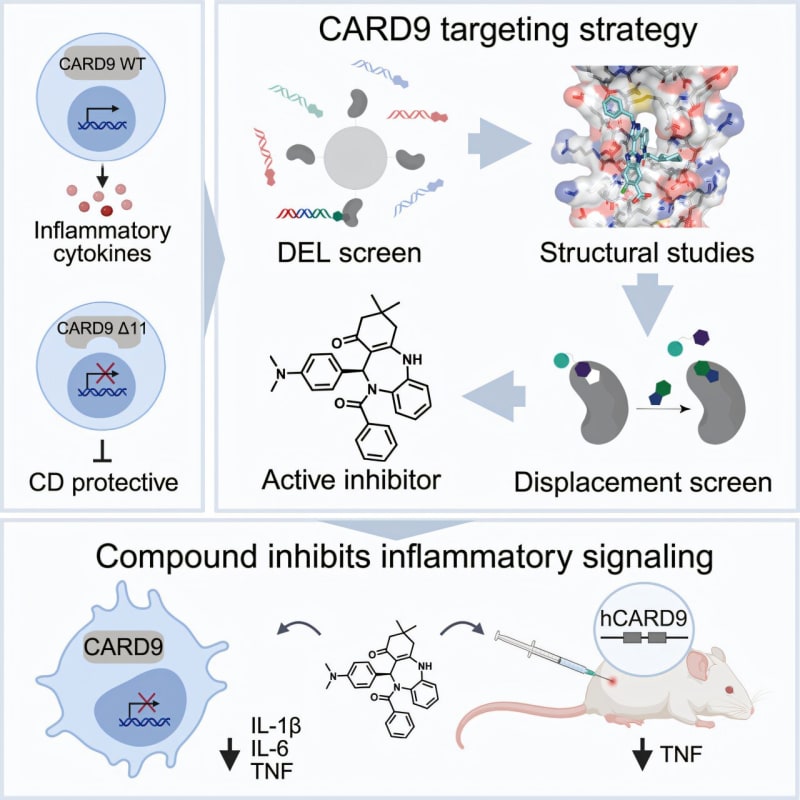
Now, researchers at the Broad Institute, Mass General Brigham, and Harvard Medical School have created small-molecule drugs that copy this natural protection. Published in Cell, the study represents more than a decade of work translating a genetic discovery into actual medicine.
The journey started in 2011 when researchers sequenced genomes from tens of thousands of people and identified CARD9 as a key player in IBD risk. They discovered that while one variant increased disease risk, a rarer shortened version actually prevented it.
The challenge was figuring out how this protective variant worked without completely shutting down CARD9. Turning off the protein entirely would prevent the immune system from fighting gut infections, but the rare variant somehow allowed initial immune responses while blocking harmful long-term inflammation.
By 2015, the team understood that the protective variant acted like a brake on inflammation. They identified the exact section of the protein that needed targeting, even though CARD9 was considered "undruggable" because it lacked obvious binding sites for medications.
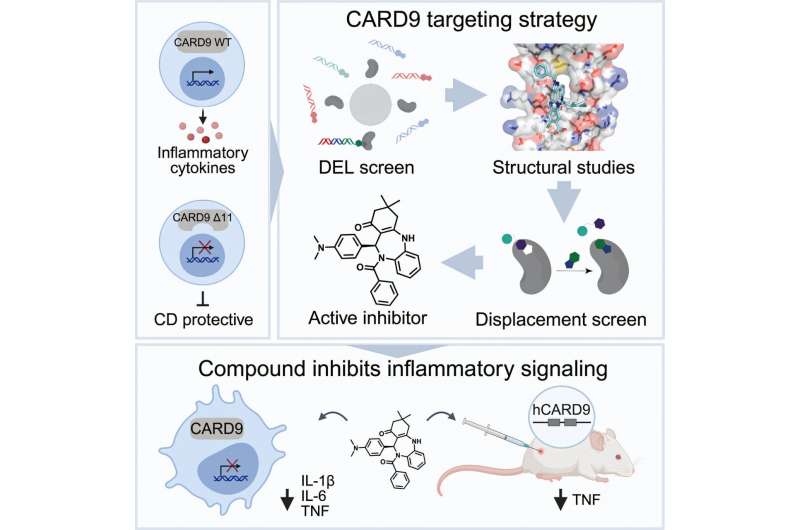
The breakthrough came through screening 20 billion molecules to find compounds that could bind to CARD9. After obtaining the first crystal structure showing how molecules could attach to the protein's coiled-coil domain, researchers refined their approach and developed candidates that decreased sustained inflammation in mice.
The Ripple Effect
This success story offers a roadmap for turning genetic discoveries into treatments for countless other diseases. While this particular effort took over a decade, the team says future work can happen much faster thanks to gene editing technology, advanced chemistry, and artificial intelligence in drug discovery.
The approach demonstrated here can now be applied to other conditions where scientists have identified causal genes and mechanisms. Deep investments in human genetics are finally paying off, showing a clear path from understanding why some people stay healthy to creating medicines that give everyone that same advantage.
For the millions living with Crohn's and ulcerative colitis, this research transforms a lucky genetic accident into a treatment anyone could benefit from.
More Images
Based on reporting by Medical Xpress
This story was written by BrightWire based on verified news reports.
Spread the positivity!
Share this good news with someone who needs it