Scientists Create First 'Half-Möbius' Molecule
Chemists just invented a completely new type of molecule that twists itself into a shape nobody thought was possible. This breakthrough could unlock fresh ways to design everything from life-saving drugs to advanced electronics.
Scientists at IBM Zurich and the University of Manchester have created a molecule with an electronic structure that's never existed before.
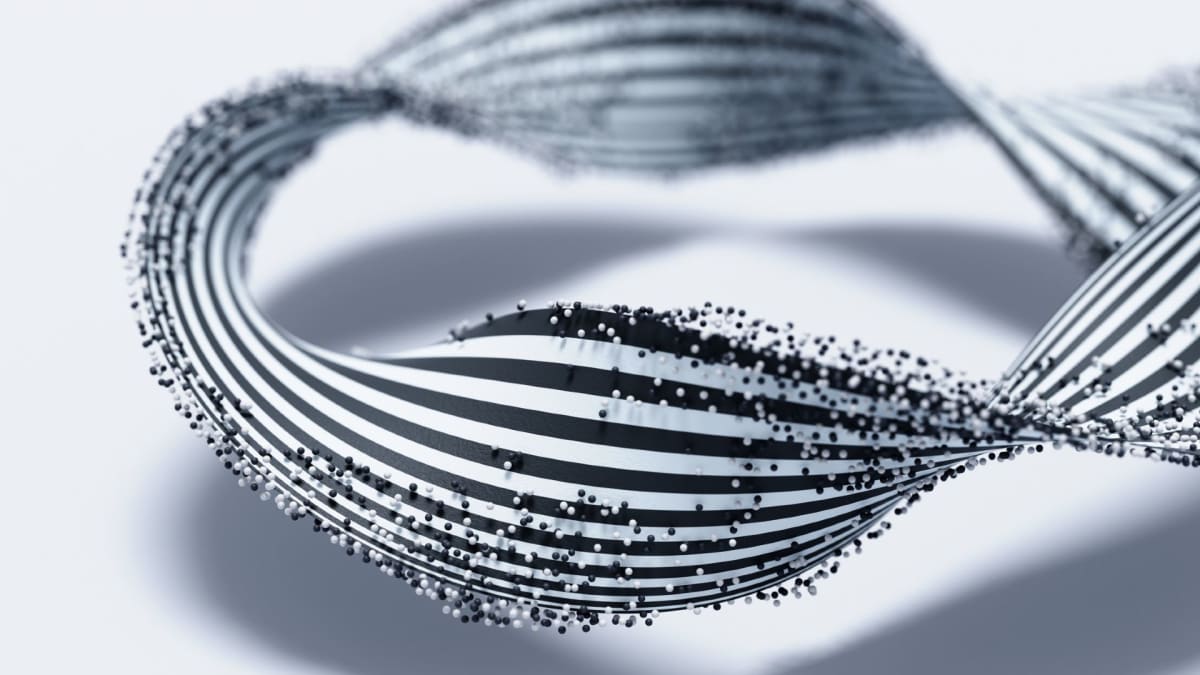
The team built what they're calling a "half-Möbius" molecule, a ring of 13 carbon atoms that spontaneously twists itself 90 degrees. Until now, chemists thought molecules could only exist in two states: standard flat rings or full 180-degree Möbius twists.
"Chemistry thought that these are the only two options," said Igor Rončević, lecturer in computational and theoretical chemistry at the University of Manchester. "But our discovery shows that there's another option, a third option."
The molecule achieves this impossible-sounding feat through clever electron manipulation. The researchers added two chlorine atoms to the ring, creating an uneven split of electrons: 13 on one side, 11 on the other. Since electrons prefer to pair up, the molecule twists itself to let the electrons share across the entire structure.
This spontaneous twist creates something remarkable. The molecule can exist as two mirror-image versions, like left and right hands. Even better, scientists can switch between these versions by applying a tiny voltage, something that's normally incredibly difficult to achieve.
The Ripple Effect
This discovery opens entirely new possibilities for designing materials. The molecule's unique chirality (its mirror-image property) matters enormously for creating pharmaceutical drugs and OLED screens. Being able to flip between mirror versions with just a voltage could revolutionize how we manufacture these products.
"This is another knob that we can turn in order to make and manipulate matter," Rončević explained. The breakthrough expands our fundamental understanding of what's possible in chemistry and physics.
The team needed state-of-the-art quantum computers just to understand the mind-bending complexity of their creation's electronic structure. They published their findings in the journal Science on March 5.
Principal research scientist Leo Gross says the team wants to keep exploring what else these new molecular architectures can do. The discovery proves there are still fundamental surprises waiting in the building blocks of matter itself.
More Images

Based on reporting by Google News - Science
This story was written by BrightWire based on verified news reports.
Spread the positivity!
Share this good news with someone who needs it