Scientists Create Gas-Free Cooling 70x More Effective
A tiny molecular tweak just made eco-friendly refrigeration 70 times more powerful, bringing us closer to ditching climate-damaging cooling gases for good. The breakthrough could transform everything from your fridge to industrial cooling systems.
Researchers just cracked a major puzzle in creating refrigerators and air conditioners that cool without harming the planet.
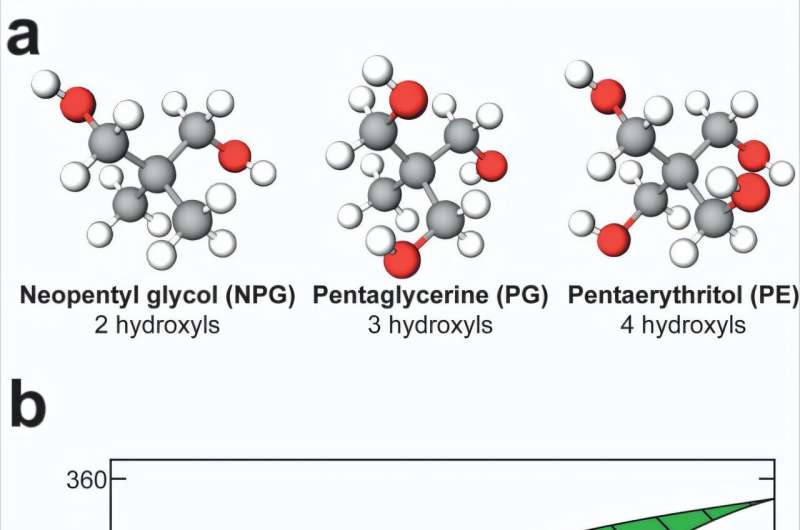
Scientists from universities in the UK and Spain discovered that adding just 2% of a simple molecule called pentaerythritol to a solid cooling material makes it work 70 times better than before. The breakthrough brings gas-free cooling technology dramatically closer to reality.
Today's refrigeration systems rely on gases that contribute to global warming and face growing regulations. The new approach uses solid materials that naturally heat up or cool down when pressure is applied, similar to how a bicycle pump gets warm when you use it.
The challenge has been making these materials work reliably. Most behave differently each time they're compressed, making them impractical for everyday use.
The research team studied a material called neopentyl glycol mixed with pentaglycerine. On its own, this combination showed promise but wasn't consistent enough for real-world applications.
By adding that tiny 2% dose of a third ingredient, everything changed. The material became dramatically more reliable, cycling consistently between hot and cold states. It now works effectively at normal pressures and around room temperature, exactly what practical cooling systems need.
The numbers tell the story. The improved material can now operate over a temperature range 20 times wider than pure neopentyl glycol. It produces a reversible cooling effect seven times larger under realistic conditions.
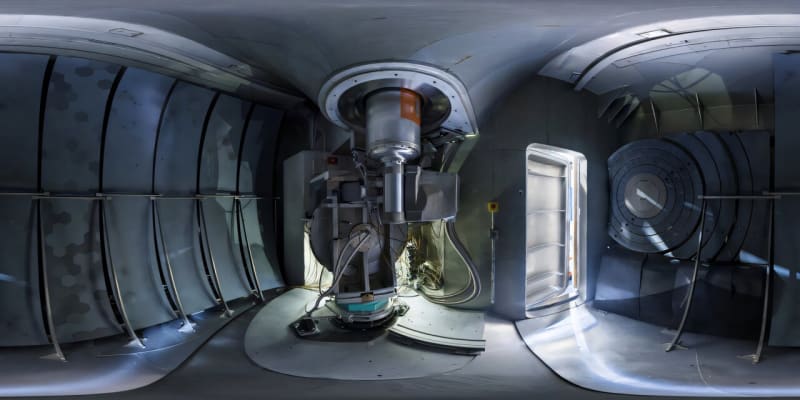
Using neutron experiments at the Institut Laue-Langevin in France, the team discovered why this works. The small molecular addition changes how molecules interact during phase transitions, reducing the inconsistency that plagued earlier versions.
The Ripple Effect
This discovery matters far beyond laboratory walls. Refrigeration and air conditioning account for a massive portion of global energy use and greenhouse gas emissions. From preserving food and medicine to keeping data centers cool, modern life depends on reliable cooling.
Countries worldwide are phasing out traditional refrigerant gases under international climate agreements. That creates urgent demand for alternatives that actually work in real products.
The beauty of this breakthrough lies in its simplicity. Rather than inventing entirely new materials or complex systems, researchers showed that a tiny compositional change can unlock huge improvements. The approach could be applied to other solid cooling materials too.
Manufacturing these materials doesn't require exotic ingredients or extreme conditions. The molecules involved are relatively simple compounds, making scaled production feasible.
The technology isn't ready for your kitchen just yet, but it's moved from theoretical possibility to engineering challenge. Companies developing next-generation cooling systems now have a clearer path forward.
Climate-friendly cooling that actually works isn't science fiction anymore—it's becoming science fact, one molecule at a time.
More Images

Based on reporting by Phys.org
This story was written by BrightWire based on verified news reports.
Spread the positivity!
Share this good news with someone who needs it