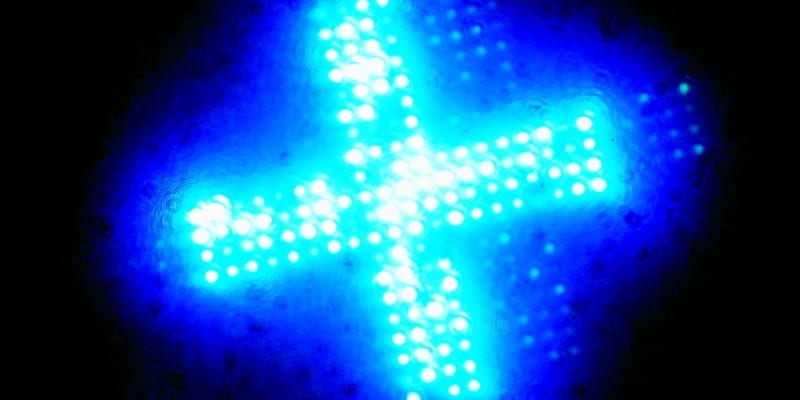
Scientists Create LEDs Smaller Than Light Itself
Researchers have built LEDs tinier than a single wavelength of light, opening doors to ultra-sharp VR displays and faster computer chips. The smallest pixel measures just 90 nanometers across.
Imagine a display so sharp that 100,000 pixels fit in a single inch. That future just got closer as scientists push LEDs into territory once thought impossible.
Researchers at Zhejiang University in China recently created the world's smallest LEDs at just 90 nanometers wide. That's smaller than the wavelengths of the light they emit, a feat that seemed like science fiction just years ago.
Three different research teams are racing to shrink display technology beyond what the human eye can even detect. Sweden's Polar Light Technologies has built 300-nanometer LEDs using pyramid-shaped structures, with plans for commercial production in 2026. Meanwhile, scientists at ETH Zurich crafted 100-nanometer green OLEDs that could pack 100,000 pixels per inch compared to today's best displays at 14,000.
The China team went smallest of all, creating 90-nanometer red and green pixels using perovskites. These cage-shaped materials, already revolutionizing solar panels, are proving surprisingly good at making light too.
Right now these tiny LEDs face one big challenge: efficiency. The smallest versions convert only 5 to 10 percent of electricity into light, compared to 50 to 70 percent for regular LEDs. But researchers believe they can close this gap with better materials and manufacturing techniques.
Why This Inspires
These nanoLEDs could transform how we see and compute. Virtual reality headsets and smart glasses manufacturers are already asking for pixels as small as 3 micrometers to create sharper, more realistic images that use less battery power.
Beyond displays, the tiniest LEDs could revolutionize computer chips. Tech giant TSMC is already testing microLED connections that let data centers communicate faster. Even smaller LEDs could supercharge AI systems and other technologies hungry for bandwidth.
The most exciting part? LEDs smaller than their own light wavelengths can do things previously impossible. Researchers have shown these nanoLEDs can create metasurfaces, special structures that manipulate light in brand new ways.
"We are making a new component that was not possible in the past," says Chih-Jen Shih, the chemical engineer leading ETH Zurich's team. His group hasn't even stopped shrinking yet.
The race to build smaller continues because nobody knows the true limit. Polar Light's CEO admits they haven't found the bottom yet and can definitely go tinier.
From crisper VR worlds to smarter computers, the smallest LEDs ever made are lighting the path to technologies we're only beginning to imagine.
More Images

Based on reporting by IEEE Spectrum
This story was written by BrightWire based on verified news reports.
Spread the positivity!
Share this good news with someone who needs it